
Learning how to build confidence involves practicing intentional confidence building exercises that strengthen self-trust, skills, and mindset over time. Proven ways to build self-confidence include journaling, taking small steps, trying new challenges, prioritizing self-care, focusing on your strengths, practicing kinder self-talk, managing social media use, using music for motivation, building supportive relationships, and seeking professional support when needed.
We all have things we would love to do: maybe go on an epic vacation, find a new career, or start a unique hobby… And yet there are also many reasons you might not follow through – everything from finances, to time, to access.
Or at least that’s what you tell yourself. What if the only thing keeping you from chasing your dreams is you?
Having the confidence to step out of your comfort zone and try something new is easier for some people than others. Nevertheless, you don’t have to remain where you are.
Join us as we explore what confidence is, how it affects you, why it’s important, and how to build confidence with effective confidence building exercises.
What confidence is, and isn’t
Confidence refers to your perceived ability to handle different situations and to be successful.
Confidence is not all-or-nothing. For example, you may feel confident in your nursing skills because you have studied and practiced them, yet you lack the confidence to repaint your home because you haven’t done that before. This is a normal part of confidence. There are ways to learn how to build confidence that we will go over later in this article.
Additionally, there are a couple of things that confidence is not. Confidence is not arrogance. While they might seem similar on a surface level, the two are not synonymous. Arrogance carries with it the implication of an inflated sense of what you can do.
An example of this is when YouGov surveyed Americans in 2021, asking which animals Americans thought could beat in a fight without using a weapon. There were a few people who (arrogantly) believed they could beat an elephant (8%), a lion (8%), or a grizzly bear (6%) in hand-to-hand combat.
Another term that might be used interchangeably with confidence, and yet is not quite the same, is self-esteem. Self-esteem focuses on your opinion of yourself, regardless of your abilities, and on how worthwhile you feel. Low self-esteem may leave you feeling worthless, a people-pleaser, or pessimistic about the future.
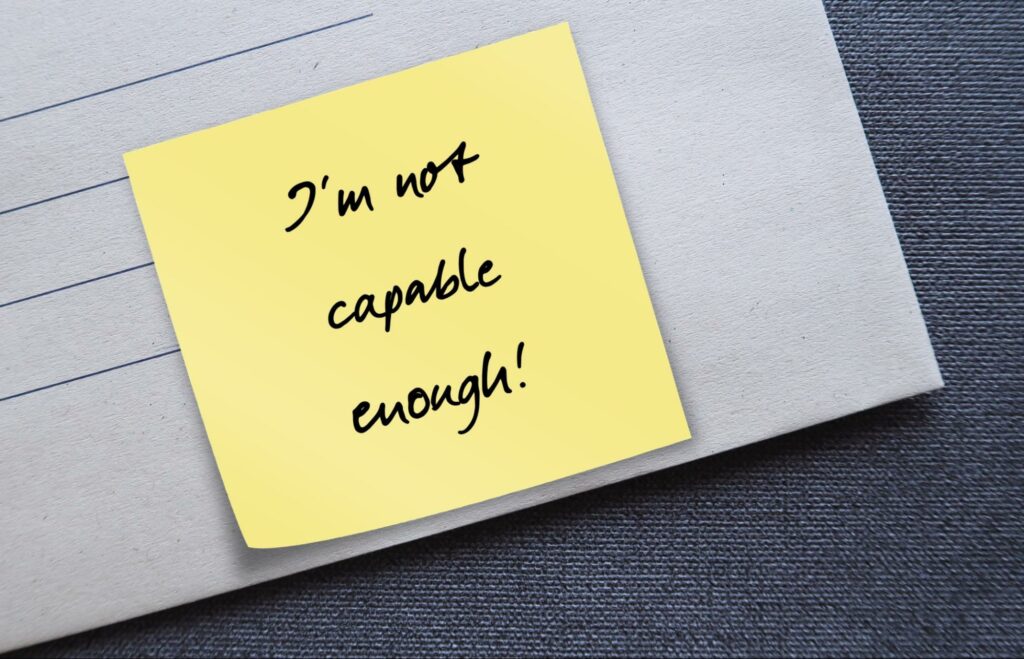
Some ways a lack of self-confidence can affect you
A lack of self-confidence can affect many areas of your life. Feeling unable to perform various activities can take a toll on your self-esteem and lead to a lack of motivation overall. Here are some specific ways that low self-confidence can affect your day-to-day experience.
- Employment: A lack of confidence can hold you back when you have a chance to move up in your company or change jobs. This could cause you to miss out on higher-paying positions, positions that would better suit you, and positions that you are talented enough to do.
- Internal monologue: You are more likely to have unhealthy self-talk when your confidence is low. Damaging self-talk may lead you to believe both that you can’t move forward and that you don’t deserve anything better.
- Appearance: Reduced confidence may lead you to dress simply so you go unnoticed. Neutral colors, minimal makeup, and a basic hairstyle can lead to you blending in. Not being seen can feel more comfortable than being singled out when you don’t feel like you have much to offer.
- Relationships: Not having much confidence could affect your relationships. It could cause you to shy away from larger gatherings such as family get-togethers or work parties. In addition, it may impact your romantic relationships because you feel you don’t deserve love. If you believe you’re not worthy of love, you may fear that your loved one will leave you, or you might shoot down anyone who wants to date you.
- Mental health: The tension between wanting to do something new and not being confident enough to try could lead to mental anguish. Unrealized desires for a different or better job, an honest connection with others, or just feeling comfortable in your own skin can generate a thought pattern that only makes your lack of confidence worse.
How can you build self confidence? (10 exercises that are proven to help)
1. Journaling
Journaling is a wonderful exercise that allows you to explore who you are and what you feel. Getting your thoughts out of your head and onto paper is a great starting point. You could note things like:
- what you think you’re good at,
- what confidence feels like for you,
- what activities or jobs you would like to try, or
- what you fear the most about starting something new.
Finding a clear focus through journaling rather than living with scattered thoughts may take some of the fear out of taking your first step toward a more fulfilling life.
2. Take a small step
Speaking of first steps, trying to change a lot at once will likely lead to burnout and set you up for defeat – the opposite of what we want for you. Instead, choose one activity that you would like to engage in and take the smallest, least scary step to start building up your confidence. You might start with:
- doing some research,
- watching online videos,
- reading a book or articles,
- talking to someone with experience,
- accompanying someone for a day who does what you want to do, or
- joining a group with the same interests as you.
Learning about what you’re interested in can help you avoid common “newbie” errors, raise your confidence, and make it more likely that you will have a good experience.
3. Do something that scares you
Make a list of things that you would like to try. Pick one of the ideas and go for it! It doesn’t have to be something major, although it does need to be out of your comfort zone.
Don’t worry about what people might think if they saw you doing it. If you’re really worried about that, maybe go to another city where you don’t know anyone, so you can try it without anyone recognizing you. The key here is that you’re taking a leap to try something new. Imagine yourself on a grand adventure, because it is.
4. Don’t neglect self-care
How you feel physically can significantly affect your confidence. There are many options for self-care, and it is important to choose what works for you. Let’s look at four categories: diet, movement, sleep, and splurge.
- Diet: Here, diet refers to overall eating habits rather than restrictive dieting practices. Over-processed foods can impact both your physical and mental health, so prioritizing whole foods can balance your nutritional needs. If you are unsure where to begin or have significant health issues, consider speaking with your primary care physician (PCP) or a nutritionist.
- Movement: Exercise doesn’t have to be strenuous to be beneficial. Any type of physical movement can help lower blood sugar, increase mobility, and improve your mental health. Choose activities that fit your abilities and that you think are fun. Dancing, bouncing on a mini trampoline, or walking could be simple ways to practice how to build confidence through movement.
- Sleep: Restorative sleep has been shown to be a key player in better overall health. It is recommended that you target both the quality and quantity of your sleep, as well as make numerous tweaks over time to improve it.
Splurge: Do something fun for your body! Get your nails done, a treatment at a spa, a new haircut and color, or even a tattoo. If you can’t afford to try one of these, there are less expensive at-home options too.
5. Focus on what you’re good at
Everyone has strengths and weaknesses – including you. Spending time honing skills you are already proficient at can be a good confidence-building exercise. This could mean focusing on an aspect of your current job, a new employment opportunity, or a hobby. While the saying “practice makes perfect” has some merit, a more realistic goal might be “practice makes progress.” It is the progress that can increase your confidence.
Conversely, knowing what you’re not good at shows how you can build self-confidence in a healthy, realistic way. That statement might surprise you, yet knowing when to call it quits is sometimes the healthiest decision you can make. It can be unhealthy and demoralizing to keep working on a task without seeing any improvement. Sometimes the best thing you can do for your confidence is to walk away.
6. Be kind to yourself
Confidence and self-esteem, though different, walk hand-in-hand. Critical self-talk about how you can’t do anything, you’re forever stuck where you are, or how you’ll never be successful is a sure-fire way to drop your level of self-confidence. Consider coming up with an opposite statement to counteract the unhealthy thoughts that may be looping in your mind.
On the other hand, encouraging self-talk might motivate you to learn how to build confidence. Focus on reinforcing healthy, affirmative thoughts. Instead of saying you can’t do anything, you might want to list out skills and talents you do have, no matter how small or insignificant they may seem. Try shifting from believing you’re stuck where you are to identifying small ways to make changes. Finally, consider repeating all the ways you have been successful. At the very least, you have been successful in surviving every day of your life so far.
7. Watch out for social media
We live in a comparison culture, and social media has exacerbated it. Most people on social media highlight their “successes” and the good parts of their lives. What you don’t usually see is what goes on behind the scenes.
The videos and snapshots are often not representative of your real life. The countertop clutter in the cooking video is now on your dining room table; the designer clothes were returned after the fancy photo shoot, or the happy family outing was preceded by a knock-down-drag-out effort to get everyone to the event.
Social media is known to increase both anxiety and depression, and can increase the pressure to “keep up with the Joneses”. You may want to assess how much time you spend on social media and who you follow. That said, social media can sometimes be part of how to build confidence when used in moderation. Consider following people who show both the ups and downs of their lives.

8. Pump yourself up
Let the music be your guide: put on some of your favorite tunes and turn up the volume! Music has been shown to improve your mood and motivation.
Choose a style and tempo that works best for your situation: soft and calm for increased focus, or loud and pounding to get you moving; use music to your advantage.
Just as listening to music can be good for your confidence, playing a musical instrument or singing can increase it as well. New skill acquisition, such as learning to play an instrument (including your voice), is another effective way to learn how to build confidence.
9. Find your tribe
The people you’re around may affect you more than you realize. Consider the saying “one bad apple spoils the barrel.” The idea that just one person reinforcing your lack of confidence can sway your life’s course is staggering.
The company you keep can affect both your mood and habits, so it is important to discern when choosing your close friends. Being supported by encouraging friends can help you learn how to build confidence. This doesn’t mean you can’t be friends with people who don’t support your goals; just watch how much time you spend with them and to what extent you let them influence you.
10. Find out more about yourself
If, after reading about how to build confidence through these confidence building exercises, you’re still struggling to know what the next step for you is, you might want to explore the idea of working with an online therapist. Building up your confidence can bring up a variety of emotions, and it might be helpful to talk through those feelings with one of Makin Wellness’ online therapists.
Our specialized online therapists are trained to walk with you as you examine your thoughts and feelings, list your dreams and desires, and help you practice confidence building exercises to get you closer to your goals. You can also check out this video on confidence.
Find support and encouragement with Makin Wellness online therapy
Realizing that you can build your confidence is a game-changer. We want you to know how to answer the question “how can you build self-confidence” so that you can chase your dreams.
To help you persevere after that first step, Makin Wellness offers supportive and practical online therapy, where you can be honest about your fears and work to address them.
Online therapy provides a safe, personalized space to:
- Learn how to build confidence;
- Practice evidence-based techniques to reframe your thoughts, like CBT, with professional guidance;
- Find out which confidence building exercises would be best for you; and
- Set goals that reflect your values.
You deserve to walk through life with confidence. Your Makin Wellness online therapist is here to help with that when you’re ready.
If you are unsure whether online therapy is right for you, your online therapist can help answer any questions you have about how to build confidence through online therapy.
Call us at (833)-274-heal or click here to schedule an appointment with one of our caring online therapists today.