Social media affects self-worth by increasing comparison, reinforcing validation-seeking, and encouraging identity performance. Over time, constant exposure to curated content can weaken internal confidence and make self-worth more dependent on external approval.
You live in a world where social media is part of everyday life. Maybe you scroll while getting ready in the morning, check notifications throughout the day, and unwind by scrolling again at night…
You might want to pause for a moment, because your sense of self-worth plays a central role in your emotional health. It influences how you connect with others, how you respond to stress, and how you interpret success and rejection.
When you are secure in your worth, outside opinions carry less power. When your worth feels fragile, comparison to others and validation from others can quickly become the measuring stick for worth and success.
That’s why understanding how social media affects self worth can empower you to step out of automatic patterns and develop greater intentionality.
Social media alone doesn’t create how you feel about yourself. It interacts with your beliefs, experiences, and the messages you already carry about your value and identity. When it becomes one of your main sources of feedback, your sense of worth often begins to shift negatively in subtle ways…
How Social Media Affects Self-Worth (tl;dr)
Social media affects self-worth by increasing comparison, reinforcing validation-seeking, and encouraging identity performance. Over time, constant exposure to curated content can weaken your internal confidence and make you dependent on the attention and approval of others.
Why Your Core Sense of Worth Matters
Before exploring how social media affects self worth, it helps to understand the foundation underneath it. You might be wondering, “What exactly is self-worth, and why does it matter so much?”
At its core, self worth meaning centers on believing that you are inherently valuable. Your worth is not something you earn through appearance, productivity, or approval. It exists because you exist, and as a human being, you are inherently valuable.
Self Worth Meaning (Short Definition)
Healthy self-worth is grounded in the internal belief that you are valuable simply because you exist – not because of your external achievements, appearance, productivity, or approval.
When this belief is stable, you are better able to tolerate disappointment, set boundaries, and stay grounded during stress. When this belief feels uncertain, your mind often reaches for external validation. Social media offers constant feedback, which can make it especially powerful during seasons of identity development or emotional vulnerability.
Research shows that the average person spends multiple hours every day on social media platforms. For a lot of young women, this time represents one of the most consistent streams of messaging about beauty, success, popularity, and belonging.
When these platforms become your primary source of affirmation, comparison to others’ standards can take over, and the often synthetic ‘highlight reel’ material you are looking at can create an unachievable standard for life and beauty – ultimately leading to destructive self-judgement.
That isn’t isolated research. A 2025 systematic review identified social comparison, validation-seeking, and emotional dependency as key risk factors for problematic social media use among youth. Another 2025 MDPI meta-analysis found consistent associations between higher social media engagement and lower self-evaluation, increased anxiety, and depressive symptoms.
These findings highlight an important reality. When social media becomes the main place where your worth is measured, emotional strain follows.
5 Hidden Ways Social Media Can Shape Your Self-Worth in Unhealthy Ways
1. Social media trains your brain to compare instead of reflect
One of the most revealing indicators of how social media affects self worth is its push towards comparison. Social media presents curated snapshots rather than full, authentic realities. You see highlight reels rather than everyday experiences.
Over time, your mind begins to measure appearance, relationships, or social status against what you see online. This comparison often happens automatically and quietly. It can leave you feeling chronically behind or inadequate without fully understanding why.
When comparison to others replaces honest self-reflection rooted in the truth of who you are, your sense of worth becomes tied to unrealistic standards. This makes self-acceptance feel harder to access, and feeling self-deprecating more natural.
2. Social media links your worth to attention and approval

Social media platforms are actively designed to maximize engagement. Likes, comments, and views can subtly teach your nervous system that attention equals value.
When engagement feels high, you may feel affirmed. When engagement drops, you can easily question your worth. The MDPI meta-analysis found that validation-seeking behaviors are strongly associated with emotional distress, especially when your self-evaluation depends on external feedback.
This pattern helps explain how social media affects self worth by shifting it from something internal to something transactional. Your worth begins to feel earned rather than inherent.
3. Social media encourages you to project an identity instead of being authentic
Another angle explaining how social media affects self worth is found in the way it encourages you to project an identity instead of showing your true self. You may feel pressure to appear successful, attractive, or socially “on point” instead of being honest about how you really feel.
Over time, this pressure can create distance between who you are inside and the version of yourself you present online. When projecting an image feels safer than being authentic, your sense of worth can start to rely on maintaining that image instead of honoring your real self.
This can leave you feeling disconnected from your own thoughts and emotions, making it harder to feel grounded, secure, and emotionally safe in everyday life.
4. Social media amplifies your self-criticism
Repeated exposure to idealized images can strengthen your inner critic. You may notice harsher thoughts about your body, productivity, or emotional responses.
The 2025 review found that emotionally-driven social media use often intensifies self-critical thinking patterns, particularly among young women. Over time, this internal criticism weakens your confidence and emotional stability.
This pattern offers another clear example of how social media affects self-worth through the internalized standards you receive from social media usage, rather than through other, reliable sources of truth.
5. Social media use replaces presence with constant self-consciousness
When much of your attention is directed toward digital spaces, your mind spends less time grounded in lived experience.
Moments with friends and family that could strengthen your connection, creativity, and self-trust are replaced with scrolling and (often subconscious) self-criticism.
Instead of being present with those you love, you may find yourself monitoring how you appear, or how people on the internet (many of whom you may not even have met in real life) perceive you.
This constant internal questioning makes it harder to rest in who you are and enjoy the healthy relationships in front of you, further shaping how social media affects self worth in your daily life.
Unmasking the Self-Worth Meaning Trap in a Digital Age
You might struggle to recognize the self worth meaning trap because the digital culture around you confuses worth with shallow measures of visibility or outward success. Clarifying where your worth actually comes from helps create a foundation that social media algorithms cannot easily destabilize – and frees you to live out what really matters.
True self-worth means recognizing that your value is not dependent on comparison, performance, or approval. It remains steady because of your inherent worth as a human, regardless of how others respond to you or judge you.
When this understanding weakens, social media messages can easily fill the gap. When this understanding strengthens, social media loses its power to define you.
How to Improve Self Worth Through Truth and Connection
If you are wondering how to improve self worth, it begins with recognizing where you place your attention and what voices are shaping your identity.
Spending time with people who encourage you and care about you for who you are reinforces a stable sense of worth. Safe relationships remind you that you are valued without having to perform.
Beholding life beyond social media also matters. Time in nature, creative expression, meaningful conversations, and quiet reflection allow your nervous system to settle and your sense of identity to deepen.
Faith can also play an important role. The message of the Bible, for example, shares truth about your value and reminds you that you are known, loved, and worthy apart from achievement or appearance. Rooting your identity in truths like this offers stability that social media cannot provide.
When you build worth through truth, connection, and spiritual grounding, you strengthen your ability to engage on social media platforms without losing yourself.
Using Social Media Without Letting It Define You
You do not need to eliminate social media to protect your sense of self. Increasing your self-awareness and intentionality allows you to engage with social media without letting the algorithm dictate how you see yourself.
You can start by noticing how certain content affects your mood and self-perception. Curating your feed to support simple encouragement rather than comparison, for example, can help you develop healthy emotional boundaries.
Limiting emotionally-driven scrolling also helps prevent social media from becoming your primary source of affirmation. Replacing screen time with in-person connection strengthens belonging in tangible ways.
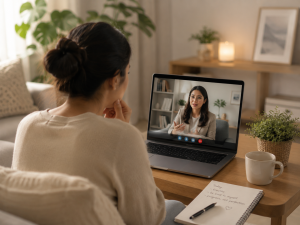
If you are actively exploring how to improve self worth, know that finding the right support can help. Engaging with an online therapist offers you space to unpack comparison, identity pressure, and emotional patterns shaped by social media.
In other words, online therapy can provide reliable structure and guidance as you work toward a more grounded sense of self.
When Social Media Becomes Harmful to Your Sense of Self
Social media becomes harmful when it stops being a tool and starts being a measure. If your worth begins to depend on the number of likes, comments, or followers you have, you will start to feel emotionally unstable when those numbers change.
This is especially true during times of transition, loss, or emotional vulnerability. Social media can intensify your feelings of isolation, self-doubt, and loneliness when it replaces meaningful connections.
When your attention becomes tied to constant evaluation, it can increase stress hormones and reduce your ability to rest. Over time, your nervous system learns to stay on alert, waiting for feedback. This makes it harder to feel safe in your own identity.
Balancing Social Media With Healthy Self-Worth
To protect your self-worth, consider enforcing a greater balance between your online and offline life. Your identity is formed through relationships, values, purpose, and internal truth – not through digital validation.
You can practice this balance by:
- Setting specific time limits for social media use
- Following accounts that reinforce your values
- Limiting content that you recognize triggers comparison
- Practicing gratitude and self-compassion
- Engaging in meaningful real-life connections
These actions don’t eliminate social media’s presence entirely. Instead, they reduce the algorithm’s power to shape your self-worth.
Key Takeaways: How Social Media Affects Self Worth
- Social media increases comparison and self-criticism
- Algorithms reward attention, making it feel transactional
- Self-worth improves through truth, connection, and grounding offline
- Online therapy can help rebuild your identity beyond validation
Moving Forward With Specialized Support
If you find that social media consistently affects your self-worth in ways that feel heavy, you don’t have to navigate this alone. Talking with a specialized online therapist can help you understand the unique patterns of comparison, identity performance, and validation-seeking that shape your emotional experience.
Online therapy offers a structured, compassionate space in which you can learn how to improve self worth in a digital age. Our specialized online therapists can help you strengthen your internal sources of value, develop healthier boundaries, and rebuild a sense of identity that isn’t dependent on likes or approval.
You deserve tools that support both your emotional health and your ability to engage with social media intentionally. With the right support, you can learn to use social media as a tool rather than letting it become the place where your value is decided.
Schedule an appointment with Makin Wellness today to begin strengthening your self-worth, reclaim your identity, and create healthier boundaries with social media. You don’t need to carry the weight of comparison alone, and you are allowed to seek support as you move forward.