
Retroactive jealousy is a pattern of intrusive thoughts and emotional distress centered on a partner’s past romantic or sexual relationships, even when those relationships pose no current threat.
When you first start dating someone, it is perfectly normal to want to know about their past relationships. In fact, it can be very important to know how long their previous relationships lasted, why they ended, and the ups and downs of those relationships. This can give you insight into how the other person communicates, their stance on relationships, as well as any healthy or unhealthy behavior patterns.
Even so, there are healthy limits to this discovery process – and crossing into retroactive jealousy is one that can actively harm your current relationship.
We will explore what retroactive jealousy is, its possible causes, why it can be harmful to both you and your partner, and how to get over it.
What is retroactive jealousy?
Although it would be hard to find someone who is not familiar with the idea of jealousy, you may not have heard of its retroactive variety. If jealousy is seeing something or someone as a potential threat to your relationship, what is retroactive jealousy, and how is it different?
The simplest way to think of retroactive jealousy is: holding a feeling of jealousy about your loved one’s past romantic relationships. Although it is not an official mental health disorder, it could be considered a subtype of obsessive-compulsive disorder (OCD).
It is characterized by obsessive thoughts, at times combined with compulsive behaviors, about previous relationships your boyfriend or girlfriend had, whether or not they are an actual threat to your current one.
For example, you might have intrusive thoughts where you worry about how your significant other’s exes could easily pop up in your life and cause issues between the two of you, or even try to win your partner back.
Some of the ways retroactive jealousy can show up include:
- asking questions repetitively about your partner’s past relationships,
- searching the internet for information on your partner’s exes,
- comparing yourself to your partner’s ex, regardless of whether that comparison is based on factual or fictional information,
- creating fake profiles to stalk their exes on social media,
- excessively thinking about your partner’s past romances and not being able to stop, and
- imagining elaborate scenarios about what you might say or do if you were to encounter one of your significant other’s exes.
Key traits of an introvert
You may be an introvert if you:
- Prefers solitude or small groups: Large gatherings can feel overstimulating, while quiet time alone or with a close friend brings calm.
- Reflective and introspective: Introverts enjoy thinking profoundly and exploring their thoughts and ideas.
- Good listeners: Introverts are usually attentive listeners, which makes them wonderful friends and confidants.
- Observant: Introverts often notice details others might miss, making them thoughtful and perceptive.
An introvert is not shy or antisocial; you find peace and restoration in calm environments rather than high-energy settings. Introversion is a natural way of experiencing the world, and learning to embrace this part of yourself can help you find ways to recharge and flourish.
What can cause retroactive jealousy?
There are various reasons you might be experiencing retroactive jealousy. Some may have to do with a mental health diagnosis, or it might be a result of your past experiences, or poor coping skills.
Some connected mental health disorders might include:
- bipolar disorder,
- anxiety,
- borderline personality disorder (BPD), or other personality disorders, and
- obsessive-compulsive disorder (OCD).
Retroactive jealousy does not necessarily need to be related to a mental health disorder; it could be caused by:
- Past experiences: Perhaps you have been burned by partners who did, in fact, reconnect with old flames.
- Insecurity: Insecurity can develop when people who were important to you habitually let you down. You might carry this into future relationships, romantic or otherwise.
- Low self-esteem: Low self-esteem can lead you to believe you are not worthy of love, and that the people you love will notice that and leave you. This belief can lead you to be jealous of others your loved one connects with.
- Sensitivity to rejection: Being sensitive to rejection can compel you to actively look for signs of rejection in your current relationship. You may experience perceived rejection and assume that the “rejection” was due to your partner reconnecting with an ex.
- Anxious attachment style: If you have an anxious attachment style, you are likely more prone to anxiously overthinking anything that could go wrong in your relationships.
Retroactive jealousy often develops when your brain tries to create certainty in emotionally unsafe situations. When attachment needs feel threatened, your mind searches the past for clues, even when those clues are no longer relevant.
How retroactive jealousy can hurt both people in the relationship
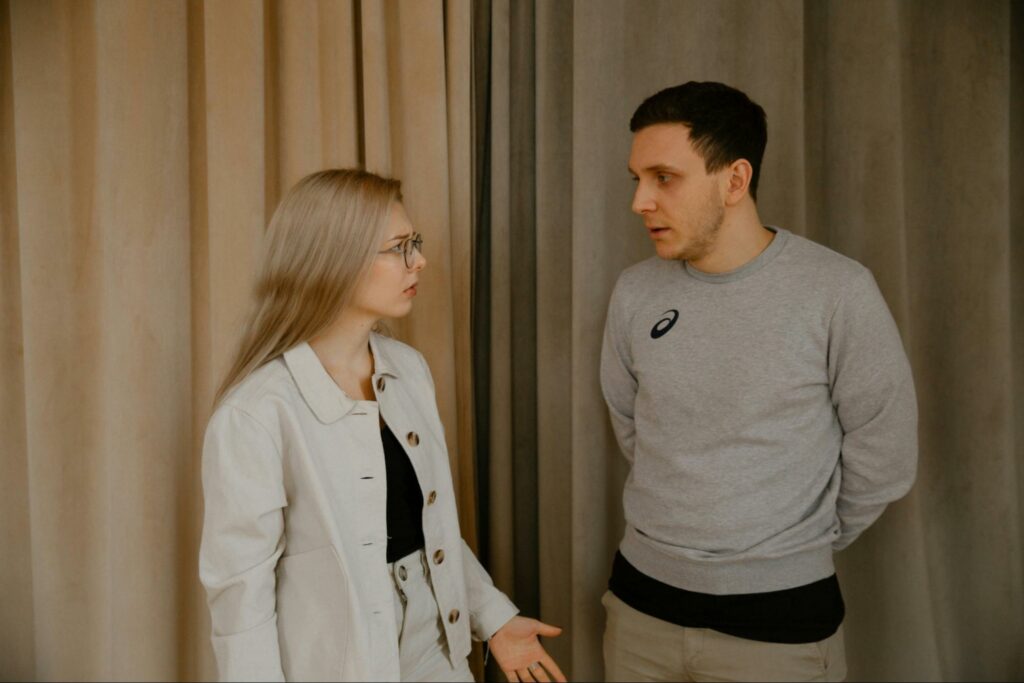
Struggling with retroactive jealousy can be harmful, both for you and your partner. Over time, it can take a toll on your mental health. When you act out of increased anxiety, that can also trigger anxiety for your loved one. For instance, if you constantly ask them about their past relationships, your partner might begin to feel anxious about having conversations with you altogether.
Ruminating on these kinds of thoughts can make you emotionally absent in your relationship. You might spend so much time thinking about your partner’s previous relationships that you don’t actually spend quality time with your partner. This could leave them feeling like you are pushing them away, creating a self-fulfilling prophecy if they then decide to end the relationship.
Additionally, if you are consistently questioning your loved one’s motives and actions, that will probably reduce the trust between the two of you. This can lead to more fights and arguments, gradually eroding your relationship over time.
Finally, obsessively focusing on your significant other’s past relationships, especially when they don’t give you a valid reason to, leaves you spending your time and energy on something that does not move your relationship forward. You may think you are working to “prevent” something bad from happening; the reality is, that behavior is unlikely to improve your union.
How to get over retroactive jealousy
If you can recognize yourself in these descriptions, it’s time to decide if you want to change. Once you choose to address these thought patterns, the next step is to determine exactly how to get over retroactive jealousy.
Please know there is hope for your mental health and the beautiful relationship you share with your loved one. Even though it may not be easy, here are four options to get you started on your path to a healthier relationship.
1. Come to terms with your loved one’s past
We all have a past. Be it good or bad, minimal or extensive, simple or messy, you and your partner both lived different lives before you got together. Grounding yourself in this reality, especially when he or she is not showing signs of cheating or being interested in anyone else, can be a good starting point.
2. Monitor your behaviors
If you tend to engage in jealous behaviors like following your loved one’s exes on social media, searching his or her drawers, or continually asking questions about your partner’s past relationships, you might find it beneficial to intentionally reduce those behaviors. For example, curtailing or even stepping away from social media can limit your access to his or her previous partners, creating an ‘out of sight, out of mind’ situation for you.
Of course, simply stopping these behaviors could leave you with anxious thoughts and no obvious outlet. That’s why it’s important to replace that space with healthy activities – to find that outlet.
Everything from journaling to exploring a new sport, to auditing a community college course could provide you with a healthy distraction from your unhealthy thoughts and maybe help you develop some new skills as well.
3. Communicate with your loved one
Communication is key. Making space for heartfelt conversations about what you’re feeling, why you might be feeling that way, and your desire to reframe unhealthy thought patterns could set the stage for better conflict resolution in the future.
Also, communicating clearly when you have concerns about your partner’s behavior may offer an opportunity to address your concerns openly. This could help you avoid obsessively thinking about what the behavior might mean by finding out exactly why your significant other did what they did.
To illustrate this point, rather than jumping to conclusions if you see your loved one spending more time talking with a coworker of the opposite sex, talk to them. Explain to them that you feel uncomfortable with this, as well as the reasons why. If this type of conversation usually leads to an argument, consider having a third party, like a mutual friend or online therapist, act as a mediator.
4. Process your feelings with an online therapist
Sometimes it can be challenging to tell when your thoughts and actions are appropriate and when they stem from retroactive jealousy. This is where talking to a specialized online therapist could really help.
If retroactive jealousy begins to interfere with daily functioning, emotional safety, or trust in your relationship, professional support may be necessary. Persistent rumination, compulsive checking behaviors, or intense anxiety are signs that therapy could help.
Online therapy doesn’t just give you a chance to get your feelings out in the open; it can also provide you with an unbiased, external viewpoint.
Cognitive Behavioral Therapy (CBT) in particular could help you reframe your thoughts and any corresponding behaviors. CBT is designed to help you understand your thoughts and emotions, with the goal of replacing unhealthy ones with healthy ones. Replacing obsessive thoughts could also decrease any harmful behavior.
You might also consider online couples therapy. Having therapy sessions with your loved one may help them see how you are working to make changes, and it may also enable your online therapist to observe how you interact with each other. All of this can help to improve your relationship.
Where to find help
After reading through the options laid out in this article, you may recognize that retroactive jealousy is not something you feel capable of handling on your own. At Makin Wellness, we are committed to helping you move toward a healthier relationship with your loved one.
We offer impartial online therapy to help you process your thoughts, attachment style, and relationship patterns.
Online therapy provides a safe, personalized space to:
- Learn why you might be prone to retroactive jealousy;
- Practice evidence-based techniques, like CBT, with professional guidance;
- Establish healthier thought patterns; and
- Set relationship goals that reflect your values.
You deserve to find peace in your relationship. Your Makin Wellness online therapist is here to help when you’re ready.
If you are unsure whether online therapy is right for you, don’t worry, your online therapist can help answer any questions you have.
Simply call us at (833)-274-heal or click here to schedule an appointment with one of our caring online therapists today.