
Have you ever found yourself doing or saying something in a group that didn’t quite feel like you? Maybe it happened in an emotionally charged moment online, in a friend group, at work, or during a public event. At the time, your behavior felt justified, even necessary. Later, though, you looked back and wondered if you crossed a line you normally wouldn’t.
If so, you’re not alone. This experience is far more common than many people realize, and psychology offers a clear explanation for it: deindividuation.
So, what is deindividuation, and why does it matter so much in modern life?
Deindividuation describes a psychological process in which you become less aware of yourself as an individual and more absorbed into a group identity. As self-awareness and personal accountability fade, your behavior becomes guided less by internal values and more by group emotion, norms, and momentum.
In this article, we’ll explore the meaning of deindividuation, how it works, how it can influence you in destructive ways – both in large-scale and small-scale situations – and how to recognize and protect yourself from being influenced to act in ways that don’t align with what’s best for you and the people around you.
Deindividuation Meaning: What Is Deindividuation?
To fully understand deindividuation, it’s important to move beyond the idea that it’s simply about “losing control” or “mob mentality.” Deindividuation is not about becoming irrational or unintelligent. Instead, it’s about a shift in your attention and identity.
In psychology, deindividuation occurs when your:
- Self-awareness decreases;
- Individual identity becomes less prominent;
- Group identity becomes more dominant, and
- Personal responsibility feels diffused.
When this happens, you are more likely to act based on emotion, instinct, or perceived group approval rather than reflective judgment.
A widely cited study published in Psychological Review and indexed by the National Library of Medicine (PubMed) explains that deindividuation reduces self-regulation by weakening the internal cues that normally guide behavior, such as your personal values, moral standards, and concern for consequences.
According to this research, when you feel less identifiable (connected to your sense of self) and more immersed in a group, you become more responsive to situational cues rather than your internal standards.
This helps clarify what deindividuation is at its core: it’s not the disappearance of your morality; instead, it is the temporary suspension of self-guided moral regulation.
How Deindividuation Separates You From Your Values
One of the most important things to understand about deindividuation is how quietly it can occur. It doesn’t usually announce itself with extreme behavior. Often, it begins with subtle internal shifts.
You may notice:
- A reduced concern for how your actions reflect on you personally;
- A stronger focus on group approval or alignment;
- Justifying your behavior because it feels emotionally right in the moment, and
- Less empathy for people outside your group.
According to the PubMed-reviewed research we mentioned earlier, this reduction in self-awareness plays a central role in behavior change. When your attention turns outward – toward the group, the crowd, or the situation – your internal self-monitoring weakens. This makes it easier for you to cross boundaries that normally feel firm.
Importantly, deindividuation doesn’t usually feel wrong while it’s happening. In fact, it often feels right because group consensus creates a powerful sense of moral certainty. This is why you might later feel shocked by your own behavior once your self-awareness returns.
Deindividuation in Modern Culture
Modern culture creates ideal conditions for deindividuation.
Large social movements, emotionally charged news cycles, online platforms, and constant social comparison all increase the likelihood that you will operate from a group identity rather than individual reflection. Anonymity, especially online, can further reduce your accountability and self-focus.
Research from Stanford University, including analyses of the Stanford Prison Experiment and related work, demonstrates how quickly ordinary individuals can adopt behaviors aligned with assigned roles and group norms when personal identity is minimized.
The original Stanford Prison Experiment, in particular, showed that when you are placed in environments that reduce your individuality and emphasize group roles, your behavior can shift dramatically in ways that surprise you and everyone else involved.
These findings are especially relevant today, as many social environments, both digital and physical, reduce your individuality while amplifying emotional intensity.
Large-Scale Deindividuation: When Groups Cause Harm

On a large scale, deindividuation is often discussed in the context of riots, violent protests, or mass aggression. These events can leave you asking, How could so many individuals participate in something so harmful?
Modern psychological research offers a clear answer.
When you are surrounded by others who share the same emotional energy, your personal responsibility can feel diluted. Another key finding from the PubMed-indexed research on self-awareness and behavior regulation we highlighted at the beginning of this article was that anonymity and group immersion reduce the psychological mechanisms that normally inhibit your aggression or other harmful actions.
In these moments, you are not acting as an isolated individual; you are acting as part of a collective identity. Compassion for outsiders diminishes, and moral reasoning becomes aligned with group emotion rather than your individual ethics.
This does not mean you are inherently violent or malicious. It means the conditions for deindividuation have overridden your self-regulation.
Small-Scale Deindividuation: Friend Groups and Everyday Life
While large-scale events are dramatic, deindividuation often causes more subtle harm in everyday settings.
In your friend groups, workplaces, or social circles, deindividuation can show up as:
- Participating in gossip that targets someone unfairly;
- Laughing along with harmful jokes to avoid standing out;
- Excluding someone to preserve group cohesion, and
- Going along with decisions that conflict with your values.
In these situations, the cost of resisting the group feels higher than the cost of self-betrayal. Over time, this pattern can erode your self-trust and emotional integrity.
Research suggests that when your self-awareness is repeatedly overridden in group contexts, you may experience internal distress, even if you can’t immediately name it. This distress often shows up as guilt, shame, or a lingering sense of discomfort after group interactions.
The Science Behind Deindividuation and Self-Awareness
The PubMed-reviewed study concludes that self-awareness is the critical variable in regulating your behavior. When your self-awareness is high, you are more likely to act in accordance with your values. When it is low, your behavior tends to become situationally driven.
Similarly, the Stanford research demonstrates that environments which reduce your individuality – uniforms, anonymity, strong group roles – can dramatically shift behavior without any change in your underlying personality.
Together, these studies reinforce a key point: deindividuation is not a personal flaw. It is a predictable psychological response to certain conditions.
This is why your self-awareness matters so deeply. Even if you cannot eliminate deindividuation entirely, you can recognize it and reduce its influence on you.
What Deindividuation Means for Your Mental and Emotional Health
From a mental health perspective, deindividuation can quietly undermine your emotional health.
When your actions in groups consistently conflict with your personal values, you may experience:
- Increased anxiety or emotional tension;
- Difficulty trusting your own judgment;
- Emotional numbing or detachment; and
- Shame after social interactions.
Repeated suppression of self-awareness can weaken your emotional regulation over time. When your behavior is guided primarily by external cues rather than internal alignment, you are likely to feel less grounded and more reactive.
Maintaining self-awareness within groups supports emotional stability, integrity, and compassion, for both yourself and others.
Common Misconceptions About Deindividuation

Myth 1: Deindividuation only happens in extreme crowds.
In reality, it can occur in any group setting where a desire for belonging outweighs your moral compass.
Myth 2: Strong-willed people are immune.
Research shows that deindividuation is more situational and less of an individual personality weakness.
Myth 3: Deindividuation always leads to harm.
Group identity can amplify healthy behavior as well, though this is true only when you maintain your personal awareness and morals.
How to Recognize When You’re Being Influenced
Recognizing deindividuation starts with noticing internal cues.
You may be under its influence if:
- You feel swept up emotionally;
- You stop questioning your group’s behavior;
- You justify your actions solely because others approve, or
- You feel disconnected from your usual values.
Helpful grounding questions include:
- Would I do this if I were alone?
- Would I stand by this decision later?
- Am I acting from conviction or pressure?
These questions can restore your self-awareness, the key psychological factor identified in research as protecting against harmful behavior.
Building Self-Control and Healthy Boundaries
Once your self-awareness returns, boundaries become possible.
Healthy boundaries may include:
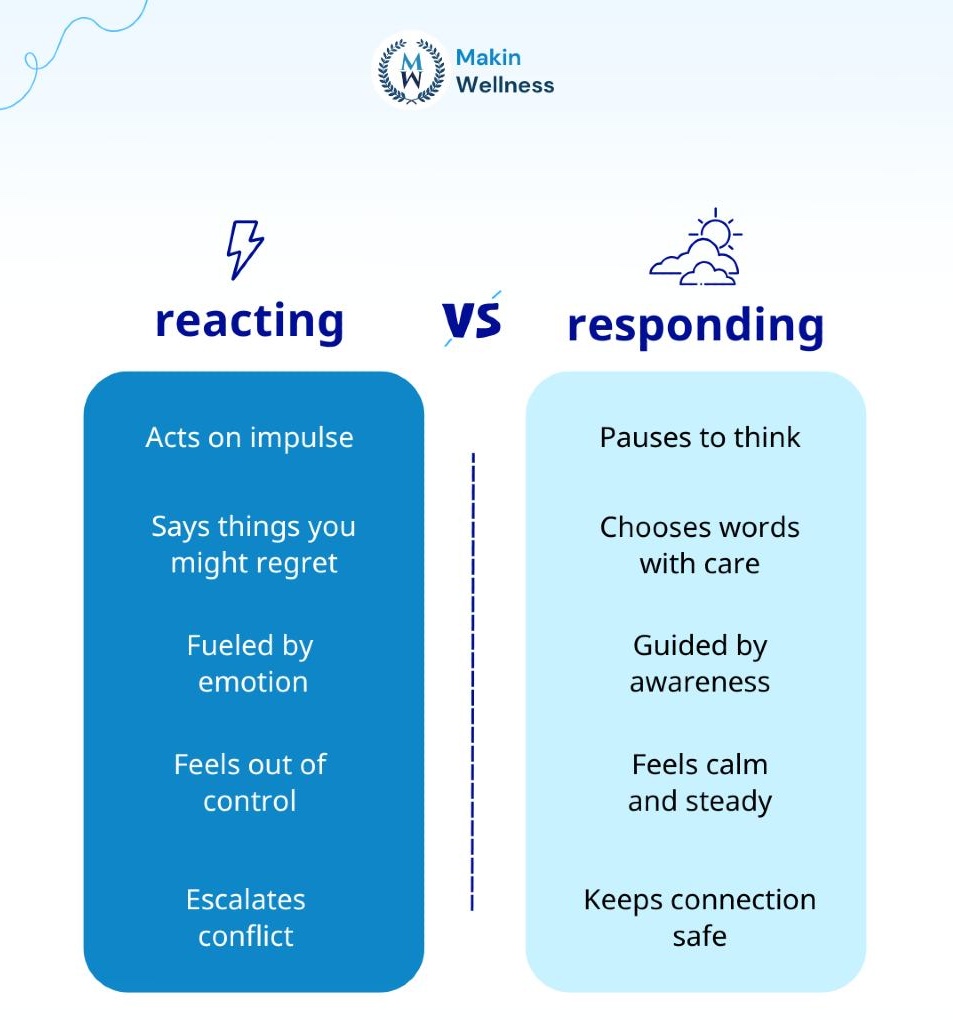
- Pausing before reacting;
- Stepping away from emotionally charged situations;
- Choosing not to participate, even quietly, and
- Accepting temporary discomfort to protect your integrity.
Self-control is not about moral superiority; it’s about alignment. It’s choosing behavior that reflects who you are, not just who you’re with.
Why Self-Awareness Matters More Than Ever
In a world shaped by social pressure, emotional amplification, and group identity, deindividuation is increasingly common.
Self-awareness allows you to:
- Participate without losing yourself.
- Belong without abandoning compassion; and
- Engage without surrendering your responsibility.
Understanding deindividuation gives you back agency. It allows you to move through groups with clarity, empathy, and self-respect.
You Don’t Have to Navigate Deindividuation Alone
If you’ve noticed patterns of self-abandonment in groups, difficulty setting boundaries, or discomfort with past behavior, seeking support through online therapy can help.
At Makin Wellness, our online therapists can help you strengthen your self-awareness, emotional regulation, and personal boundaries, especially in complex social environments.
You don’t have to feel internally conflicted forever. Let’s explore how to stay grounded and compassionate, no matter the crowd or situation. Call us at (833)-274-heal or click here to schedule an appointment with one of our caring online therapists today.