
Fearful avoidant attachment is an attachment pattern where you deeply desire close relationships while also feeling afraid of them. If this sounds familiar, know this from the very beginning: these patterns often develop for understandable reasons, and they are not permanent. Through greater self-awareness, supportive relationships, and online therapy, you can gradually move toward more secure, peaceful ways of relating to others.
Imagine a little girl on a swing. At first, she laughs as she pumps her legs higher into the air. The rhythmic motion feels exciting, comforting, and familiar. Her body adjusts to the back-and-forth movement until it almost feels effortless.
At the same time, something else is happening. The faster she swings, the harder it becomes to see the world around her. The flowers beneath her become a blur. The grass she could have explored is just out of reach. She can’t stop to examine the tiny clover blossoms, watch a ladybug crawl across a leaf, or feel the solid ground beneath her feet because she’s constantly moving between one extreme and the other.
For many women, fearful avoidant attachment feels a lot like that swing.
Part of you moves toward love. You want to love and be loved, understood, and feel safe with another person. At the same time, another part moves away from it. Love feels overwhelming, risky, even dangerous. And all the while, everything starts to feel like a blur. It’s overwhelming and isolating to have this internal conflict.
When your earliest relationships taught your nervous system that love and uncertainty often arrived together, emotional unpredictability can begin to feel really normal. Even though most people don’t want to live on that swing, if you’ve been on it long enough, your nervous system confuses it with being normal, safe even.
The encouraging news is that your story does not have to end there. You can get off the swing of fearful avoidant attachment.
Is fearful avoidant attachment the same as disorganized attachment?
Let’s clear something up quickly: If you’ve been researching attachment styles online, you’ve probably noticed another term appearing alongside fearful avoidant attachment: disorganized attachment style.
Researchers often use disorganized attachment to describe attachment patterns in infants and young children. As those children grow into adulthood, the term fearful avoidant attachment more accurately describes how those same patterns tend to appear in adult relationships. So, they are close, yet not interchangeable terms. The biggest difference is the age of the person experiencing the attachment style. In other words, the names have changed because the kinds of relationships have changed.
What is fearful avoidant attachment?
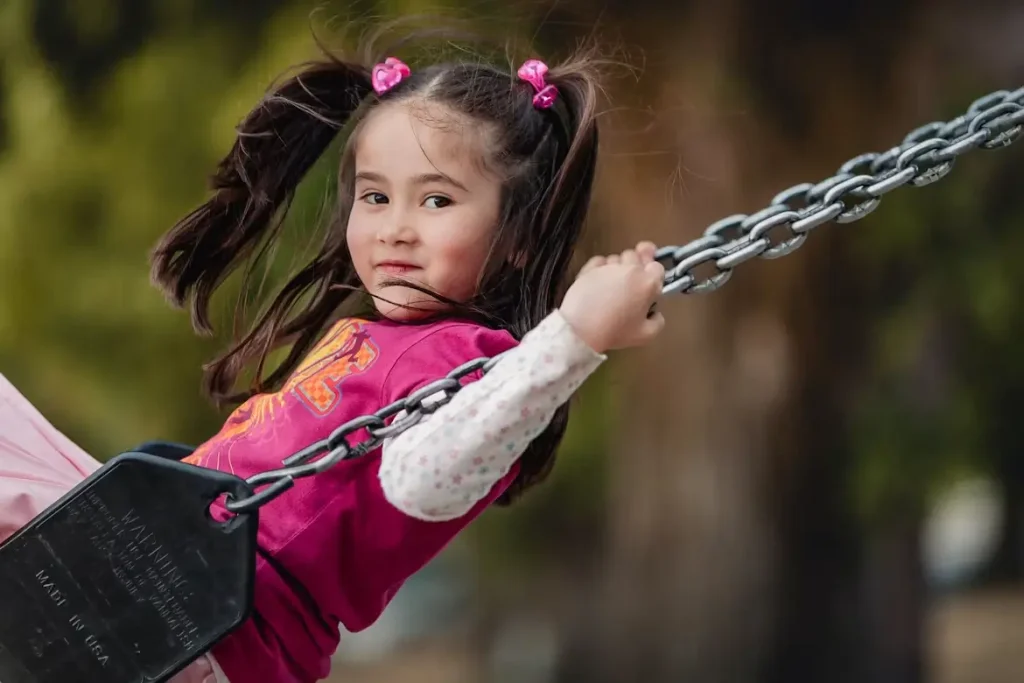
Fearful avoidant attachment is an insecure attachment style in which you deeply desire connection while also fearing the emotional closeness that relationships require. You may find yourself wanting intimacy, trust, and commitment while simultaneously feeling an urge to protect yourself by withdrawing, questioning the relationship, or expecting rejection.
When addressing attachment styles in relationships, we have described healthy relationships as a nest.
A nest is a place where you can rest before exploring the world. It provides safety without keeping you trapped. It offers comfort without preventing growth. Birds don’t spend their entire lives inside the nest. They return to it because they know it’s safe, and then fly off again to explore and live full lives.
Fearful avoidant attachment often feels like the opposite experience. Instead of resting securely in the nest, it can feel as though you’ve spent years riding that emotional swing.
You move toward connection… And then you swing away from it.
Why? Usually, because there wasn’t a safe, consistent nest for you to land in when you were growing up. Take, for instance, a little girl who grows up with a dad who comes home from work , excitedly asking her about her day, taking her to the park, and making eye contact. Then, the next day, he gives her the cold shoulder, ending the evening by yelling at her.
That little girl learns that whatever nest she does have isn’t always safe. So, when she grows up, it can be really hard for her to connect even though she would like to.
The question is this: “What did your nervous system learn about love?” If you learned that love is unpredictable, then this feeling of constantly being on a swing starts to make sense. Thankfully, just like a child can start to slow the swing down and hop off to explore, you too can get off the swing of fearful avoidant attachment, even if that’s what your nervous system has become used to.
What online therapists often notice
One of the most common misconceptions people bring into online therapy is this:
“I’m afraid that I’m just too broken for a healthy relationship.”
Interestingly, a pattern that online therapists often notice is that people with fearful avoidant attachment usually care deeply about relationships. As a result, they actually have a lot of potential to develop strong relationships.
They aren’t afraid that they are too broken for a healthy relationship because they don’t value love. They’re afraid because the love that they value has often felt unpredictable.
Over time, many clients begin discovering something incredibly freeing: They weren’t sabotaging relationships because they wanted chaos. Their nervous system simply recognized chaos as more normal than calm.
Imagine spending years on that swing. Eventually, the motion stops feeling unusual. It starts feeling normal. Once you get off, the solid ground beneath your feet – the very thing that would allow you to freely run, laugh, explore, and rest – can initially feel unfamiliar (and therefore unsafe) simply because you’ve spent so long adapting to movement.
That’s why online therapy is rarely about forcing you to “jump off the swing.” After all, if someone abruptly stopped a child swinging as fast as she possibly could, she’d likely stumble, become frightened, or even get hurt.
Instead, caring adults instinctively slow the swing. Little by little. The blur begins to clear. Your breathing settles. Your stomach no longer feels like it’s dropping. Eventually, you notice something you couldn’t really see before. The beauty around you becomes clear, and you are filled with wonder. Then you step onto the ground to explore.
In many ways, that’s what growth often looks like with fearful avoidant attachment. Not forcing yourself to trust faster. Not pretending your fears don’t exist. Simply allowing your nervous system enough safety, enough consistency, and enough compassion that it gradually discovers it no longer has to live in constant motion.
Why can love feel both safe and scary?
So, let’s dig a little deeper. If you have fearful avoidant attachment, one question may have resurfaced over and over again: “Why do I want love so much if it also frightens me?”
The answer often begins long before your first date, your first heartbreak, or even your first friendship. It actually begins with the way your nervous system learned what love felt like.
As a child, your brain was constantly asking questions like:
- Is someone coming when I need comfort?
- Will they still be here when I’m upset?
- Can I trust the people who love me?
- Is it safe to need someone?
Every interaction that you had with your caregivers forms the answers to those questions in your heart and mind.
When caregivers are generally responsive, emotionally available, and willing to reconnect after moments of disconnection, children often begin building what we described in our attachment styles article as a secure nest. They gradually learn that relationships can be a place of comfort, safety, and encouragement. That provides children with the ability to form a secure attachment.
For some children, the answers are much more confusing, like the experience of the little girl we shared with you earlier.
Perhaps one of your caregivers struggled with addiction, untreated mental health concerns, overwhelming stress, unresolved trauma, or emotional inconsistency. Maybe their affection for you came one day, and was distant the next. Perhaps your home felt peaceful until it suddenly didn’t.
So, your little nervous system quietly begins writing a story: “Although my mom scares me sometimes, I know she loves me too; that means others who love me will also frighten me.”
Those lessons often become the emotional language you carry into adulthood. You didn’t choose them. They were the reality that you grew up in. If that sounds familiar to you, know that you can break free into a new reality where consistent, faithful love from both parties is possible.
You are no longer the little girl on the swing
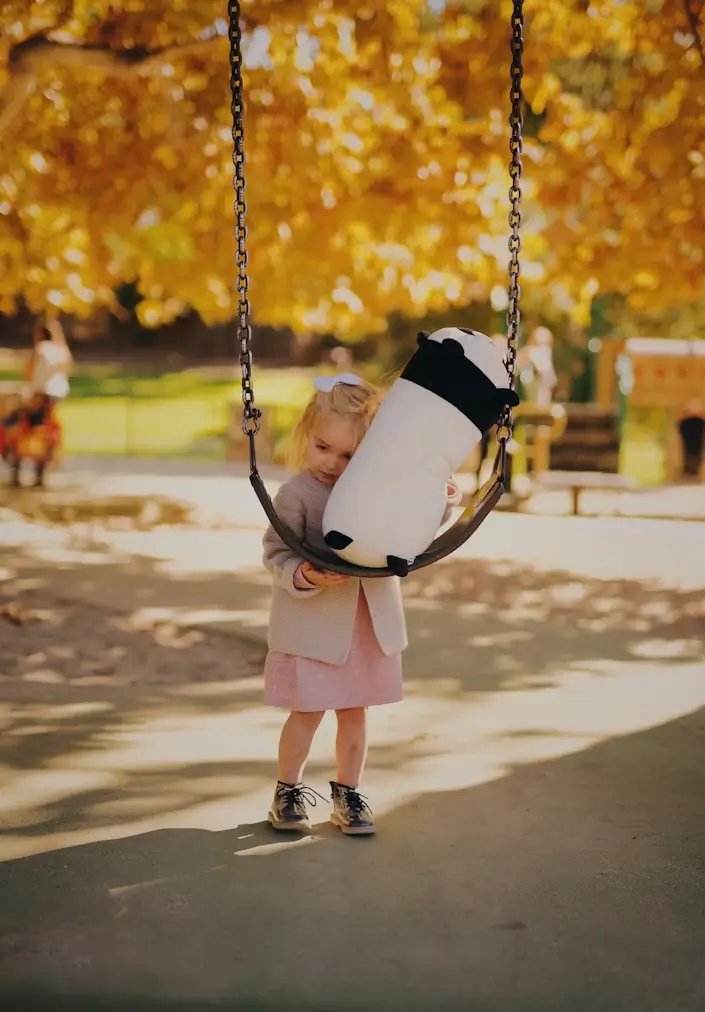
This may be one of the most important truths of this entire article: as a little girl, you didn’t get to choose the environment that shaped your nervous system. Today, you have choices that your younger self never had.
- You can build trustworthy friendships one day at a time.
- You can learn about attachment (hey, you’ve already taken that step!).
- You can take breaks and have boundaries with loved ones whose behavior makes you want to get back on the swing.
- You can discover hobbies that bring genuine joy and help you to feel like yourself instead of providing a temporary escape.
- You can join a support group (like Al-Anon if a caregiver’s alcoholism impacted their ability to always show up for you).
These steps gradually invite your nervous system into a new rhythm where connection doesn’t have to compete with fear.
Researchers often explain this ability to invite your nervous system to change through neuroplasticity: your brain’s remarkable ability to continue forming new pathways throughout life.
For many years, scientists believed the brain became relatively fixed after childhood. Today, we know something much more hopeful. Your brain keeps learning. That means that even if you grew up with disorganized attachment, you can grow past it into security.
The little girl who spent years riding the swing can finally place both feet on solid ground, look around with fresh eyes, and begin exploring the beautiful world that has been waiting for her all along.
Three gentle steps toward secure attachment: from the swing to solid ground

Every person’s journey is unique.
Even so, you may find that this pattern is helpful for you:
1. Notice your rhythm
Instead of criticizing yourself for your reactions (which actually increases your stress and anxiety), begin just noticing them. Sit with them gently and calmly.
Ask yourself:
- When do I feel the urge to pull away?
- What situations make me question someone’s love?
- What does my body feel like when I begin protecting myself?
Awareness is one of the first steps toward lasting change.
2. Slow the swing
You don’t have to force yourself into vulnerability before your nervous system is ready.
Instead, practice creating small moments of safety. Reach out to that friend who always seemed to have your back and see how she responds. Journal your thoughts about a friendship you once had. Take time after seeing people to reflect and ask yourself where fearful avoidant attachment may have colored the picture.
Every safe experience becomes another opportunity for your brain to learn a healthier rhythm.
3. Begin exploring again
One of the quiet tragedies of fearful avoidant attachment is that so much emotional energy goes toward surviving your relationships that there is very little left for simply enjoying life.
As the swing begins slowing, something beautiful happens: you begin to see an unblurred world, full of possibilities for your delight. Maybe you’ve always wanted to join a book club. Take an art class. Start hiking. Make a garden. Travel somewhere new.
These things don’t distract you from your emotional health. They can actually improve it. They remind you that your identity is so much bigger than your attachment style. Your story has never been only about surviving relationships. It’s also about discovering who you are, what brings you joy, and how uniquely you’re able to love the people around you.
That’s a life worth exploring.
Your freedom doesn't depend on someone else changing
You may be reading this and think to yourself, “I can’t change until he/she changes!” While that’s a common belief we see, the truth is that sometimes relationships do become healthier… and sometimes they don’t.
You have every right and the ability to get freedom from fearful avoidant attachment before anyone else around you chooses to. You have choices now. As a child, you couldn’t decide who raised you.
Today, you can choose who influences your life. You can choose relationships that encourage growth. You can choose healthy boundaries. You can choose a supportive community. You can choose to keep growing, even if someone else in your life chooses not to.
You can get off the swing even when the people around you are not ready to yet.
Another angle: Rapunzel's tower

If you’ve ever watched Tangled or read the story of Rapunzel, you may remember that Rapunzel believed that the tower was protecting her. She had spent her entire life hearing that everything beyond its walls was dangerous (think of the song ‘Mother Knows Best’ and you get the picture).
Rapunzel wasn’t foolish for believing Mother Gothel. She had never been given another story.
Fearful avoidant attachment can create something similar.
If unpredictability has always accompanied your experience of love, emotional caution can start to feel like wisdom. Distance begins feeling protective. Guarding your heart from other people feels responsible.
Then, as life moves on, the same walls that once protected Rapunzel eventually kept her from experiencing friendship, purpose, adventure, and authentic love. In much the same way, emotional walls that once protected you can eventually begin limiting the life and relationships you truly long for.
The crown you get to pass on

One of the most beautiful moments in Tangled isn’t when Rapunzel leaves the tower. It’s what happens afterward. If you’ve seen the movie, all we have to remind you of is the Ugly Duckling Tavern, and you’ve got the picture.
She becomes a joyful inspiration to everyone she meets. Her world becomes larger because her fear no longer defines its boundaries. In fact, at the end, she is able to step into her role as a ruler. She brings goodness and beauty to everyone around her.
Conversations about attachment often focus on what gets passed from one generation to the next. You may wonder if your mother’s anxious attachment style will be passed on to your daughter. You may have been troubled by the nagging thought that your husband’s avoidant attachment style is feeding your fearful avoidant one and impacting the kids.
The truth is, though, that as you step off the swing and out of your tower, you have something very precious to pass on to your family for generations to come. As you continue growing, you’re building something precious. Healthy boundaries, honest conversations, gentle apologies, and taking time to care for yourself are all an inheritance for your children.
And that inheritance is not another burden – it’s a crown.
In getting out of that tower, Rapunzel was able to become free and rule well. Her children would not inherit that tower, her burden. They would inherit her crown.
You may have inherited relationship patterns that made life feel confusing. You are also capable of passing forward emotional security, wisdom, compassion, courage, and hope.
That inheritance is priceless.
Key takeaways
- Fearful avoidant attachment often develops when love and unpredictability become closely connected during childhood.
- These relationship patterns are understandable, and they are not permanent.
- Your nervous system learned a rhythm that once helped you survive. It can also learn a healthier one.
- Lasting growth usually happens through repeated experiences of safety, consistency, and connection rather than dramatic overnight change.
- Online therapy, healthy boundaries, trustworthy relationships, and supportive community can all help you move toward greater emotional security.
- Your story is about more than what was passed down to you. It is also about the beautiful inheritance you have the opportunity to pass forward.
When online therapy can help
If fearful avoidant attachment is affecting your relationships, you don’t have to figure everything out on your own.
Working with an online therapist for avoidant attachment can help you better understand where these relationship patterns began, identify what your nervous system has been trying to protect you from, and gradually develop healthier ways of relating to yourself and the people you love. You can get off the swing and out of the tower.
If you and your partner want to get off the swing together (you find yourselves caught in the same misunderstandings or emotional cycles), online couples therapy can provide a supportive place to better understand one another’s attachment styles, strengthen communication, and build greater emotional safety together.
At Makin Wellness, our specialized online therapists understand that attachment isn’t about labeling you. It’s about helping you experience relationships with greater confidence, peace, and freedom.
Further reading
Fearful avoidant attachment FAQs
Yes. Fearful avoidant attachment is generally considered the adult expression of disorganized attachment. Both describe a pattern of wanting close relationships while also feeling afraid of the vulnerability they require.
While the names differ depending on the stage of life being discussed, they refer to the same underlying attachment pattern. As children, this attachment style is often called disorganized attachment. As adults, it is commonly referred to as fearful avoidant attachment. Both involve an internal conflict between the desire for closeness and the fear of being hurt.
Yes. Attachment styles can become more secure over time through self-awareness, supportive relationships, intentional practice, and online therapy. Your brain continues learning throughout life through neuroplasticity.
Every healthy relationship, repaired conflict, trustworthy connection, and healthy boundary gives your nervous system another opportunity to develop new expectations about relationships. While change doesn’t happen overnight, many people discover that consistent support and intentional growth help fearful avoidant attachment become increasingly secure over time.
Absolutely. Many people with fearful avoidant attachment build deeply healthy and fulfilling relationships. The goal isn’t to become fearless before loving someone. It’s learning how to build safety while you grow.
As you better understand your attachment patterns, communicate openly, establish healthy boundaries, and develop greater emotional awareness, relationships often become more secure and satisfying. Working with an online therapist can also help you recognize old patterns and practice healthier ways of connecting with others.
If you have fearful avoidant attachment, your nervous system may associate emotional closeness with both comfort and potential pain. Pulling away is often a protective response rather than a sign that you don’t care.
Many people with this attachment style long for intimacy and connection while simultaneously feeling overwhelmed when relationships become emotionally close. As you develop greater self-awareness and experience healthier relationships through supportive connections and online therapy, those protective responses often become less automatic.
Several forms of online therapy can help fearful avoidant attachment, including attachment-focused therapy, trauma-informed therapy, cognitive behavioral therapy (CBT), mindfulness-based approaches, and emotionally focused therapy (EFT). The best approach depends on your unique experiences and goals.
Rather than looking for a single “best” therapy model, it’s often more helpful to find a specialized online therapist who understands attachment and can tailor treatment to your needs. Together, you can create a supportive environment where your nervous system gradually experiences greater emotional safety, trust, and confidence in relationships.