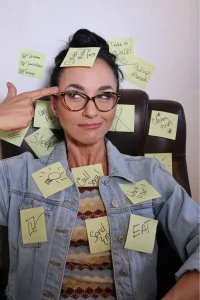
Relationship issues are not always explosive or obvious. Sometimes, they begin quietly, through repeated moments where your needs become smaller, your voice carries less weight, and love starts feeling expected instead of freely given. Over time, unhealthy relationship patterns can lower your self-esteem and leave you feeling disconnected from yourself. Recognizing these patterns can help you strengthen boundaries, rebuild your sense of identity, and move toward healthier relationships where love does not require you to disappear.
This article may resonate with you if…
- You feel emotionally exhausted in your relationship
- You feel guilty setting boundaries
- You replay conversations in your head late at night
- You feel responsible for everyone else’s emotions
- You feel anxious about expressing your needs
- You feel like you have slowly become smaller in your relationship
If that sounds familiar, you are not alone.
Many women experiencing relationship issues are not weak or “too sensitive.” Often, they are deeply caring people who have slowly adapted to unhealthy relationship patterns, so that they now feel trapped and lost in a relationship that once felt life-giving.
If you resonate with this description at all, this article is for you.
What are relationship issues?
Relationship issues are repeated patterns in how you and your partner communicate, connect, and respond to one another emotionally.
Some relationship issues are completely normal: every relationship features stress, misunderstanding, conflict, and seasons where life feels heavy. Loving another person closely will always involve moments of tension.
At the same time, there is a difference between healthy sacrifice and slowly losing yourself.
This article explores how your self-esteem is impacted by relationship issues. This is because your relationships often shape your self-worth, identity, confidence, and emotional health over time.
Healthy love allows you to remain fully yourself while caring deeply for another person. Unhealthy relationship patterns slowly pressure you to lose yourself in order to maintain a connection.
What does it mean when love feels taken instead of freely given?
When love feels freely given, you still feel connected to your voice, identity, boundaries, and emotional needs.
When love starts feeling taken, you may begin prioritizing another person’s emotional needs so consistently that you disconnect from yourself.
This often happens gradually:
- your exhaustion gets overlooked
- your “no” creates guilt
- your emotional labor becomes expected
- your needs feel less important
- your identity slowly revolves around keeping the relationship stable
Over time, this can deeply impact your self-esteem, which is why hearing this reminder is so important: healthy love stretches you; unhealthy love slowly erases you.
You were made for connection, not disappearance

Wanting love, connection, safety, and community is deeply human.
Many women naturally pour enormous emotional energy into the people they care about.
You know, the homeschool mom who literally gave up her lucrative career to teach her kids about the French Revolution, or the devoted future sister-in-law who put together the best bridal shower of all time, or the friend who goes out of her way to drop off an iced lavender latte to an exhausted mama.
And there’s nothing wrong with that. It’s part of what makes life great and beautiful.
You probably genuinely enjoy supporting others, creating warmth, remembering details, or helping people feel loved. That is not a weakness.
The issue begins when love slowly stops feeling chosen. There is a major difference between freely giving love and feeling like you have to constantly give your love.
At first, unhealthy relationship patterns can feel almost invisible. You say yes when you want to say no. You carry more emotional responsibility because it feels easier than conflict. You tell yourself it is “not a big deal.”
Then, one day, you realize you cannot remember the last time you asked yourself what you wanted. Sometimes, relationship issues are not about dramatic fights – they are about the slow erosion of self.
Healthy love vs love that feels taken
Healthy Love | Love that feels taken |
|---|---|
You feel safe expressing needs | You fear disappointing your partner |
Sacrifice feels voluntary | Sacrifice feel expected |
Your identity stays intact | You feel disconnected from yourself |
Boundaries are mutually respected | Boundaries create guilt or tension |
Emotional care flows both ways | You carry most of the emotional labor |
Communication feels safe | You science yourself to "keep the peace" |
Communication issues in relationships
Communication issues in relationships are often one of the first visible signs that something deeper is happening emotionally.
This can look like:
- Avoiding important conversations because you’re afraid of the consequences
- Apologizing constantly (to the point you accidentally apologize for apologizing!)
- Feeling emotionally shut down and not like yourself
- Overexplaining yourself because otherwise you’re worried that you won’t be heard
- Feeling anxious about bringing up needs… even the smallest ones.
The unhealthy communication cycle looks like this:
- You express a concern (big or small)
- Your feelings get minimized or redirected
- You begin questioning whether your feelings are valid
- You silence yourself next time
- Emotional distance grows.
Sometimes, communication issues in relationships become even more severe through manipulation or gaslighting.
Communication issues in relationships
Communication issues in relationships happen when you consistently feel unheard, emotionally unsafe, dismissed, or misunderstood.
How do I know if my relationship is unhealthy?
Unhealthy relationships are not always abusive, controlling, or dramatic.
Sometimes the earliest signs are subtle:
- you feel anxious expressing needs
- you constantly second-guess yourself
- you feel responsible for someone else’s emotions
- you feel guilty setting boundaries
- you no longer feel like yourself.
If these experiences are becoming your norm, it may be worth paying attention to the broader pattern rather than isolated incidents.
Why do I feel emotionally exhausted in my relationship?
Emotional exhaustion often develops when you are carrying more emotional responsibility than one person was ever meant to hold.
You may:
- monitor another person’s moods constantly
- replay conversations in your head late at night
- suppress your own needs or talk yourself out of them
- feel emotionally “on” all the time or masked
- feel guilty resting or doing something fun.
Sometimes you sit in the bathroom or your parked car for a few extra minutes because it is the only quiet space you have left. You put in so much… and it feels like other people aren’t putting anything in.
That level of emotional exhaustion matters, and it can become especially common in toxic relationship patterns and enmeshed relationships.
Toxic relationship patterns often begin subtly

Toxic relationship patterns rarely begin with obvious cruelty. If they did, few people would end up in them!
Instead, most begin quietly through repeated moments where:
- your needs become inconvenient (even if that’s only expressed through a sigh or eyeroll)
- your boundaries get pushed, apologies are made, and the boundaries get pushed again
- your emotional labor becomes expected, not appreciated
- your self-esteem slowly decreases.
Toxic relationship patterns
Toxic relationship patterns are repeated behaviors that create emotional instability, imbalance, fear, confusion, or control.
Common toxic relationship patterns
- controlling behavior
- emotional manipulation
- criticism disguised as honesty
- silent treatment or pretending that nothing’s wrong
- making you feel responsible for another person’s emotions.
Here are two of the most common patterns of toxic relationships:
Narcissistic relationship pattern
A narcissistic relationship pattern can feel especially confusing because affection and emotional harm often exist side by side.
The narcissistic relationship cycle
- You feel intensely valued at first
- Your needs slowly become less important
- You work harder to maintain a connection
- You blame yourself for the distance
- The cycle repeats.
Over time, many women in narcissistic relationships begin doubting:
- their instincts
- their emotions
- their memory
- their self-worth.
If this is familiar to you, it’s time to know that you are not crazy. Having a narcissistic partner can keep you from feeling grounded or yourself.
You are worth rediscovering yourself, and you are worth being free.
Narcissistic relationship pattern
A narcissistic relationship pattern involves repeated cycles of idealization, criticism, emotional control, and self-doubt.
Bipolar relationship patterns
Bipolar relationship patterns can involve emotional highs and lows that affect your communication, consistency, and emotional connection.
At the same time, having bipolar disorder does not automatically make you unhealthy or unsafe. Support, communication, treatment, accountability, and self-awareness all matter deeply – both for your sake and your partner’s.
Bipolar relationship patterns
Bipolar relationship patterns refer to relationship dynamics shaped by mood shifts that affect emotional availability and stability.
When love starts feeling like forced service
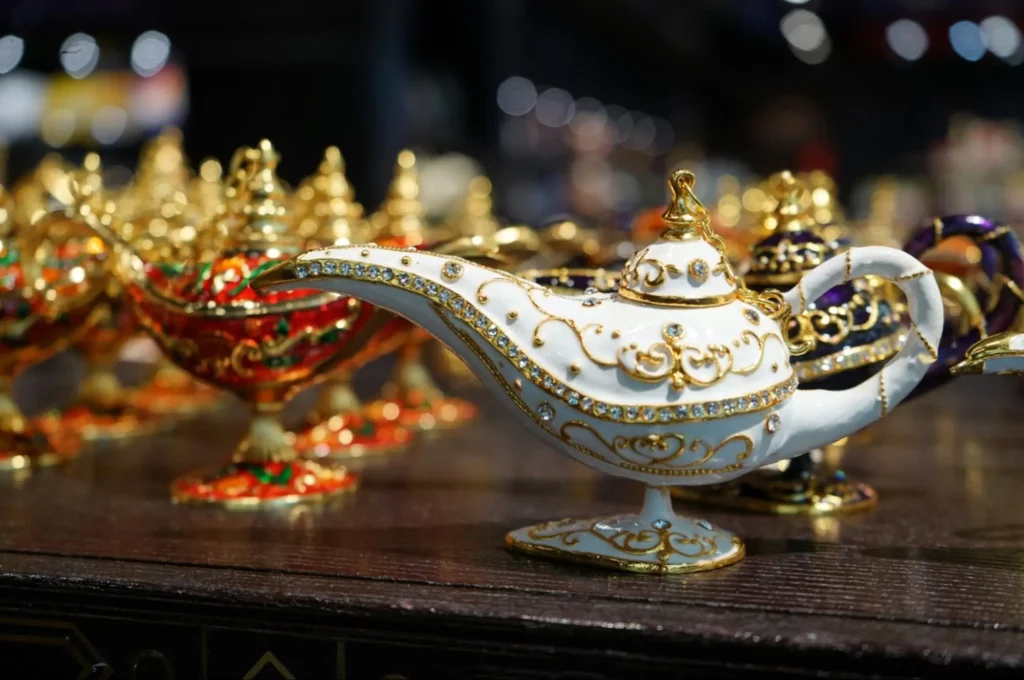
One of the clearest signs of unhealthy relationship patterns is when love no longer feels voluntary, and one of the most relatable examples of this dynamic appears in Aladdin.
The Genie is loving, loyal, generous, and full of life – yet he is trapped in forced service. He gives endlessly without freedom or agency.
Many women experiencing relationship issues describe a similar feeling. You may still deeply love the people around you. You want to help them to have better lives even at great cost to yourself. Yet somewhere along the way, your love stopped feeling chosen. Instead, it began feeling expected.
That shift can quietly erode your self-esteem over time.
The fact of the matter is that love was never meant to cost you your identity and self-esteem.
Healthy love still involves sacrifice
Of course, not all sacrifice is unhealthy.
When a beautiful engagement ring is purchased, or a mom sits out in the cold rain to watch her son play soccer, we admire the sacrifice.
Healthy relationships still involve:
- compromise
- emotional investment
- service
- vulnerability
- showing up for one another.
The difference is that healthy love still allows you to remain fully yourself.
Many people recognize this dynamic in Bandit from Bluey. He sacrifices his time constantly for his family and pours enormous energy into his children. Yet he still feels playful, connected, emotionally alive, and fully himself.
His love feels freely given rather than extracted from him: a distinction matters more than many people realize.
Healthy love does not require you to disappear in order to prove you care.
Why do women stay in unhealthy relationship patterns?
If you are experiencing toxic relationship patterns, it’s not unusual for you to continue trying harder because you genuinely care about the relationship, the other person, and the fallout that losing the relationship can create for you and your loved ones.
You may keep hoping that:
- if you communicate better
- if you become easier to love
- if you ask for less
- if you stay patient long enough,
Things will finally feel safe again.
Whether you are wondering why you stayed for so long or trying to decide if you need to stay or go, show yourself compassion.
Women stay for many serious reasons, such as:
- children
- anxiety about finding work
- spiritual manipulation
- emotional attachment
- financial pressure
- loss of reputation
- hope things will improve
- fear of starting over
- confusion caused by manipulation
- burn out
- fear of losing kids to the other party
- shared history
- pressure from family
- gradual emotional erosion over time.
On top of that, many unhealthy relationship patterns develop slowly. So, you adapt one moment at a time until the dynamic starts feeling normal.
Sometimes you can stay and rebuild healthier dynamics with your partner. Sometimes you may need to leave to slowly rediscover yourself again. Every situation carries nuance.
What therapists often notice about unhealthy relationships
In therapy, one of the most common misconceptions we see is that people stay in unhealthy relationships because they are weak or lack self-respect.
In reality, many people stay because they are loyal, hopeful, empathetic, and deeply invested in the people they love.
Our therapists often see clients who have spent months or years trying to communicate better, give more grace, or hold a relationship together before seeking support.
The issue is rarely that they care too little. More often, they have been carrying too much for too long.
Boundaries protect your ability to love without losing yourself

Whether you feel that you need to stay or go, there is one tool that can help you to find yourself again: boundaries.
Boundaries are not about becoming cold or selfish. They protect your ability to love while remaining connected to yourself.
You are allowed to:
- say no
- ask for rest
- express your needs
- protect your emotional energy
- change your mind.
Learning how to break unhealthy relationship patterns often begins with realizing that your needs matter too.
Communicating those needs to those around you is an important first step.
Someone once described boundaries as a living fence, like a hedge: boundaries can adapt and grow, allowing you to be safe and be yourself, while allowing other people to adapt and grow too.
The Three Signs You May Be Losing Yourself in a Relationship
Many unhealthy relationships look different on the surface and, as therapists, we often notice three common signs that someone is beginning to lose their sense of self within the relationship.
Your needs feel inconvenient
You hesitate to ask for support, rest, space, or understanding because it feels like too much to ask.
Your identity feels smaller
Your interests, goals, friendships, and personality begin taking a back seat to maintaining the relationship.
Your peace depends on someone else’s mood
You spend significant energy monitoring another person’s emotions while neglecting your own.
When all three signs are present, you begin experiencing emotional exhaustion, lower self-esteem, and a growing sense of disconnection from yourself. Your relationship may still contain love, and the cost of maintaining that love is becoming your identity.
How to break unhealthy relationship patterns
Learning how to break unhealthy relationship patterns takes awareness, support, and consistency.
1. Notice repeated cycles
Focus on patterns rather than isolated moments.
It can be extremely helpful to keep a dated journal. You don’t need to detail every single thing, especially since you’re probably already burnt out. Just write down the key issues and the date.
2. Pay attention to emotional exhaustion
Your emotions and body often recognize unhealthy relationship patterns before your mind fully processes them.
Notice when your body seems to say that it has had enough. Notice when that ‘last straw’ feeling doesn’t seem to go away.
3. Rebuild your identity outside the relationship
Take the time to reconnect with:
- your voice
- your interests
- your friendships
- your values.
When you already feel burnt out and isolated, this can feel like a huge ask. Just take one step at a time.
If you used to enjoy photography, take one picture of something a day. Maybe send one text to a friend. Listen to that song that brings you joy.
4. Practice boundaries consistently
Boundaries may feel uncomfortable at first, especially if overgiving became part of your survival strategy.
Creating and pruning those living fences, or ‘hedges’, takes time and effort.
You won’t get it right the first time or every time. Sometimes it will feel like it made everything worse before the situation starts to improve.
Thankfully, setting and holding the right boundaries gives you the freedom to start to feel like and be yourself again.
5. Consider online therapy for relationship issues
Online therapy can help you:
- recognize unhealthy relationship patterns
- rebuild self-esteem
- improve communication issues in relationships
- set and strengthen boundaries
- reconnect with yourself.
Code red: when safety becomes the priority

Some relationship issues move beyond unhealthy patterns into emotional or physical danger.
Seek support immediately if you are experiencing:
- abuse
- intimidation
- threats
- severe emotional control
- fear for your safety or your children’s safety.
In these situations, support from an online therapist and trusted resources like the National Domestic Violence Hotline can help you navigate your next steps safely.
How online therapy can help with relationship issues
Online therapy for relationship issues can help you:
- recognize unhealthy relationship patterns
- strengthen self-esteem
- improve communication
- process emotional exhaustion
- rebuild your sense of identity.
You were never meant to disappear inside love
If you feel like you have slowly become smaller inside your relationship, you are not alone.
Many women enter relationships wanting to love deeply and wholeheartedly. The pain begins when that love slowly turns into pressure, obligation, emotional exhaustion, or loss of self.
Healthy love still involves sacrifice. Healthy love still asks for vulnerability. The difference is that you remain a person inside it.
You were never meant to become smaller in order to keep receiving love. Healthy love allows you to care deeply while still remaining connected to yourself.
You are allowed to love fully without disappearing in the process.
Ready to reconnect with yourself?
If you are struggling with relationship issues, unhealthy relationship patterns, emotional exhaustion, or low self-esteem, online therapy can help you rebuild healthier patterns and reconnect with yourself.
A healthy relationship should ask you to grow, not disappear.
If maintaining a relationship requires you to repeatedly silence your needs, ignore your instincts, or abandon your identity, the cost may be higher than you realize.
Don’t hesitate to schedule an appointment with a specialized online therapist at Makin Wellness today.
Key takeaways
- Relationship issues often develop gradually through repeated emotional patterns.
- Self-esteem can decrease when love stops feeling freely given.
- Toxic relationship patterns often begin subtly.
- Healthy love allows you to remain fully yourself.
- Boundaries protect your emotional health and identity.
- Online therapy for relationship issues can help you rebuild your sense of self.
Further Reading:
FAQs:
Yes. Repeated, unhealthy relationship patterns can gradually affect your self-worth, confidence, identity, and emotional health over time.
Some communication struggles are normal. The issue becomes more serious when you consistently feel emotionally unsafe, dismissed, or unable to express your needs.
Yes. Individual online therapy can help you recognize unhealthy relationship patterns, strengthen boundaries, and make healthier decisions for yourself.
Common signs include emotional exhaustion, guilt around boundaries, overgiving, emotional numbness, and feeling disconnected from yourself.