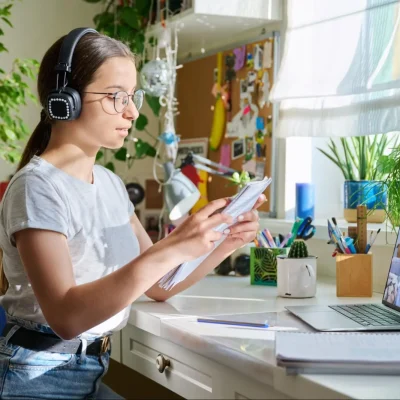
ADHD in girls often hides behind daydreaming, emotional overwhelm, and a quiet sense of never quite measuring up, not the hyperactive behavior most parents are taught to watch for. The signs tend to cluster around three areas: inattention that looks like carelessness, internalized frustration that mimics anxiety or depression, and a slowly eroding sense of identity built on years of falling short without understanding why. Because these struggles happen internally, girls are diagnosed at significantly lower rates than boys, often not until adolescence or adulthood. Recognizing what ADHD actually looks like in your daughter is the first step toward getting her the support she deserves.
Imagine this: your 14-year-old daughter sits at the kitchen table, staring at her open textbook. She has been there for an hour, yet the page is still blank. Her room is a maze of half-finished projects and misplaced assignments. She is sharp, funny, and creative, and none of that translates into the grades or friendships that you know she is capable of. When you ask what is wrong, she shrugs and says, “I don’t know. I just can’t.”
To an outside observer, she may appear unmotivated or careless. To an online therapist trained in children’s ADHD therapy, those quiet frustrations may point toward something far more specific and far more treatable.
Why is ADHD in girls so often overlooked?
ADHD has a global prevalence of an estimated 8 percent of children, yet boys are diagnosed two to nine times more frequently than girls in clinical settings. That gap narrows significantly in adulthood, suggesting that many girls go unidentified during the years when early support could make the greatest difference.
The core issue is one of visibility. Boys with ADHD tend to exhibit externalizing behaviors, such as physical restlessness, impulsivity, and classroom disruption, that quickly draw attention from parents and teachers. Girls more commonly present with the inattentive subtype. Their struggles are often internal: daydreaming, emotional sensitivity, and a quiet sense of falling behind. Because these signs are less disruptive, they are also less likely to prompt a referral for evaluation. Teachers refer girls for evaluation far less frequently than boys, often comparing girls to their more visibly hyperactive male classmates rather than to other girls.
Many girls also develop coping strategies early on. They may work twice as hard to maintain their grades, internalize their frustration, or mask their struggles to fit in socially. These compensatory behaviors can delay diagnosis by years, sometimes until adolescence or adulthood, when academic and social demands finally outpace their ability to keep up. And so, girls and women are less likely to be diagnosed than their male counterparts.
What is inattentive ADHD?
Inattentive ADHD (previously called ADD, Attention Deficit Disorder) is a subtype characterized primarily by trouble with concentration, organization, and follow-through, rather than by hyperactivity or impulsivity. It is the type of ADHD most commonly diagnosed in girls.

What are the 3 most common ADHD symptoms in girls?
ADHD symptoms in girls often cluster into three interconnected areas. Online therapists sometimes refer to this as the Three I’s of ADHD in Girls: Inattention, Internalization, and Identity.
1. Inattention
This is the hallmark. Your daughter may frequently lose personal belongings, struggle with multi-step instructions, or appear to “zone out” during conversations. She might hyperfocus on a novel for hours yet find it nearly impossible to finish a one-page assignment. What looks like selective effort is actually a brain that gravitates toward high-stimulation tasks and struggles to sustain attention on everything else.
2. Internalization
Instead of acting out, girls with ADHD tend to turn their frustration inward. Anxiety, self-blame, and emotional overwhelm are common. Many girls feel a persistent sense that something is “off” about them, yet they cannot pinpoint what it is. These internalizing symptoms are frequently misdiagnosed as anxiety disorders or depression, which means the underlying root goes untreated.
3. Identity
Years of struggling without understanding why she doesn’t seem to quite fit in can take a toll on how your daughter sees herself. Girls with ADHD often describe themselves as “stupid,” “lazy,” or “broken,” because of the gap between their effort and their results. This erosion of self-worth can ripple into friendships, classroom confidence, and willingness to try new things.
Tip for Parents: Watch for consistent patterns across multiple settings rather than isolated incidents. If your daughter is struggling at school, at home, and in friendships in similar ways, that consistency is an important signal worth exploring with a professional.
Your daughter’s worth was never meant to be measured by a report card, a clean room, or how quietly she sits in class. ADHD is part of how her brain works; it is not a reflection of who she is.
How can an ADHD in girls checklist help you spot patterns?
A checklist can give you a structured starting point for conversations with your daughter and her care team. Consider whether your daughter consistently shows several of the following:
- Struggles to follow multi-step instructions.
- Talks excessively or interrupts without realizing it.
- Frequently daydreams or appears “in her own world.”
- Becomes easily overwhelmed by emotional situations.
- Maintains grades only through exhausting levels of effort.
- Has mood swings that seem out of proportion to the situation.
- Reports feeling “different” from peers without being able to explain why.
- Fidgets quietly: doodling, twirling hair, picking at nails, or stimming in subtle ways.
- Procrastinates on tasks, then panics close to deadlines (ADHD paralysis is common in girls).
- Loses or misplaces items like homework, keys, or her phone (object permanence can play a role here).
This list is not a diagnostic tool, and only a qualified professional can evaluate your daughter for ADHD. Still, tracking these patterns over a few weeks can offer valuable clarity and help you communicate your concerns more specifically to an online therapist.
How do ADHD symptoms differ between girls and boys?
Tip for Parents: If your daughter’s teachers describe her as “doing fine” in class yet you see a different picture at home, trust your instincts. Girls with ADHD often hold it together at school and release their overwhelm in the safety of home.
What do online therapists notice about ADHD in teenage girls?
A pattern that online therapists frequently observe is that girls are often brought to them for anxiety or low mood, and only after deeper exploration does ADHD come to light. By the time a teenage girl reaches an online therapist, she may have spent years constructing an elaborate system of workarounds: color-coded planners she rarely uses, staying up late to finish assignments she could not start earlier, and rehearsing social interactions before and after they happen.
One of the most telling signs is the disconnect between effort and outcome. When a girl invests enormous energy into tasks that seem straightforward for her peers and still falls short, that gap often points to ADHD rather than a lack of motivation.
Another important aspect that we also notice is that ADHD in teenage girls can intensify during puberty. Hormonal fluctuations in estrogen and progesterone directly affect dopamine activity in the brain, which may amplify attention and emotional regulation challenges during certain phases of the menstrual cycle. As your daughter grows, these shifts may evolve into the patterns described in our guide on ADHD symptoms in women.
How can you support your daughter after an ADHD diagnosis?
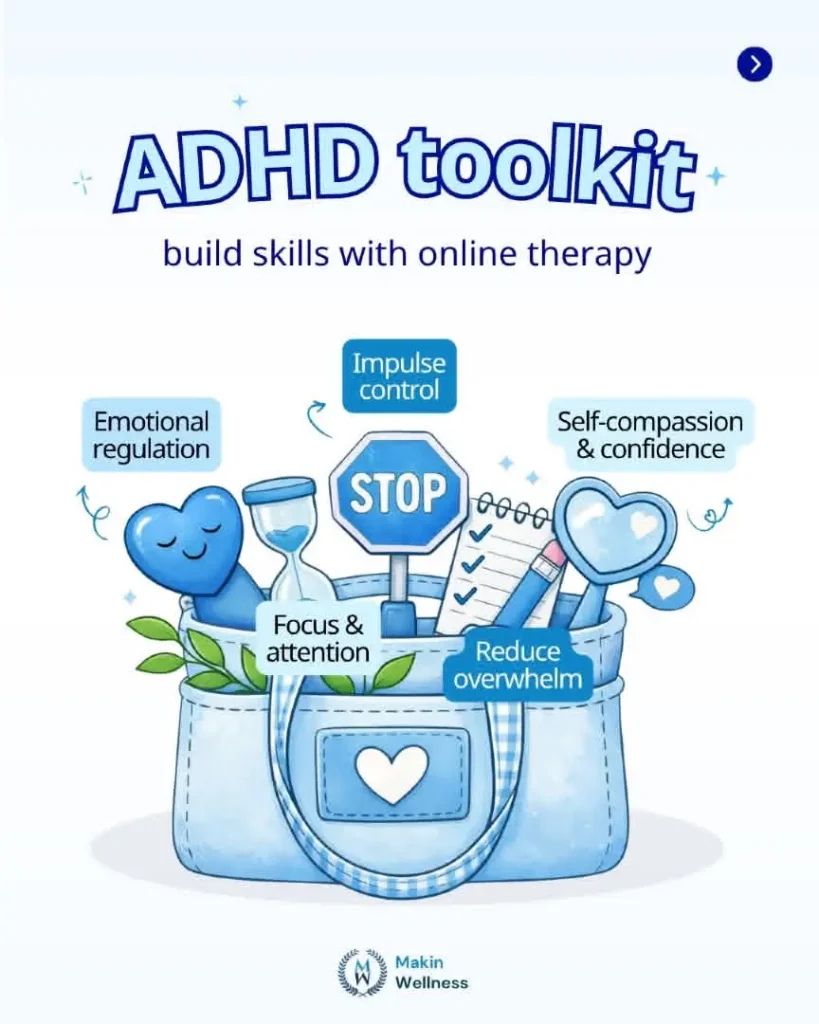
Online children’s ADHD therapy typically involves a combination of approaches tailored to your daughter’s age, symptom profile, and personal needs. It may take some time to find what combination works best for your child, as there are many options available to mix and match.
It can feel overwhelming to take the first steps to getting your daughter help. You may want to consider finding a local ADHD support group for parents, either locally or online. Being able to share your experiences and learn from others can help on some of the hard days.
Behavioral online therapy teaches practical skills for organization, time management, and emotional regulation. For younger children, parent training in behavior management is often the recommended first step. For adolescents, online Cognitive Behavioral Therapy (CBT) and executive function coaching can help build strategies that last well beyond the online therapy sessions.
Medication may also be part of the conversation. Stimulant medications are effective for approximately 70 to 80 percent of children with ADHD, and nonstimulant options are available as well. Your daughter’s healthcare provider can help determine whether medication makes sense as part of a broader treatment plan.
School-based supports, such as accommodations for extended time, organizational check-ins, and structured feedback systems, can bridge the gap between your daughter’s potential and her day-to-day performance.
Tip for Parents: Treatment works best as a team effort. Partnering with your daughter’s school, online therapist, and healthcare provider creates a consistent support system across every area of her life.
Take the next step for your daughter
If you are recognizing signs of ADHD in your daughter, she does not have to navigate it without help. Schedule a consultation with a Makin Wellness online therapist who specializes in online children’s ADHD therapy and understands how ADHD in girls is often missed or misdiagnosed.
Not sure if what you are seeing is actually ADHD? Take our online ADHD assessment to better understand how these symptoms in girls may be showing up at home, in school, or socially, and get personalized guidance on next steps for your daughter.
ADHD in girls does not disappear with age; it evolves. Learn how the signs you are noticing now can carry into adulthood in our full guide on ADHD symptoms in women.
Additional reading:
ADHD in girls FAQs:
Yes! The inattentive subtype is far more common in girls and does not involve visible hyperactivity.
Many people still associate ADHD with physical restlessness, yet girls frequently experience it as internal struggles with focus, organization, and emotional regulation. Your daughter may appear calm on the outside while her mind races from one thought to the next. She might channel restless energy into quieter outlets like doodling, hair twirling, or fidgeting with jewelry. The absence of visible hyperactivity does not rule out ADHD; it simply means the signs require closer observation.
Symptoms can appear as early as preschool, and girls can be evaluated at any age when patterns are affecting daily life.
While the average age of ADHD diagnosis is around seven, many girls are not identified until adolescence or adulthood because their symptoms are subtler. If your daughter consistently struggles with focus, organization, emotional reactions, or friendships across multiple settings, an evaluation is worth pursuing regardless of her age. Early identification opens the door to support that can prevent years of self-blame and mounting academic or social challenges.
Yes. Hormonal changes during puberty can amplify ADHD symptoms, making them more noticeable during the teenage years.
Fluctuations in estrogen and progesterone influence dopamine activity in the brain, directly affecting attention, mood, and emotional regulation. Some girls notice that their ability to concentrate or manage emotions shifts throughout their menstrual cycle. These changes can intensify existing ADHD symptoms, and they can also cause it to surface more visibly for the first time in girls who compensated well during childhood. Tracking monthly patterns and sharing them with your daughter’s online therapist can lead to more targeted support.
Yes. Girls with ADHD have significantly higher rates of anxiety and depression compared to their peers without ADHD.
Research shows that girls with ADHD are more likely to develop anxiety disorders and major depression than boys or girls without the condition. These co-occurring conditions can sometimes overshadow the ADHD itself, leading to treatment that addresses the anxiety or depression without ever identifying the root cause. If your daughter is receiving online therapy for anxiety or low mood and not seeing expected progress, it may be worth discussing an ADHD evaluation with her care team.
Absolutely not. Effective treatment often combines behavioral online therapy, school-based supports, and sometimes medication.
Medication can be a valuable part of managing ADHD, yet it is most effective when paired with other strategies. Behavioral online therapy helps your daughter build organizational skills, emotional coping techniques, and social strategies that she can carry into adulthood. School accommodations, parent training, and lifestyle adjustments like consistent routines, regular exercise, and adequate sleep all play a role in a comprehensive treatment plan. Your daughter’s online therapist and healthcare provider can work together with you to create an approach tailored to her specific needs.