
Why emotional manipulation can be hard to spot
Many manipulative behaviors are subtle, which is why learning how to recognize emotional manipulation can be challenging. They may begin as concern, affection, or humor, then gradually shift into control. Because the tactics can be inconsistent, many people question themselves instead of recognizing the unhealthy pattern.
Common emotional effects include:
- Self-doubt
- Anxiety before conversations
- Feeling guilty for normal boundaries
- Constantly trying to “fix” things
- Emotional exhaustion
- Loss of confidence
Mental health experts note that emotional abuse can be difficult to identify because it often leaves no visible signs.
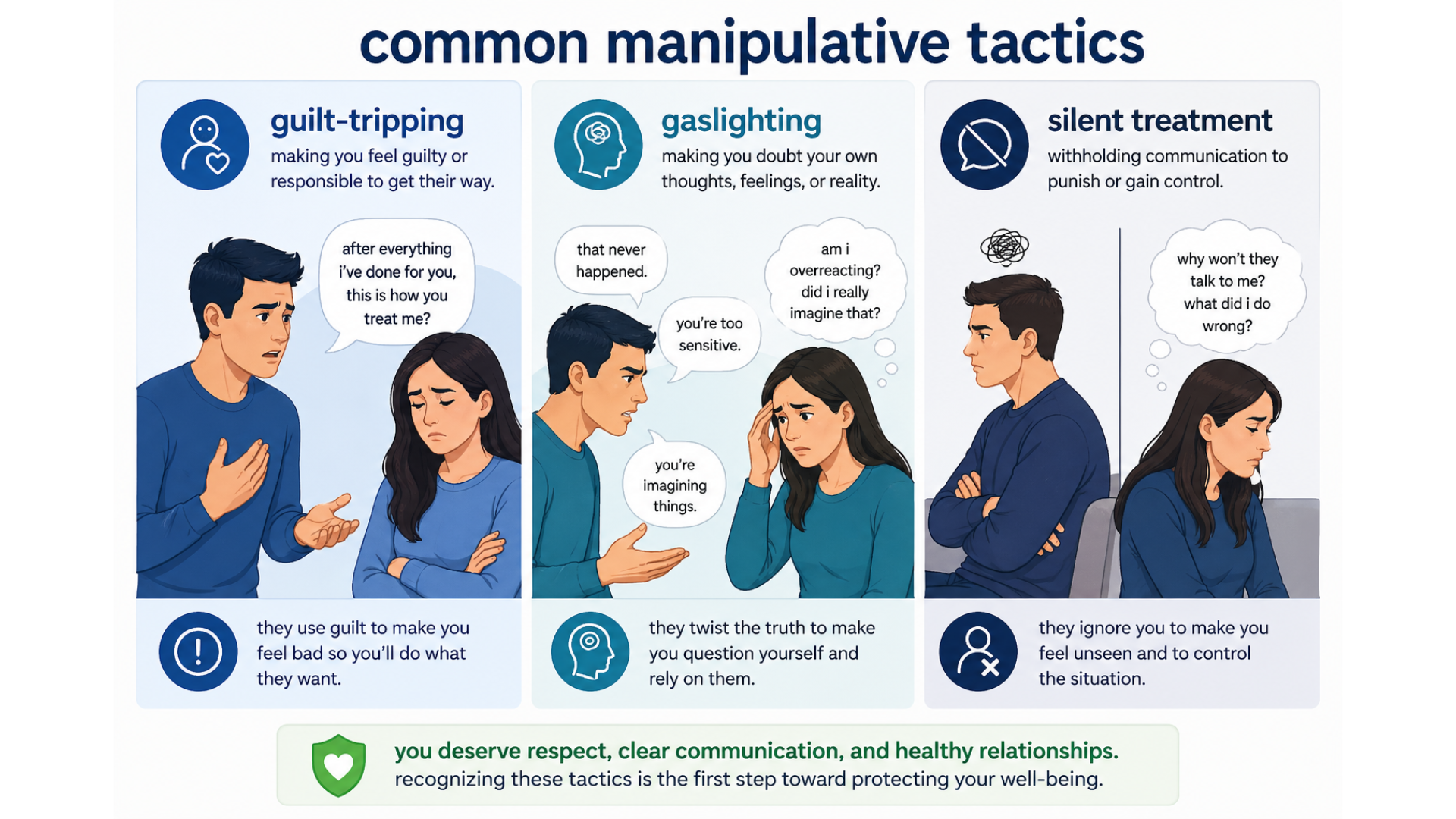
How to recognize emotional manipulation
Understanding how to recognize emotional manipulation is the first step toward protecting yourself.
Guilt-tripping
The person makes you feel responsible for their emotions or outcomes.
Examples:
- “If you loved me, you would do this.”
- “After everything I’ve done for you…”
Gaslighting
They deny facts, minimize events, or make you question your memory.
Examples:
- “That never happened.”
- “You’re imagining things.”
Silent treatment
They withdraw affection or communication to punish you.
Blame-shifting
They avoid responsibility and redirect fault onto you.
Emotional pressure
They demand immediate decisions, so you cannot think clearly.
Playing the victim
They focus only on their pain to avoid accountability.
How to handle emotional manipulation

Learning how to handle emotional manipulation can help you regain emotional control.
- Pause before reacting
Manipulation often relies on quick emotional responses. Slow the interaction down.
Try saying:
- “I need time to think.”
- “I’ll respond later.”
- Name the behavior to yourself
Silently identify what is happening.
Examples:
- “This is guilt-tripping.”
- “This feels like pressure.”
Naming the pattern helps you stay grounded.
- Trust your internal signals
If you regularly feel confused, diminished, fearful, or guilty after interactions, pay attention to that pattern.
- Set clear boundaries
Boundaries reduce opportunities for manipulation.
Examples:
- “I won’t continue this conversation while being insulted.”
- “I’m not making a decision under pressure.”
- “If yelling continues, I’m ending the call.”
- Stop overexplaining
Long explanations may invite more circular arguments. Short, calm statements are often stronger.
- Reduce exposure if needed
If boundaries are repeatedly ignored, limiting contact may be appropriate. Experts consistently recommend boundaries and support systems when dealing with emotionally unhealthy dynamics.
How to respond to emotional manipulation
Knowing how to respond to emotional manipulation helps you stay steady.
If they use guilt
“I understand you’re upset, but I’m making the choice that’s right for me.”
If they deny reality
“We remember it differently, and I trust my experience.”
If they pressure you
“I’m not deciding right now.”
If they become aggressive
“I’ll continue this when the conversation is respectful.”
If they keep repeating the same tactic
“I’ve already answered.”
You do not need to convince someone who is committed to controlling the conversation.
By now, you’ve learned how to recognize emotional manipulation, along with practical ways on how to handle emotional manipulation and how to respond to emotional manipulation when it happens. That’s a big step—you don’t have to figure everything out on your own. If you’re still feeling stuck or overwhelmed, talking to a therapist can give you extra support, clarity, and tools tailored to your situation. Online therapy, in particular, makes it easier to get help in a way that fits your schedule and comfort, so you can keep building healthier patterns at your own pace.
Online therapy treatment options for emotional manipulation
If emotional manipulation has affected your confidence, relationships, or mental health, online therapy can help you learn how to handle emotional manipulation and how to respond to emotional manipulation in healthier, more grounded ways.

Cognitive Behavioral Therapy (CBT)
CBT helps identify distorted beliefs created by manipulation, such as self-blame or “I’m always the problem.” It also teaches healthier coping skills and understanding psychotherapy.
Trauma-Informed Therapy
If manipulation was severe, chronic, or tied to abuse, trauma-informed therapy can help process fear, hypervigilance, and emotional wounds.
Dialectical Behavior Therapy (DBT) Skills
DBT-based strategies can help with emotional regulation, distress tolerance, and interpersonal boundaries.
Relationship Counseling
If both people are willing to participate honestly and respectfully, couples counseling or family therapy may help improve communication. This is not always appropriate in abusive dynamics.
Assertiveness and Boundary Work
Many therapists help clients practice saying no, tolerating guilt, and communicating clearly.
How to find support with online therapy
Knowing how to find support with online therapy can make help more accessible.
Benefits of online therapy
Online therapy can help you:
- Recognize unhealthy patterns
- Rebuild self-trust
- Practice boundaries
- Reduce anxiety and stress
- Process relationship trauma
- Improve communication skills
Why many people choose online therapy
Online therapy offers:
- Flexible scheduling
- Sessions from home
- Greater privacy
- Access to more therapists
- Easier consistency with busy schedules
Research has found that teletherapy can be effective for many common mental health concerns.
How to choose the right therapist
Look for a specialized therapist experienced in:
- Relationship issues
- Emotional abuse recovery
- Anxiety or trauma
- Self-esteem concerns
- Boundaries and communication
When to seek immediate help
If manipulation includes threats, stalking, intimidation, financial control, coercion, or isolation, seek immediate support. Trusted crisis and abuse resources are available, including national support organizations, such as the National Domestic Violence Hotline.
Long-term recovery from emotional manipulation

Healing often includes:
- Rebuilding trust in your own judgment
- Learning what healthy relationships feel like
- Reducing shame and self-blame
- Reconnecting with supportive people
- Practicing boundaries consistently
- Strengthening identity outside the relationship
Recovery can take time, especially after long-term manipulation. Progress is often gradual, not linear.
Final thoughts
Learning how to handle emotional manipulation means recognizing unhealthy tactics, protecting your peace, and trusting your own reality. You are allowed to have limits, ask for respect, and step away from harmful dynamics. Online therapy treatment options can help you rebuild confidence, strengthen boundaries, and create healthier relationships. Knowing how to find support with online therapy can make getting help easier and more convenient.
Start getting support today
You do not have to manage emotional manipulation alone. Working with a compassionate online therapist can help you regain clarity, confidence, and emotional safety. If unhealthy relationship patterns are affecting your life, reaching out today can be the first step toward healing and healthier connections.
Frequently asked questions
What is the best way to handle emotional manipulation?
Stay calm, recognize the tactic being used, set boundaries, and avoid making decisions under pressure.
How do I know if someone is emotionally manipulating me?
Common signs include guilt-tripping, gaslighting, blame-shifting, pressure, and leaving you feeling confused or drained after conversations.
Can online therapy help with emotional manipulation?
Yes. Online therapy can help you recognize patterns, improve confidence, set boundaries, and heal from unhealthy relationship dynamics.
What therapy works best for emotional manipulation?
CBT, trauma-informed therapy, DBT skills work, and boundary-focused counseling are common options depending on your needs.
How long does recovery take?
Recovery varies. With support, many people improve over time through therapy, boundaries, and healthier relationship choices.