
Mindfulness is the practice of focusing your attention on the present moment without judgment, and learning how to practice mindfulness daily can improve your mental health, reduce stress, and increase emotional balance. Simple techniques like mindful breathing, body scans, and guided meditation help you become more aware of your thoughts and reactions. Over time, this awareness makes it easier to manage challenges like anxiety, overthinking, and intrusive thoughts, allowing you to feel more grounded, focused, and in control of your daily life.
Feeling overwhelmed with anxiety, depression, or the constant demands of daily life? Is stress starting to impact your work, relationships, or mental health?
Learning how to practice mindfulness can be a powerful way to regain a sense of control, reduce emotional strain, and improve your mental health. Over time, this connection between meditation and peace of mind becomes more noticeable in your daily life.
Before diving in, you might wonder what mindfulness is, where to start, and whether it makes a difference to what matters most in your life.
Take a breath – you don’t have to figure everything out at once. Mindfulness is a practical, evidence-based skill that helps you feel more grounded, present, and resilient. With consistent practice, even small efforts can lead to meaningful change.
This guide will walk you through what mindfulness is, the different ways to practice it, and how to build a routine that works for you, including practical insights into how to practice mindfulness daily.
What is mindfulness?
Mindfulness is the practice of bringing your full attention to the present moment with openness and without judgment.
When you practice mindfulness, you actively notice your thoughts, emotions, and surroundings without becoming overwhelmed or reactive. Instead of getting caught up in what’s happening, you learn to observe it. This skill is simple and can be life-changing with consistent use.
Over time, mindfulness builds awareness, emotional balance, and mental clarity. Research has shown that mindfulness meditation can produce meaningful reductions in anxiety, depression, and stress, making it a valuable tool in online therapy.
Mindfulness is more than stress reduction
While mindfulness is often associated with stress relief, its benefits go much deeper. Many people find that consistent practice strengthens the connection between meditation and peace of mind, helping you stay grounded even in challenging situations.
Practicing mindfulness regularly can help you:
- Strengthen focus and attention;
- Better understand your thoughts and emotional patterns;
- Respond to challenges with greater clarity and control; and
- Feel more balanced, even in challenging situations.
Mindfulness also works well alongside therapeutic approaches like Cognitive Behavioral Therapy (CBT) and Dialectical Behavior Therapy (DBT). These methods focus on managing your thoughts and emotions, while mindfulness strengthens your ability to apply those skills in real life.
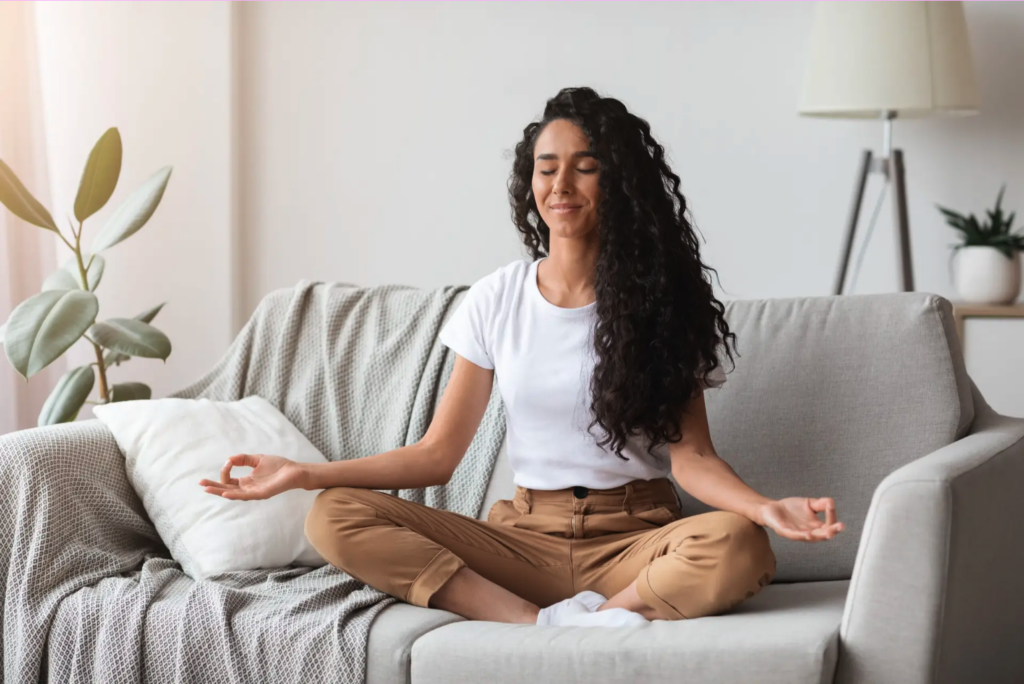
Different types of meditation to practice mindfulness
There are many ways to practice mindfulness, and finding the type that resonates most with you is essential. Here are some of the most common types of mindfulness:
1. Mindfulness meditation (breath awareness)
Mindfulness meditation around your breath is the most straightforward place to start. You sit quietly and bring your attention to your breath, noticing each inhale and exhale.
As thoughts, emotions, or distractions arise, you don’t try to stop them – you simply notice them and gently return your focus to your breathing.
This practice can help you build awareness of your internal patterns, create space between you and your reactions, and empower you to reduce stress, anxiety, and depression through improved emotional regulation over time.
2. Loving-kindness meditation (metta meditation)
Loving-kindness meditation focuses on developing compassion for yourself and others. You begin by silently repeating phrases like “May I be safe,” “May I be happy,” or “May I be at peace.”
After focusing on yourself, you gradually extend those same thoughts to others – even including people with whom you are in conflict. It’s a powerful way to cultivate empathy, compassion, and positive emotions while reducing anger and resentment.
3. Body scan meditation
Body scan meditation helps you reconnect with your physical body and release built-up tension. You bring attention to different areas of your body, noticing sensations without trying to change them. It’s an effective way to align your body with your thoughts and emotions, and to release stress.
Usually, this meditation involves starting at the top of your head, gradually moving your attention down through your body, and noticing any areas of tension, discomfort, or relaxation. The point is to observe and notice what is present. This can improve your mind-body connection and pain management.
4. Guided meditation
Guided meditation involves following along with a teacher, audio recording, or app that walks you through the process step by step. Depending on your needs, this might be something you practice with an online therapist, as part of your sessions together.
This can be an excellent meditation practice for beginners, as it provides structure and direction, allowing you more room to focus on each exercise.
5. Movement meditation (mindful walking)
Movement meditation is ideal if sitting feels challenging to you. The idea is simple: you practice mindfulness while moving, through everyday activities like walking and stretching.
The key is to move slowly and deliberately, paying close attention to the sensations in your feet, legs, and any other body parts you use throughout the exercise. This meditation can be easily integrated in your daily routine, and it can be especially beneficial if you lead a more active lifestyle.
6. Visualization meditation
Visualization meditation uses your imagination to create a sense of calm and focus by picturing a specific image, scene, or object – usually, a peaceful place – and connecting emotionally and physically with that visual experience.
While you may practice this type of meditation in a guided setting at first, with practice, you can get comfortable trying this on your own. It can be a great way to develop your visual cortex and limbic system, and to activate your parasympathetic nervous system.
If you are new to meditation, working with a mental health professional trained in mindfulness-based interventions can help ensure proper guidance and enhance the benefits of the above practices.

Mindfulness meditation for overthinking
Overthinking can feel like your mind is stuck in a loop, replaying the same thoughts without resolution. Practicing mindfulness meditation for overthinking helps interrupt that cycle by bringing your attention back to the present moment.
Instead of trying to “solve” every thought, mindfulness teaches you to observe them without getting pulled in. As you sit with your breath, you begin to notice when your mind starts to spiral and gently guide it back. Over time, this creates space between you and your thoughts.
One simple way to practice mindfulness meditation for overthinking is to focus on your breathing and label thoughts as they arise. For example, you might silently say “thinking” or “worrying,” then return to your breath. This small shift helps reduce the intensity of repetitive thoughts and builds mental clarity.
Mindfulness meditation for intrusive thoughts
Intrusive thoughts can be unsettling, especially when they feel unwanted or out of your control. Using mindfulness meditation for intrusive thoughts can help you respond differently without fear or judgment.
Rather than trying to push these thoughts away, mindfulness encourages you to acknowledge them and let them pass. You might notice the thought, recognize that it’s just a temporary mental event, and return your focus to your breath or body.
A helpful approach to mindfulness meditation for intrusive thoughts is to imagine your thoughts as clouds passing through the sky. You don’t need to engage with them or assign meaning – you simply watch them come and go. With consistent practice, this can reduce the emotional impact of intrusive thoughts and help you feel more in control.

The basics of mindfulness practice
Now that you understand the different types of meditation, the next step is building a simple, consistent practice. If you’re wondering how to practice mindfulness daily, it doesn’t need to be complicated.
How to practice mindfulness as a beginner:
- Choose a time and place: Set aside a consistent time each day in a quiet environment. It could be in the morning before you start your day, or in the evening before bed. Ideally, find a quiet place where you won’t be disturbed.
- Start small: Begin with just a few minutes per day. As you become more comfortable, you can gradually increase the time.
- Focus on your breath: One of the simplest ways to practice mindfulness is to focus on your breath. Notice the sensation of the air entering and leaving your body. Gently guide your attention back when your mind wanders.
- Be patient with yourself: Awareness, not perfection, is the goal. It’s normal for your mind to wander during mindfulness practice. When it happens, notice where your mind is going, and gently return your attention to the present moment.
- Practice regularly: Consistency is what creates results. Try to practice mindfulness daily, even if it’s just for a few minutes.
How to practice mindfulness daily
You don’t need to set aside large chunks of time or start with an overwhelming list of exercises to begin practicing mindfulness. The following are some simple ways to incorporate mindfulness into your daily life:
- Mindful eating: Take a few moments to taste and enjoy your food. Notice the flavors, textures, and smells with each bite.
- Mindful walking: As you walk, pay attention to the sensation of your feet touching the ground and the rhythm of your steps.
- Mindful listening: When someone is speaking to you, really listen. Pay attention to their words, tone, and body language.
- Mindful breathing: Take a few deep breaths whenever you feel stressed or overwhelmed. Focus on the sensation of the air moving in and out of your lungs.
Get support on your mindfulness journey
Starting a mindfulness practice is a meaningful step toward improving your mental health. It’s also normal to seek help along the way. If you are struggling with symptoms of anxiety, depression, or stress, and you are looking for guidance in building your mindfulness practice, online therapy with Makin Wellness can help.
Our experienced therapists can provide personalized support to help you identify your mental health goals, navigate life challenges, and develop a mindfulness routine that works for you. Whether you’re just starting out or looking to deepen your practice, Makin Wellness is here to support you.
Schedule an appointment with Makin Wellness today to take the next step, moving beyond overwhelm to a space of greater emotional regulation, focus, and mental health.
5 Common mindfulness meditation questions
1. Do I need special equipment to practice mindfulness?
You don’t need any special equipment to practice mindfulness. All you need is a quiet space and a few minutes. As you advance in your practice, you may invest in a meditation cushion or a comfortable chair if you need more comfortable support while you practice.
2. How long should I practice mindfulness each day?
Start with just a few minutes each day and gradually increase the time as you become more comfortable. Even 5 to 10 minutes a day can have significant benefits.
3. What if I can’t clear my mind?
It’s entirely normal for your mind to wander during mindfulness practice. The goal is to observe your thoughts without getting caught up in them. When your mind wanders, notice it and gently bring your attention back to your breath.
4. Can mindfulness help with anxiety and depression?
Yes, mindfulness has been shown to be effective in reducing symptoms of anxiety and depression. By practicing mindfulness, you can learn to manage your thoughts and emotions more effectively, leading to greater emotional resilience and mental clarity.
5. How can I stay motivated to practice mindfulness regularly?
Consistency is critical to reaping the benefits of mindfulness. Try to integrate mindfulness into your daily routine, even just for a few minutes. Remember that mindfulness is a journey, and it’s okay to start small and build your practice over time.
Additional clinical review provided by Sean Ramos-Izquierdo, MA, LAPC, therapist at Makin Wellness.