
Do you want to know if EMDR therapy for OCD works? The International OCD Foundation and many therapists say EMDR can be useful for some people with OCD— especially when symptoms are connected to trauma, anxiety, distressing memories, or emotionally triggering experiences. While Exposure and Response Prevention (ERP) is still considered the gold standard for OCD treatment, EMDR therapy may help reduce the emotional intensity and fear responses that often fuel obsessive thoughts and compulsive behaviors.
For many people, OCD is not just about rituals or intrusive thoughts. It’s about feeling trapped in cycles of fear, guilt, shame, uncertainty, and emotional overwhelm. EMDR therapy helps the brain reprocess distressing experiences so they no longer trigger the same level of anxiety or compulsive reactions.
If traditional therapy hasn’t fully helped—or if your OCD symptoms are tied to trauma, panic, childhood experiences, or chronic stress—EMDR may be an effective part of your treatment plan.
What is EMDR therapy?
Eye Movement Desensitization and Reprocessing (EMDR) is a structured psychotherapy approach originally developed to help people process trauma and PTSD. According to the American Psychological Association, EMDR therapy focuses on helping you process distressing memories while using guided eye movements or other forms of bilateral stimulation.
During EMDR sessions, a therapist helps you safely revisit distressing thoughts, emotions, or memories in a controlled and supportive environment. The goal is not to erase memories; it is to help the brain reprocess them so they feel less emotionally overwhelming over time.
EMDR therapy is often described by patients as helping them:
- Feel less emotionally reactive
- Reduce anxiety connected to triggers
- Stop spiraling into fear-based thinking
- Feel calmer and more in control
- Process unresolved traumatic experiences
How EMDR therapy for OCD can help

Obsessive-Compulsive Disorder (OCD) often involves intrusive thoughts followed by compulsions meant to reduce anxiety. These compulsions may include checking, reassurance-seeking, cleaning, counting, mental rituals, or avoidance behaviors.
According to EMDR International Association (EMDRIA), EMDR therapy for OCD may help by addressing the underlying distress, unresolved experiences, and emotional triggers that contribute to obsessive thoughts and compulsive behaviors. Your OCD symptoms might become more intense because the brain stays stuck in a constant threat-response state.
EMDR therapy for OCD aims to help the brain reprocess distressing memories and emotional experiences so they feel less overwhelming over time. This may reduce the emotional intensity connected to obsessions and triggers.
EMDR may help with:
- Fear-based intrusive thoughts
- Panic and anxiety linked to obsessions
- Shame or guilt surrounding OCD symptoms
- Trauma-related OCD triggers
- Hypervigilance and emotional reactivity
- Disturbing memories connected to compulsions
For example, if you’re experiencing contamination OCD, you may have experienced a traumatic illness, loss, or frightening childhood experience involving safety or cleanliness. EMDR can help process the emotional memories attached to those fears, which may help reduce the anxiety driving compulsive behaviors.
Is EMDR therapy for OCD effective?
Research is still being conducted to understand the full scope of potential benefits EMDR therapy has for OCD patients. Some studies suggest EMDR can help you process feelings of guilt, shame, and other distressful emotions that may be underlying your compulsive behaviors. Other research has shown EMDR can improve the in-the-moment triggers that heighten your anxiety and fuel your OCD symptoms.
According to a published study on EMDR therapy for OCD, EMDR may be beneficial for you if your OCD symptoms are connected to distressing memories, adverse life experiences, or strong emotional triggers.
Many mental health professionals utilize EMDR as part of a personalized OCD therapy, particularly when trauma, long-term anxiety, feelings of shame, or panic responses are part of the picture. This type of EMDR therapy does not specifically target the compulsion(s); rather, the goal is for the brain to process unhealed emotional responses that could be exacerbating obsessive fears and anxiety.
The specific applications of EMDR therapy for OCD are best used in combination with other therapy methods, such as:
- Cognitive Behavioral Therapy (CBT)
- Exposure and Response Prevention (ERP)
- Anxiety management strategies
- Trauma-informed therapy
Not every person with OCD will need EMDR therapy. When you feel emotionally “stuck,” overwhelmed by anxiety, or triggered by past experiences, you may benefit from incorporating EMDR into your treatment plan.
EMDR vs. ERP for OCD
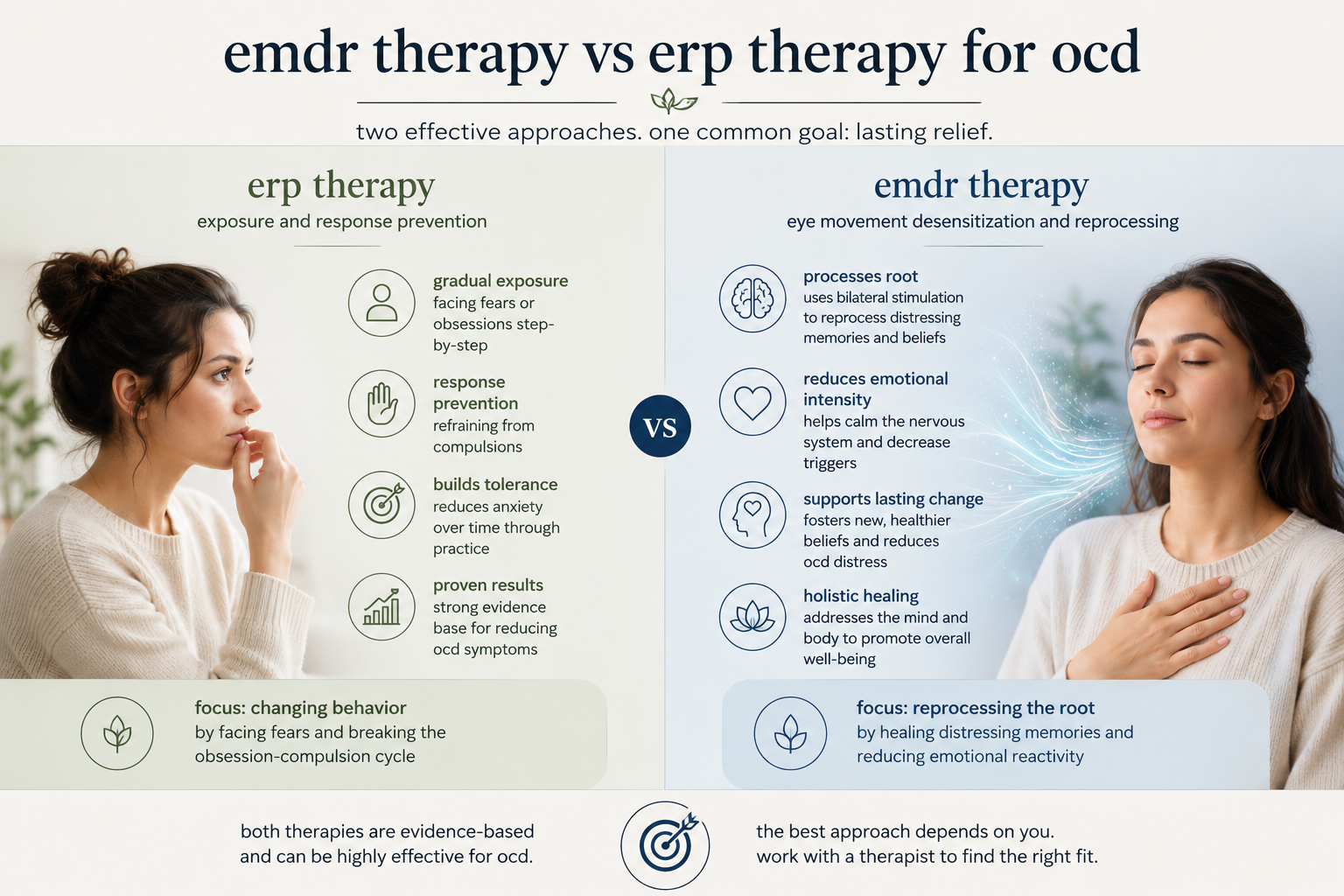
If you’re exploring treatment options, you may be wondering how EMDR therapy for OCD compares to ERP therapy. ERP and EMDR work differently and may have unique benefits. While ERP therapy can help you develop stronger coping skills and reduce anxiety as you confront your fears and triggers, EMDR therapy can speed up the processing of painful memories and associated feelings. EMDR therapy may help reduce the overall emotional charge of painful thoughts, feelings, and memories, which may impact the intensity and frequency of anxiety-provoking obsessive thoughts and possibly lower overall anxiety and emotional reactivity.
ERP Therapy
Exposure and Response Prevention (ERP) is considered one of the most effective evidence-based treatments for OCD. ERP therapy focuses on gradually exposing you to feared thoughts, situations, or triggers while helping you resist the urge to perform compulsions or safety behaviors. Over time, this process helps retrain the brain to better tolerate uncertainty, anxiety, and discomfort without relying on compulsive behaviors for relief.
EMDR Therapy
Eye Movement Desensitization and Reprocessing (EMDR) Therapy is designed to help you process distressing memories and reduce emotional distress associated with traumatic experiences. In the context of OCD, EMDR therapy focuses more on addressing unresolved emotional experiences, triggers, and trauma-related distress that may intensify obsessive thoughts and anxiety.
Which therapy is right for you?
It varies from person to person. Usually, ERP is what you’ll try first. EMDR can come into play later, if at all necessary. Your therapist will draw up a strategy based on your symptoms, background, and recovery objectives.
You might need to go with ERP if your OCD is mainly prompted by your compulsions and the urge to avoid things.
On the other hand, if your OCD symptoms get worse due to trauma, panic, emotional strain, or certain past events, EMDR might help alleviate some of that.
Or you could go for both, as most people do.
Signs that EMDR therapy for OCD may help you
You may benefit from EMDR therapy:
- Your OCD symptoms worsened after a traumatic or stressful event
- You experience panic attacks alongside OCD
- Intrusive thoughts feel emotionally overwhelming
- You struggle with shame, fear, or guilt connected to your obsessions
- Traditional talk therapy hasn’t fully worked
- You feel “stuck” despite trying to manage compulsions
An experienced therapist can help determine whether EMDR therapy for OCD is appropriate for your specific symptoms and treatment goals.
What to expect during EMDR therapy for OCD
EMDR sessions are collaborative and structured. Your therapist will first help you build coping and grounding skills before processing distressing memories or triggers.
During sessions, you may:
- Identify distressing thoughts, memories, or triggers
- Notice physical sensations and emotions connected to them
- Use guided eye movements or bilateral stimulation
- Allow the brain to reprocess emotional responses safely
Many people report feeling lighter, calmer, or less emotionally reactive after successful EMDR work.
Importantly, EMDR therapy for OCD is paced carefully. You do not have to relive trauma in graphic detail for it to work.
Can EMDR therapy for OCD cure your symptoms?
While there is no single “cure” for OCD symptoms, effective treatment can significantly reduce your symptoms and improve the quality of your life.
EMDR therapy for OCD may help reduce:
- Anxiety intensity
- Emotional triggers
- Trauma-related reactions
- Fear responses connected to intrusive thoughts
This can create more space for you to resist compulsions, feel emotionally regulated, and regain control over daily life.
Why seeking professional OCD treatment matters
OCD can feel exhausting and isolating, especially when intrusive thoughts begin affecting your relationships, work, school, sleep, or your overall health.
The good news is that OCD is treatable. You do not have to manage it alone.
Working with a therapist experienced in OCD and trauma-informed care can help you:
- Understand your triggers
- Build healthier coping strategies
- Reduce compulsive behaviors
- Feel safer and more confident in daily life
Ready to explore EMDR therapy for OCD?

If OCD is interfering with your peace of mind, relationships, or daily functioning, professional support can make a meaningful difference.
Eye Movement Desensitization and Reprocessing, or EMDR for OCD, is a type of therapy that Makin Wellness, with a trauma-informed therapist, offers to help people recover from traumatic or distressing life experiences.
Connect with a therapist who understands OCD, anxiety, and trauma-informed care. A personalized treatment plan can help you determine whether EMDR therapy for OCD, ERP, or a combination of approaches is right for you.
Don’t wait for symptoms to become more overwhelming. Taking the first step toward support could help you start feeling relief sooner.
Schedule your appointment online or call us at (833) 274-heal to connect with a member of our team and take the first step toward support.
Frequently asked questions about EMDR therapy for OCD
Is EMDR likely to worsen my OCD symptoms?
A trained mental health clinician should conduct EMDR. Therefore, when done at the appropriate pace, EMDR should likely decrease (rather than exacerbate) OCD symptoms, long-term.
Is EMDR approved for OCD treatment?
EMDR is widely recognized for trauma treatment, and many therapists also use it to support individuals with OCD, especially when trauma or anxiety contributes to symptoms.
How long does EMDR therapy for OCD take?
The number of sessions will depend on how debilitating OCD is to start with, how many adverse experiences/traumas contributed to the onset of OCD, and how likely you are to encounter stressful/traumatic situations in the future.
Can EMDR help reduce intrusive thoughts?
Yes, EMDR can help reduce the emotional and physiological impact of intrusive thoughts/aversive situations, which can effectively reduce their frequency and intensity.
Should I choose ERP or EMDR for OCD?
Both approaches can be helpful. While ERP is the number-one treatment for OCD, it can be more challenging when you struggle with panic and traumatization. EMDR is a good alternative.
Is online EMDR therapy effective for treating OCD?
EMDR is widely considered effective for trauma, and it’s commonly used by therapists to treat OCD, especially when trauma/aversive experience is playing a role in the onset or maintenance of OCD.