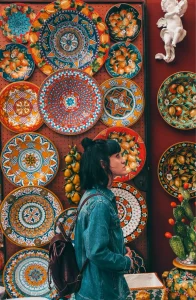
Cultural identity refers to how your background, traditions, environment, and experiences shape who you are. You may notice your cultural identity in how you think, connect, communicate, and view the world. At times, it can feel grounding. At other times, it can feel confusing or heavy. As you begin to understand your cultural history more clearly, you can move toward a more grounded, integrated version of yourself – one that allows you to grow without losing where you came from.
Cultural Identity and Identity Formation
Cultural identity is the way your background, traditions, environment, and experiences shape how you understand yourself, your relationships, and the world around you.
It plays a meaningful role in how you understand yourself, how you connect with others, and how you move through the world.
You may feel deeply connected to parts of your background.
You may feel confused about how to integrate your background into your current life.
You may even feel hurt by your background.
You may have found yourself wondering:
- Why do I feel different in certain environments?
- Why do parts of my background feel meaningful, while others feel challenging?
- Do I need to change where I come from in order to grow?
These questions are a normal part of navigating your identity.
Your cultural background is one layer of a much larger process of identity formation: the way you come to understand who you are over time.
As you begin to explore this part of yourself, you may start to notice something important: you do not have to escape your past to grow. You can begin to understand it, engage with it, and shape how it fits into who you are becoming.
No matter where you are in your journey with navigating how you are connected to your culture, it is possible for you to bloom where you are planted.
Defining Cultural Identity
What is cultural identity?
You can think of your cultural identity as the soil in which you were planted.
Sometimes that soil is full of weeds that choke and starve your true self.
Sometimes the soil is relatively free and healthy, ready for you to bloom.
No matter where you come from, you were shaped by the people, places, and patterns that have surrounded you over time. These influences quietly guide how you communicate, what feels familiar, and how you make sense of relationships and expectations.
Some parts of your cultural background may feel obvious, like traditions or language. Other parts may feel harder to name, showing up in how you respond to situations or what you instinctively value.
You may not always notice it directly, and you can often feel it in how naturally certain behaviors or beliefs come to you.
What Is Cultural Identity?
Cultural identity refers to how your background, traditions, environment, and experiences shape how you understand yourself and the world around you. It includes shared values, communication styles, and expectations that influence your daily life and relationships.
Cultural Identity Definition (Expanded)
A simple cultural identity definition is this: it is the combination of influences from your family, environment, traditions, and lived experiences that shape your beliefs, behaviors, and sense of self.
You may notice these influences in areas like:
- how you approach conflict
- what feels respectful or disrespectful
- how you build relationships
- your confidence and self-understanding
- what you value in work, family, and community.
Your cultural identity develops over time, often before you have the language to describe it.
And as your experiences grow, your cultural identity can grow with you.
Cultural Identity Examples in Everyday Life

You may notice your cultural background impacting you in small, everyday moments.
Some cultural identity examples include:
- Family communication/conflict styles: do you press in or blow up, or just get on the phone and ignore it?
- Family traditions/celebrations: Easter, Ramadan, Hanukkah?
- The food you grew up eating: okay, just think about what number you last ordered for the spice level…
- Relationship expectations: did you grow up playing flag football with the neighbors or stay inside your urban apartment playing Animal Crossing?
- Definitions of success: did your parents push you to always get that A+?
You may have grown up with a conflict-avoidant family that mostly celebrated Christmas, Easter, and Halloween, eating boxed mashed potatoes until your mom got on a health-food kick from her friend who gave her some essential oils, being constantly reminded that you can’t date until you’re sixteen, etcetera.
At the same time, your friend may have grown up in a more confrontational family that celebrated familial and religious rituals weekly. Your friend may have a much higher spice tolerance and can cook a mean curry. You remember that she got in trouble with her mom for not bringing home her first boyfriend.
Your next-door neighbor’s story could be completely different from yours or your friends’.
Each of these backgrounds is worthy and beautiful in its own merit despite the cringe moments that are present in them too.
They are the soil in which you were planted to grow and thrive.
Types of Cultural Identity Experiences
You may experience your cultural identity in different ways depending on your upbringing and environment.
For instance, through:
- feeling deeply connected to your culture
- feeling disconnected or unsure where you belong
- navigating multiple cultural identities.redefining your relationship with your culture over time.
At times, your cultural identity may feel even more layered. You likely need to navigate more than one culture – to figure out how to fully thrive and be true to yourself around multiple values, expectations, and traditions.
Beyond this complexity stands an encouraging truth: diversity creates richness; it makes the soil for your roots even more conducive to life, if you can learn how to work with it.
Now, that doesn’t mean the learning process will be simple – better soil is more attractive to weeds, after all…
You may notice:
- feeling caught between two cultures
- feeling like you are “too much” of one identity and “not enough” of another
- adjusting how you show up depending on the environment
- navigating expectations that do not fully align with who you are.
Perhaps you attended college and realized that in order to thrive, you had to figure out how to stay true to yourself, while also conforming to new friend group and classroom norms. This can be tricky to navigate when your new friends don’t know your family’s inside jokes, or no one around you speaks your home language.
Staying true to yourself while becoming more of who you are in a new context takes grit.
You Were Shaped by Your Soil
Your cultural identity did not form randomly.
Your environment, your relationships, and your experiences have all contributed to how you understand yourself.
You may notice patterns such as:
- how you respond to authority
- how comfortable you feel expressing your thoughts
- how you approach relationships.
Whether you find that those patterns serve you or hinder you, you do not need to feel stuck. You can find meaning and value in your experiences, including those that feel heavy or even actively painful.
As you begin to understand your history more clearly, you can move forward with greater awareness and intention.
When Cultural Baggage Feels Heavy or Confusing
There may be moments when your cultural identity feels challenging to navigate: the weeds just feel really overgrown, choking you out and blocking the sun.
You may feel:
- pressure to meet expectations that do not align with you
- tension between different parts of your identity
- uncertainty about where you belong
- a desire to distance yourself from your background.
You may also experience judgment or misunderstanding when you do not fit expectations. Feeling shamed for your cultural story does not allow you to thrive. Know that no matter what your background is, your stories are worth sharing, and the person you have become is worthy of being cared for and understood.
Some of your stories may be deeply heavy: a painful burden.
If that’s something you identify with, it is important to say this clearly: some environments and expectations can feel overwhelming or harmful. Your experience is real and deserves care and compassion.
Perhaps you can freely navigate your sexuality outside of your hometown. Then, when you go home to see your parents, it doesn’t feel fully like home because they do not offer a good context for your journey.
You may notice that parts of your identity (such as your gender identity) feel misunderstood or difficult to express, especially when they do not align with cultural expectations.
Learning how to understand your emotional responses in those situations can help you move forward in a way that supports your mental health, even as you learn how to interact with the different cultural worlds that hold different parts of your identity.
Signs Your Cultural Identity Feels Challenging
You may notice signs such as:
- feeling like you don’t fully belong anywhere
- changing how you act in different environments
- feeling pressure to meet expectations
- feeling disconnected from parts of your background.
Cultural Identity Conflict
Cultural identity conflict occurs when you feel tension between different parts of your background, values, or expectations. You may feel pulled in different directions or unsure which parts of yourself to express in certain environments.
Cultural Identity in Relationships and Work
As you now know, your cultural background influences how you experience relationships and environments.
For instance, in family relationships, you may notice expectations around:
- When you see different relatives
- Who is responsible for what
- Who decides different things that have ripple effects on the whole family
In dating, cultural factors can shape:
- Expectations around what commitment looks like and how much of it is important
- Different ways to express your feelings
- What a long-term future looks like.
Similarly, in work environments, you may feel pressure to adjust how you present yourself.
For instance, the common dress code of your workplace may be radically different from your home culture’s. Whether you feel out of place because you dress differently due to religious principles or because you are from a very different part of the country, this can be a tough arena to navigate.
You may be highly experienced in outdoorsmanship and choose to work at a summer camp, yet quickly realize that you don’t fit in because you do not have the “Patagucci” that everyone else does. Even though you’re perfectly qualified for the job, your coworkers expect you to align with the ‘cultural marker’ of more expensive gear to be ‘qualified’ because they are from a higher income bracket.
Another practical example: you may notice how your energy and environment interact in ways that affect your daily life. Your family and home community may deeply value timeliness and organization. You may be learning about your ADHD and realize that you never felt like you fit in solely because being organized and on time did not come easily to you.
These experiences can feel challenging, especially when you feel like you are being forced to adjust to fit in.
You Don’t Have to Escape to Grow
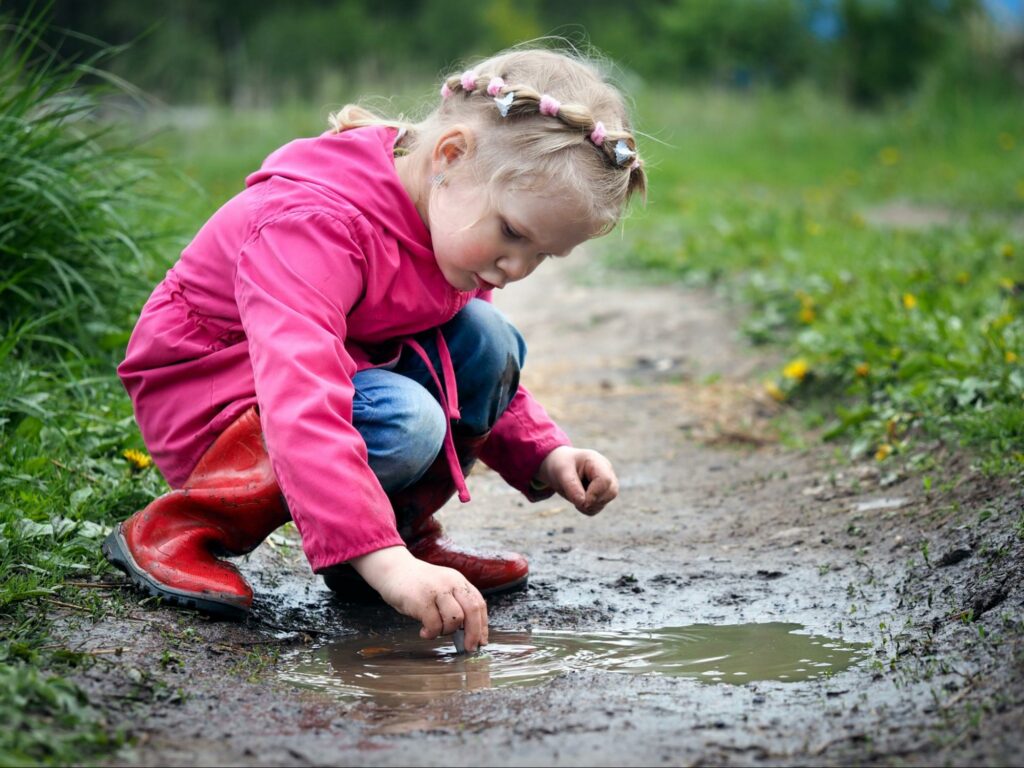
It can sometimes feel like growth requires leaving parts of your identity behind, or even renouncing it entirely.
You may think:
- “I need to become someone different to move forward.”
- “I need to distance myself from where I came from.”
The truth is that while it is messy, growth does not always require separation.
You can:
- keep what feels meaningful
- redefine what does not support you
- create space for new perspectives.
You can grow without losing your roots.
Sometimes growth looks like becoming more grounded. Sometimes it looks like understanding yourself more clearly. Sometimes it looks like allowing yourself to grow where you already are.
While it takes getting in the mud and pulling out the weeds, finding the root of who you truly are is worth it. Then you can bloom and enjoy the full radiance of the person you were destined to be.
Cultural Identity Evolves Over Time
If it feels like it’s too late – like there are just too many well-established weeds – don’t worry; it’s not. You can always get in the mud around the weeds and get to work.
Your cultural identity can shift as your life changes. In fact, that’s part of the power and beauty of identity!
Over time, you may notice:
- parts of your identity becoming more meaningful
- other parts becoming less aligned
- a clearer sense of who you are.
Your identity is not fixed. It evolves with your experiences, whether you’re a toddler learning about how to thrive in your little home environment or going through a midlife crisis, trying to figure out what you want out of life.
You can always dig around for the roots, strengthen them, and bloom once more.
How to Explore and Strengthen Your Cultural Identity
You may be sold that it’s time to get in the mud to grow. Now it’s time to think about how. All it takes are small steps to better understand your cultural heritage.
You might begin by:
- reflecting on your experiences
- noticing what feels meaningful to you
- reconnecting with parts of your background that support you
- setting boundaries with what feels overwhelming
- building relationships with people who support your growth.
Some helpful starter questions for this process include:
- What did you love about your childhood?
- What were you proud to share with your friends?
- Which eras of your life felt most natural and safe?
- When could you really be yourself?
As you answer these, remember: you do not have to choose one version of yourself.
All of the different versions can come together to nurture that root that you are freeing up as you remove the weeds. Under the pain and confusion lies a true, deep self that is beautiful and worth allowing to bloom, for all the world to see.
You deserve freedom and happiness. The world deserves the best version of you.
In nature, this is called a superbloom. One of the best depictions of how you can superbloom is found in a song by Misterwives, literally called ‘Superbloom.’
“Never rained in the desert til I
Picked me for the very first time
It’s darkest before the sunrise
That’s when I
Superbloom”
You can begin to integrate the different parts of your identity into something that feels grounded and aligned – something beautiful, whole, and good.
Key Takeaways
- Your cultural background shapes how you think, connect, and experience the world.
- Cultural identity includes your background, traditions, and environment.
- Cultural identity examples can show up in everyday habits, values, and relationships.
- It is normal for cultural identity to feel complex or conflicting.
- Some cultural experiences may feel supportive, and others may feel challenging.
- You do not have to reject your background to grow.
- Your cultural identity can evolve as you grow.
- You can develop a grounded, integrated sense of self over time.
How to Uncover Your Superbloom
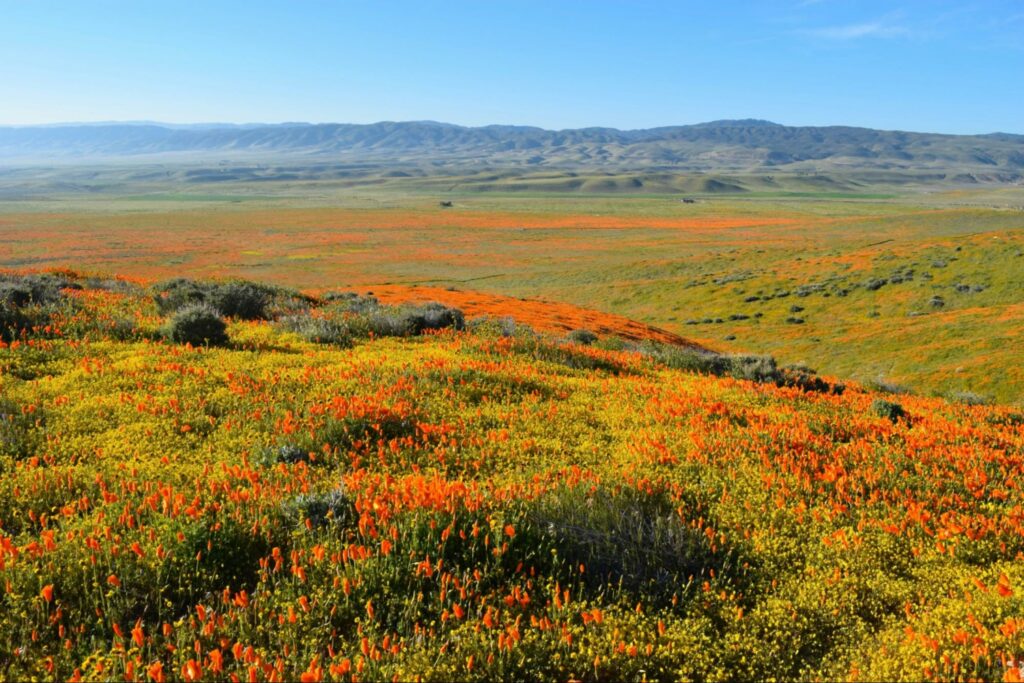
Growth does not always happen all at once.
At times, it may feel slow or uncertain. Then, something begins to shift when you get in the mud and start to remove the weeds…
You may feel more grounded.
You may understand yourself more clearly.
You may feel more comfortable being who you are in different spaces.
You have found the root, nurtured it, and now it’s time to superbloom.
This kind of growth can feel like rediscovering life again – like something that has been developing beneath the surface, finally breaking through.
You are not misplaced.
You are not behind.
You are still growing.
Indeed, you are growing into something incredibly beautiful.
When Online Therapy Can Help
If you feel overwhelmed navigating your cultural identity, working with an online therapist can help you explore your experiences and move forward in a way that supports your mental health.
At Makin Wellness, you can connect with a specialized online therapist who will help you better understand your identity, your relationships, and your next steps.
Your cultural background is not something you have to escape – it is something you can understand, shape, and grow within.
Additional clinical review provided by Allison Ho, MSW, LSW, Licensed Social Worker at Makin Wellness.
Further Reading:
FAQs:
Cultural identity is how your background, traditions, and environment shape who you are and how you experience the world.
Your cultural identity influences your sense of belonging, your relationships, and how you understand yourself.
Yes, your cultural identity can evolve as your experiences and environment change.
Examples include communication styles, traditions, values, food, and expectations around relationships or success.
This can happen when you experience different expectations or influences. It reflects complexity, not failure.
No, you can integrate different parts of your identity in a way that feels true to you.