
Family issues can shape your relationships, emotional health, and sense of identity for life. Whether you’re navigating conflict with your parents, adjusting to a blended family, carrying the weight of your family of origin, or wondering how to support a loved one through a challenging season, working with online therapists for family issues can help you move forward with greater clarity and hope. Online therapy offers a safe, compassionate space to better understand your family story, strengthen healthier patterns, and discover that you do not have to carry everything alone.
Family issues don't always look the way that you expect
When you hear the phrase family issues, you might picture explosive arguments, slammed doors, or a holiday dinner that ends with everyone storming out. High drama. And that’s true; sometimes that is what family issues look like.
At the same time, even more commonly, they can be much more subtle. For instance, have you ever found yourself in the school pickup line, wondering why you feel so exhausted before the afternoon has even begun?
Maybe you realized that you were smiling through a family gathering while quietly counting the minutes until you can leave. Perhaps your birth experience still makes your chest tighten every time someone asks how delivery went. You would love some postpartum support. Or you were recently staring at your phone before calling your dad because you honestly don’t know which version of him is going to answer today.
Your story is unique and so is your family. The same quiet question often remains though: “Is this something I could bring to an online therapist?”
Yes.
Your family story does not have to fit into a neat category or hit a certain level of drama before it deserves care. You do not have to wait until your relationships completely fall apart before asking for support. Many people begin online therapy simply because they want to understand themselves, their relationships, and their family patterns more clearly.
Perhaps the most important thing to know is this: Your family may have written the first chapters of your story. You still get to help write the chapters that come next.
What are family issues?
Family issues are ongoing patterns, experiences, or life events within your family that affect your relationships, emotional health, or daily life. They may involve communication, conflict, grief, parenting, addiction, mental health conditions, blended family issues, major life transitions, or experiences from your family of origin that continue to shape you today.
When is it time to see therapists for family issues?
Many people assume they should only reach out to therapists for family issues in the middle of a crisis, when life has truly fallen apart, when they’ve hit rock bottom.
Thankfully, that isn’t true.
One of the most common misconceptions that online therapists notice is that people believe they have to “earn” therapy by experiencing something dramatic enough. The truth is that online therapy for family issues is for anyone who wants to better understand their story. It’s there for the big moments, like the divorce court dates, and the seemingly littler ones, like when you feel guilty for taking a few minutes to yourself.
Family issues show up in a myriad of ways. You may notice them when you struggle to set boundaries without feeling guilty. You may recognize them in the way conflict makes you shut down, or in the pressure you feel to keep everyone else happy before paying attention to your own needs. You may even see them showing up in your marriage, your friendships, or the way you parent your own children. All of these reasons, and many more, are valid ones to start online therapy because it helps you to better understand your story.
As you begin to understand where certain patterns came from, you can also begin deciding which ones you want to carry into the future, and which ones you want to leave behind. After all, every family leaves you with something.
Some families leave you with deep security and encouragement. Others leave you with unanswered questions, painful memories, or responsibilities you were never meant to carry by yourself. Most leave you with a mixture of both. No matter what your family story looks like, you deserve a safe place to explore it with an online therapist. You don’t need to wait any longer.
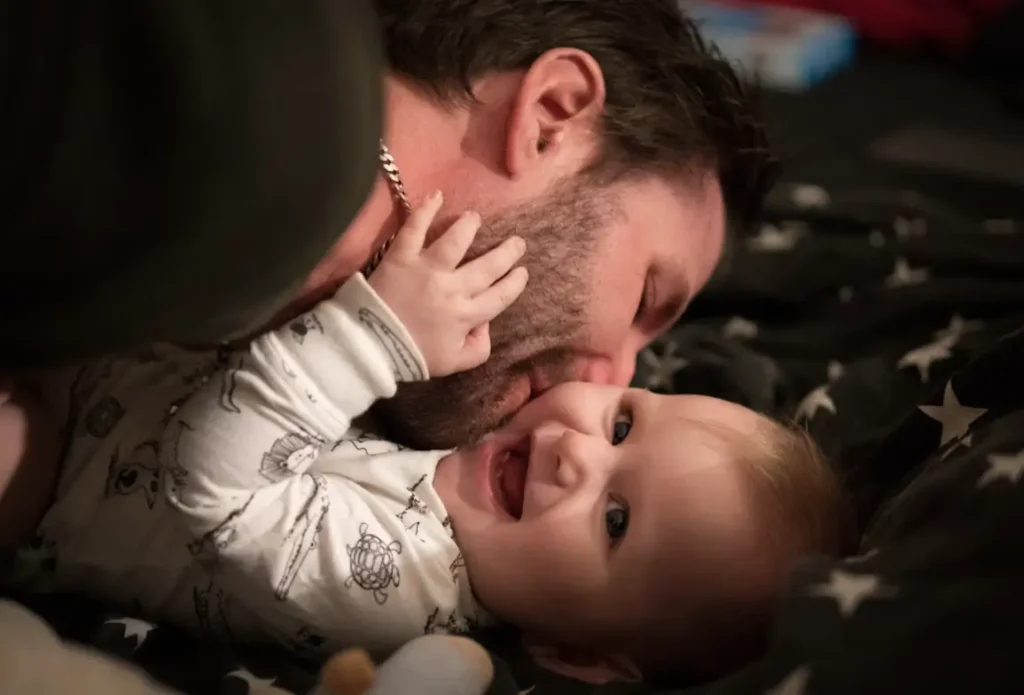
Family issues show up wherever there is… well… family.
When you think about issues in family, your mind may immediately go to arguments, divorce, or ongoing conflict. Those experiences certainly matter. At the same time, as we said earlier, family issues are often much quieter and far more personal than people expect.
You could be a young mom who is trying hard to give her little boys the best childhood that she possibly can, even as she wonders if she’s making mistakes that she can’t anticipate.
Maybe you’re grieving the loss of a parent and realizing that your family doesn’t know how to grieve together. Everyone keeps stepping on each other’s toes or giving each other the cold shoulder, when you really just need a shoulder to lean on instead.
Maybe you’re part of a blended family, trying to love children who are still grieving another version of their family, and who need your help moving forward…all while you are navigating how this new blended family is impacting you.
You could have grown up walking on eggshells around a parent with untreated mental health concerns or addiction. Years later, you’ve built a healthy life, yet you still find yourself bracing for conflict, apologizing when you haven’t done anything wrong, or feeling responsible for everyone else’s emotions. You and your partner are now trying to move forward from this trauma together.
You may consider yourself blessed: your family is loving overall and, simultaneously, you’re simply exhausted. You’re caring for aging parents while raising teenagers, balancing work, marriage, and friendships, and quietly wondering when you stopped feeling like yourself. Life happened and keeps happening.
Every one of these stories is welcome in online therapy and deserves to be worked out there. Your experiences do not have to fit someone else’s definition of “serious enough.” You may find yourself thinking, “well, it could definitely be worse.” And that’s true.
At the same time, if your family story is affecting the way you live, love, parent, grieve, or see yourself, it deserves thoughtful attention. You deserve thoughtful attention and support. Sometimes the greatest gift of online therapy is discovering that what has felt lonely for years is actually something you no longer have to navigate alone.

The three signs that your family issues may still be shaping your life
Not every family issue stays meekly inside the time that it happened. Pain like that isn’t tame. Usually, it quietly follows you into adulthood, shaping the way you relate to yourself and the people around you. You may not even recognize the connection until an online therapist gently helps you connect the dots.
In fact, researchers (like those with The Bowen Center for the Study of the Family) have spent decades studying how early family relationships influence emotional development across entire lifetimes so that people can start to see how those relationships impact their stories.
That’s why having someone help you understand your family story better can be so liberating. Here are three signs that that story may still be influencing your life today.
1. The same relationship patterns keep repeating.
Have you ever found yourself wondering why different relationships with different people somehow leave you feeling the same way?
Maybe you become the peacemaker in every friend group. You want to finally have fun, yet somehow the responsibility of keeping the peace keeps falling on your shoulders. Or maybe you find yourself drawn to emotionally unavailable partners. You resolve not to date again until you find someone who will really care… You think you find someone who does, and discover that yet again you’re with someone who can’t care like you deserve. The key is that these patterns do not mean something is wrong with you.
Often, they are learned ways of relating that began much earlier in your life. The way you experienced love, conflict, encouragement, or emotional safety within your family can quietly shape how you experience relationships today. Learning about your attachment style through online family therapy can be a helpful place to begin understanding these patterns.
2. You carry responsibilities that were never yours to carry.
You may feel responsible for another person’s happiness, moods, or choices. You may apologize automatically, struggle to say no, or feel guilty anytime you prioritize your own needs. These are common patterns if you grew up believing that you are responsible for keeping the peace, called upon to care like a parent would for other siblings, got criticised by family members for making independent decisions, or had to have your own back.
Sometimes these patterns develop within enmeshed family relationships, in which personal boundaries become blurred and your identity is closely tied to taking care of someone else. Healthy relationships allow you to care deeply about others while still remaining connected to yourself. That’s part of reclaiming your story.
3. You aren’t sure where your family’s story ends and your own begins.
Every family shapes you. Your family traditions, values, struggles, and relationships all become part of your story. At the same time, they do not have to become the whole story. As you grow, you have the opportunity to explore your own identity formation and decide which beliefs, habits, and patterns still fit the person you are becoming.
This isn’t about rejecting your family; far from it! It’s about understanding your story and your family’s story well enough to live it intentionally. That is one of the greatest gifts online therapy can offer. As you better understand where your patterns came from, you also gain the freedom to choose healthier ways of moving forward, taking and leaving what you need to to live a full and joyful life.
How online therapy helps you to move forward through family issues

By the time many people begin online therapy, they have already spent months – or even years – trying to figure things out on their own. You’ve probably replayed conversations in your head. You’ve searched for answers online. You’ve wondered whether you’re overreacting or whether everyone else’s family is somehow handling life better than yours.
One of the most encouraging things you can discover in online therapy is that you no longer have to untangle your family story alone. An online therapist isn’t there to tell you who was right or wrong, who’s to blame, or who you need to cut off.
Instead, they help you slow down, notice patterns, understand your experiences, and begin responding in ways that support your emotional health rather than simply reacting out of old habits.
What online therapists often notice about family issues
One of the most common patterns that online therapists notice is that people often arrive believing that they need to change someone else before their own life can become healthier. And that thought makes sense.
You may think that life will get better once he stops drinking, once custody litigation wraps up, once your parents start online therapy, once your child gets a diagnosis and good treatment, etcetera. And yes, those outward circumstances that are outside of your control would have great effects in your life if they changed.
At the same time, they are outside of your control. Online therapy gently shifts the focus toward something you can actually influence so that you can start to find happiness and peace in the middle of the storm. It helps you to begin to achieve your own growth.
As you begin understanding your boundaries, your communication, your emotional responses, and your identity, you often discover that you have more freedom than you realized, even in challenging situations that you might face.
That doesn’t mean that every family relationship suddenly becomes easy. It does mean that your family’s patterns no longer have to determine every part of your future. Their choices no longer control you.
Many people discover that online therapy helps them:
- communicate more confidently and set healthier boundaries.
- process grief, major life transitions, or unresolved family experiences.
- understand long-standing family patterns with greater compassion and clarity.
- strengthen relationships that are healthy while navigating those that remain challenging.
- reconnect with parts of themselves that may have become buried beneath years of caregiving, conflict, or people-pleasing.
You cannot rewrite your family’s story overnight. You can begin by writing a healthier chapter of your own.
What if my family won't participate in online therapy?
At the same time, the question could still be nagging you: “What’s the point if my family won’t come?”
You may think to yourself that it would be lovely to start seeing an online therapist to help you to write a healthier chapter of your own, yet, you may feel skeptical that it would work without everyone else’s cooperation.
While family members are certainly welcome to participate when it makes sense, many people begin online therapy on their own. It’s a normal first step in the process of family therapy! You come to better understand your family story, strengthen your emotional health, and learn healthier ways of responding to the relationships that matter most. You get to write the first chapter of the healthier legacy of your family and see what happens next.
You cannot make another person communicate differently. You cannot choose someone else’s boundaries. You cannot make someone apologize before they’re ready.
You can learn how to respond differently. You can learn to communicate with greater confidence. You can learn to recognize unhealthy patterns before they quietly become your normal. You can learn how to care deeply about the people you love without losing yourself in the process.
Sometimes those changes influence the entire family. Sometimes they don’t. Both can be healthy outcomes for you.
Another concern many people carry is this: “Does going to online therapy mean I’m betraying my family?”
Not at all.
Seeking support does not mean that you are criticizing your parents, your spouse, your children, or your siblings. Actually, it shows that you are trying to improve your relationships with them. You haven’t given up. You’re choosing to understand your experiences with honesty and compassion.
In fact, one of the most surprising things that people often discover is that online therapy helps them develop more empathy, not less. As you begin understanding your family’s history, your own needs, and the pressures everyone has been carrying, you can often approach relationships with greater wisdom instead of greater resentment.
You may also be wondering: “Is my story really serious enough to warrant online therapy?”
If you’re asking that question, you’re not alone. One of the most common misconceptions online therapists hear is that people believe they should wait until life completely falls apart before reaching out for support. The truth is much simpler. You don’t have to earn the right to receive care.
If something in your family story continues to affect your relationships, your confidence, your parenting, your grief, or your emotional health, it is worthy of attention. You deserve a place where your story can be heard with curiosity, compassion, and hope.
Your family story doesn't have to be the end of the story

Every family leaves you with something. Your story is beautifully complicated, filled with both love and loss, joy and grief, gratitude and unanswered questions. Most family stories are.
The beautiful thing about your story is that it is still being written. You cannot change your childhood. You cannot rewrite conversations that happened years ago. You cannot choose how another family member responds to you today.
You can choose what comes next. You can learn healthier ways to communicate. You can better understand your identity, your relationships, and the patterns that have shaped your life. You can move forward with greater confidence, healthier boundaries, and renewed hope. And you never have to take those first steps alone.
If your family story has been weighing on your heart – whether it’s connected to conflict, grief, parenting, blended family issues, your family of origin, or simply a quiet feeling that something isn’t quite right – working with one of Makin Wellness’ specialized online therapists for family issues can help you better understand your experiences and discover a healthier path forward. If you and your partner specifically are looking for a couple’s online therapist, we would love to connect with you as well.
No matter where your story is at, you deserve a place where it is heard. You deserve support that meets you with compassion instead of judgment. And you deserve the opportunity to write the next chapter with hope.
Further reading
Family issues FAQs
Online therapy can help with conflict, parenting concerns, blended family issues, grief, family-of-origin experiences, estrangement, caregiver burnout, cultural differences, and many other family-related challenges. Essentially, if it involves family and it’s affecting your emotional health, it belongs in therapy.
Your experience doesn’t need to fit a specific category or reach a certain level of severity. Whether you’re navigating a major life transition or simply carrying a quiet weight you can’t quite name, an online therapist can help you understand your story more clearly and move forward with greater confidence.
If your family story continues to affect your relationships, confidence, parenting, communication, or emotional health, it may be time to reach out to a therapist for family issues. You do not have to wait until a situation becomes overwhelming.
Many people assume they need to hit rock bottom before seeking support, but that isn’t true. If you notice recurring patterns, emotional exhaustion, or a quiet sense that something isn’t quite right, those are all valid reasons to begin online therapy. The sooner you start, the sooner you can begin building healthier ways of relating to yourself and the people you love.
Yes, online therapy is well-suited to help with blended family issues, including navigating changing roles, new relationships, grief, and shifting expectations. A therapist can help you approach these transitions with greater clarity and compassion.
Blended families carry unique complexities: children grieving another version of their family, stepparents finding their footing, and everyone adjusting to new dynamics at the same time. An online therapist helps you slow down, identify what each person needs, and respond intentionally rather than reactively, so your blended family can grow stronger together.