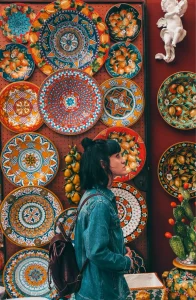
Identities and identity formation continue evolving throughout your life. Family, culture, school, dating, exploring gender identity, social media, and your career all influence how you understand yourself. While identity exploration can sometimes feel confusing or overwhelming, these experiences also help illuminate the person you are becoming. By reflecting on these influences with curiosity and compassion, you can better understand your identity and move toward a life that aligns with your values.
What shapes identities and identity formation today?
Identities and identity formation are shaped by the environments you live in. Your family relationships, cultural influences, friendships, dating experiences, gender identity, social media, and professional environments all contribute to the process of identity exploration. These experiences gradually influence how you understand yourself, what you value, and how you want to live.
Even when your identity feels uncertain, the influences around you can continue to shape who you are becoming. Identity formation does not stop after adolescence. Instead, it continues evolving as you move through new relationships, environments, and moments of self-reflection.
Understanding these influences can help you recognize the ways your identity is still forming today.
Identity formation definition
Identities and identity formation refer to the lifelong process of discovering who you are, what you value, and how your experiences shape the way you understand yourself and your place in the world.
Identity formation begins early in life through your relationship with caregivers and the environments in which you grow up. As you move through adolescence and adulthood, identity exploration continues evolving through your friendships and cultural influences, by exploring gender identity, and by engaging in the worlds of social media, dating, and your professional life.
Rather than arriving all at once, your identity gradually forms in the context of the environments around you.
The lights surrounding your identity
Navigating identities and identity formation rarely happens all at once.
Instead, your identity unfolds gradually. Sometimes these influences appear in moments that seem ordinary at first: a conversation that changes how you see yourself, a relationship that reveals something about your values, or a decision that helps you recognize what truly matters.
If you recently read our article on identity formation theories, you may already be familiar with the psychological frameworks that explain how identity begins developing early in life. Researchers like James Marcia and Dan McAdams have explored how your relationships, emotional development, and self-reflection shape identity formation in your childhood and adolescence.
This article focuses on something slightly different.
Rather than looking only at theory, we are going to explore the environments that continue shaping your diverse identities and identity formation in everyday life.
As you move through the world, different influences begin surrounding you. Wrestling with family expectations, friendships, and cultural traditions, exploring gender identity, dating, and social media, and adapting to professional environments – these can all contribute to your unique journey of identity exploration.
At first, these influences may feel subtle.
Over time, they gather around you.
You might imagine them like soft lights surrounding you as you stand in a dark room. Each light reveals something new. One illuminates your values. Another highlights your relationships. Another reveals your ambitions.
Together, these lights slowly illuminate who you are becoming… until the room is full of light and the picture is crystal clear.

Family influences on your identities and identity formation
Some of the earliest influences shaping your identities and identity formation begin in the spaces where you grow up.
Long before your identity becomes something you consciously think about, family routines, conversations, expectations, and emotional patterns begin shaping how you see yourself. These early experiences often become the first ‘lights’ surrounding your identity.
Psychologists have spent decades studying this process. If you want to explore the research behind early identity development, our guide to identity formation theories explains how researchers like Margaret Mahler and Erik Erikson understand the foundations of your identity.
Mahler’s work on separation–individuation, for example, focuses on how you gradually begin recognizing yourself as a separate individual while remaining emotionally connected to your caregivers. Through this process, you slowly develop autonomy and a clearer sense of self.
In everyday life, these developmental dynamics can appear in many forms.
Some families encourage independence while also offering strong emotional support. Others emphasize loyalty and closeness, sometimes creating blurred boundaries that resemble enmeshed relationships. In other situations, you may take on responsibilities that usually belong to adults, an experience often described as parentification.
Reflecting on your family influence can bring mixed emotions to the surface. Some memories feel warm and grounding – perhaps a parent encouraged your creativity, supported your education, or believed in you when you doubted yourself.
Other experiences may feel more complicated and painful…
Whatever the case, family influence represents one of the earliest environments shaping your identity, and it remains influential well into your adult years.
Wonderfully, as life expands beyond the home you grew up in, new environments begin adding their own lights and possibilities to the process, empowering you to create a family that aligns with your unique identity and values.
Bicultural identity and identity exploration across cultures
Identity exploration can become especially meaningful when more than one culture influences your life.
There is a charming animated film called Ponyo, loosely inspired by the classic Little Mermaid story. In the film, a curious fish-girl becomes fascinated with the human world and begins moving between two very different environments: the ocean she came from and the world she is discovering.
If you are navigating bicultural identity, life can feel a little like that.
You may notice this when the traditions in your home differ from the culture surrounding you at school, work, or in your community. Family expectations, religious traditions, language, and cultural values may shape one part of your life, while the environment outside your home introduces different customs and perspectives.
Researchers often refer to this experience as bicultural identity, and studies on bicultural identity integration suggest that learning to move between cultures can become an important part of your identity exploration journey.
Imagine a middle school classroom in a Philadelphia suburb. Even within a single classroom, students may be navigating different traditions around Ramadan. Some students fast during the school day, others do not. They all follow unique practices shaped by their family’s culture or country of origin.
In moments like these, identity exploration is quietly unfolding.
At times, navigating multiple cultural worlds can feel challenging. You may wonder where you fully belong or how different expectations fit together.
Yet bicultural identity can also become a beautiful part of your different identities and identity formation. Moving between cultures often builds your empathy, adaptability, and perspective.
Each culture becomes another light enveloping your identity.
School, friendships, and dating in identity exploration

As your world expands beyond family, new environments begin shaping your journey of identity exploration.
School introduces friendships, social groups, mentors, and early relationships that influence how you understand yourself.
You may remember the first time you felt like you truly belonged somewhere. Maybe it was a group of friends who understood your slightly quirky humor. Maybe it was a teacher in sixth grade who noticed your curiosity or creativity in math.
School environments also introduce group dynamics. Sometimes people behave differently when they are part of a group, a psychological phenomenon known as deindividuation.
For many people, school is also where dating begins.
Singer Conan Gray captures this experience beautifully in People Watching, describing what it feels like to observe relationships and try to understand how love works.
Sometimes exploring your identity in the dating world feels a little like Rapunzel in Tangled when – spoiler alert(!) – she finally sees the floating lanterns and realizes that true love isn’t controlling or manipulative.
In moments like that, everything becomes clear.
You begin recognizing the kind of connection that feels genuine and the kind that does not.
These experiences shed new light on your identity.
Exploring gender identity and self-understanding
As identity exploration continues, you may eventually find yourself reflecting on gender in ways you did not expect.
Sometimes these reflections begin quietly. You notice that certain expectations feel comfortable while others do not. You may think about how you express yourself or how others perceive you.
These questions are part of how identity grows.
Psychologists often describe identity development as a process shaped through self-reflection, where people gradually make sense of their experiences and the meaning those experiences hold in their lives.
For many people, exploring gender identity becomes a meaningful part of identity exploration.
Research on gender identity frameworks suggests that personal experience, culture, relationships, and reflection all influence how people understand their gender.
Sometimes, this process brings clarity.
Other times, it may feel confusing or emotionally heavy.
If you have ever experienced that tension, your experience deserves compassion.
No matter your experience, with the right blend of patience and curiosity, these reflections can become another light surrounding a clear sense of your identity.
Social media and digital influence on identity formation

Some mornings begin with the glow of your phone screen.
Before your feet even touch the floor, you might scroll through messages, notifications, and videos. Maybe your group chat exploded overnight. Maybe your crush finally texted back. Maybe you found a creator who explained something about your life in a way that suddenly made you feel understood.
These small digital moments are now commonplace in everyday life.
And they can influence your identities and identity formation more than you sometimes realize.
Research on social comparison shows that online environments can shape how you evaluate yourself when you see curated images of other people’s lives. If you have ever compared your life to someone else’s highlight reel, you may find it helpful to explore our article on self-worth.
Influencers can also shape the way you explore your identity. Watching someone share their routines, beliefs, or personal experiences can influence how you imagine your own future. This article on influencers explores this experience more deeply.
Social media can sometimes feel overwhelming. Comparisons never fully turn off. Conflict spreads quickly.
Yet digital spaces can also introduce supportive communities and meaningful conversations to your life, so that even glowing screens can become lights supporting your identity exploration.
Identity formation in your professional career
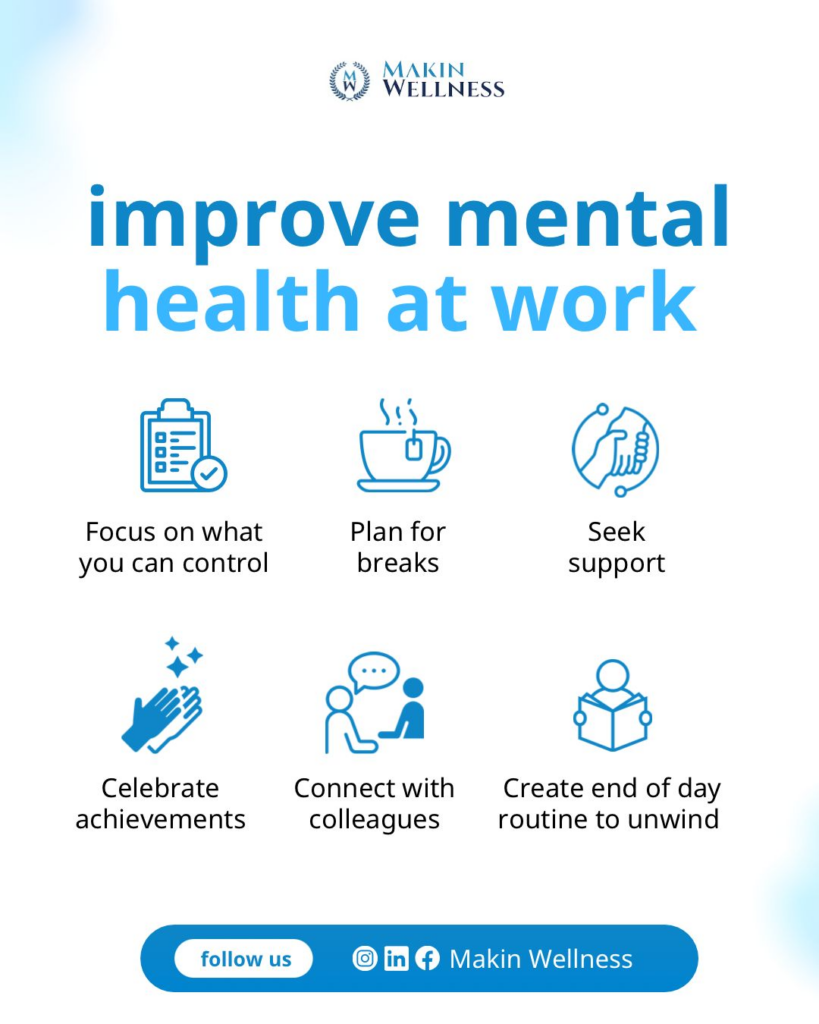
Eventually, identity exploration enters another environment, one in which you will spend a large part of your life: work.
Early in your career, it is normal to feel like you are still figuring things out.
Researchers refer to this process as professional identity formation.
Studies in medical education, for instance, show that even highly trained students do not immediately feel like doctors when they begin practicing. Their professional identity develops gradually through experiences with patients, mentors, and challenging decisions.
If you have watched The Good Doctor, you have seen a fictional version of this process unfold.
The same pattern appears in many careers.
If you have experienced identity confusion early in your career, know that is by no means unusual. In many ways, it can be a healthy contributor to your identity formation.
Little by little, your work experiences begin adding their own lights to the ‘room’ encompassing your identity.
When your identity feels lost or uncertain
Even with all these influences vying for a place in your sense of self, there are seasons when the lights shaping your identity feel harder to see.
Sometimes, exploring your identity can feel confusing instead of exciting. You may question your path or feel discouraged about yourself.
If your thoughts continue to turn inward, you may find it helpful to explore our article on self-hatred.
Many people also benefit from learning about radical acceptance, which involves acknowledging reality while still treating yourself with compassion.
All of which is to say: identity formation does not move in a straight line.
Even during challenging seasons, small moments continue shaping who you are becoming.
Slowly, new lights begin appearing again.
What will your next steps with identity formation be?
You may be noticing something as you reflect on the different components of your identities and identity formation: your identity has never formed in isolation.
Family, culture, friendships, dating, social media, work, and reflection have all shaped your identity in subtle ways.
Some influences feel bright, while others feel confusing. Yet each experience contributes to your identities and identity formation.
If you want to dig deeper into your identity, you do not have to navigate that journey alone.
Working with an online therapist can help you reflect on the experiences that have shaped your identity to better support your mental health journey.
At Makin Wellness, we care deeply about supporting your mental health and helping you build healthier relationships.
Make an appointment or call (833)-274-heal to be matched with a specialized online therapist today.