
ADHD Awareness Month takes place every October and helps raise awareness about Attention-Deficit / Hyperactivity Disorder (ADHD), challenge common myths, and connect people with information and support. It matters because ADHD can look very different from the stereotype many people grew up with, particularly for women who may have spent years wondering why everyday responsibilities seem harder than they should. If you’ve been fighting through everyday life alone with ADHD, wondering why it feels so much harder for you than it seems to be for everyone else, ADHD Awareness Month exists to provide you with a boost of support that can make all the difference.
You’ve been spinning plates your whole life… whether you want to or not.
One plate is the morning routine you can never quite get right: the forgotten lunchbox, the frantic search for your keys, the sprint to the car when you swore today would be different. Your youngest daughter somehow walked out the door for school with her beautiful hair completely unbrushed and sticking about three feet in the air. Oh, and you were up until 3am working on that home repair project that you realized needed to be done once the kids went to bed.
Another plate is your career: the creativity and big-picture thinking that makes you brilliant at your job, paired with the missed deadlines and overflowing inbox that make you feel like a fraud.
Yet another plate is the friendship you keep meaning to nurture, except somehow three months have passed since you last texted her back. Though you really do care about her, every time you pick up your phone to text her, you realize that something else needs to be done. By the time that’s complete, you’ve forgotten again.
Frankly, you probably feel like you’re not just spinning plates. You’re spinning plates while walking on a tightrope. And the truth is that each plate holds something precious… and dropping them can have different levels of consequence for you and your loved ones.
Each one takes energy that you’re not sure you have, unseen and uncelebrated by those around you. If this is familiar to you, ADHD Awareness Month is for you. It’s time to feel the communal support that you deserve as you walk through life spinning plates on a tightrope.
What is ADHD Awareness Month?
ADHD Awareness Month happens every October (October 1–31). It’s a global campaign dedicated to sharing accurate information about ADHD, challenging the myths that keep people stuck in shame, and creating space for people with ADHD to feel seen, supported, and celebrated for who they are.
You are not the only one spinning plates… even though it feels like it
While you might not have said it out loud… at the end of the day, when you realize that you forgot to pay the mortgage again, the trash never got taken out, and you misplaced the milk, which rotted in the cereal cupboard, you turn to the internet. This is your 2 AM Google search: “why can’t I get my life together?!??!!”
Here’s what you need to know: there are millions of women doing the exact same search. The fact is that approximately 7 million children and 15.5 million adults in the U.S. have ADHD.
And the truth is that for women specifically, the path to understanding your experience with ADHD is often long, lonely, and full of wrong turns. You may have spent years hearing that you’re “just stressed,” “too sensitive,” or “not applying yourself.” You may have received treatment for anxiety or depression without anyone asking what was underneath those symptoms.
ADHD Awareness Month exists because too many people have carried this weight alone of being misunderstood and isolated for too long. It exists because:
- You deserve community, not just coping mechanisms.
- You deserve to know that the chaos in your head has a name.
- You deserve to hear other women describe the exact thing you’ve been hiding.
This month says: come as you are. Messy, overwhelmed, plates wobbling, trying not to fall off the tightrope. You belong here. We all know what it feels like to balance plates on a tightrope and we’re here to stand around you as that buffer you need to keep going.
The myths that kept you silent when you needed to scream
Part of why ADHD can feel so isolating is that the world has been telling you the wrong story about it for decades.
You may have heard:
- “You just need more discipline.”
- “You’re too smart to have ADHD.”
- “ADHD is only for hyperactive little boys.”
- “If you can focus on things you enjoy, you don’t have ADHD.”
Let’s be crystal clear from the get-go: every single one of these is false. And every single one has kept real women and girls from getting the support that they needed.
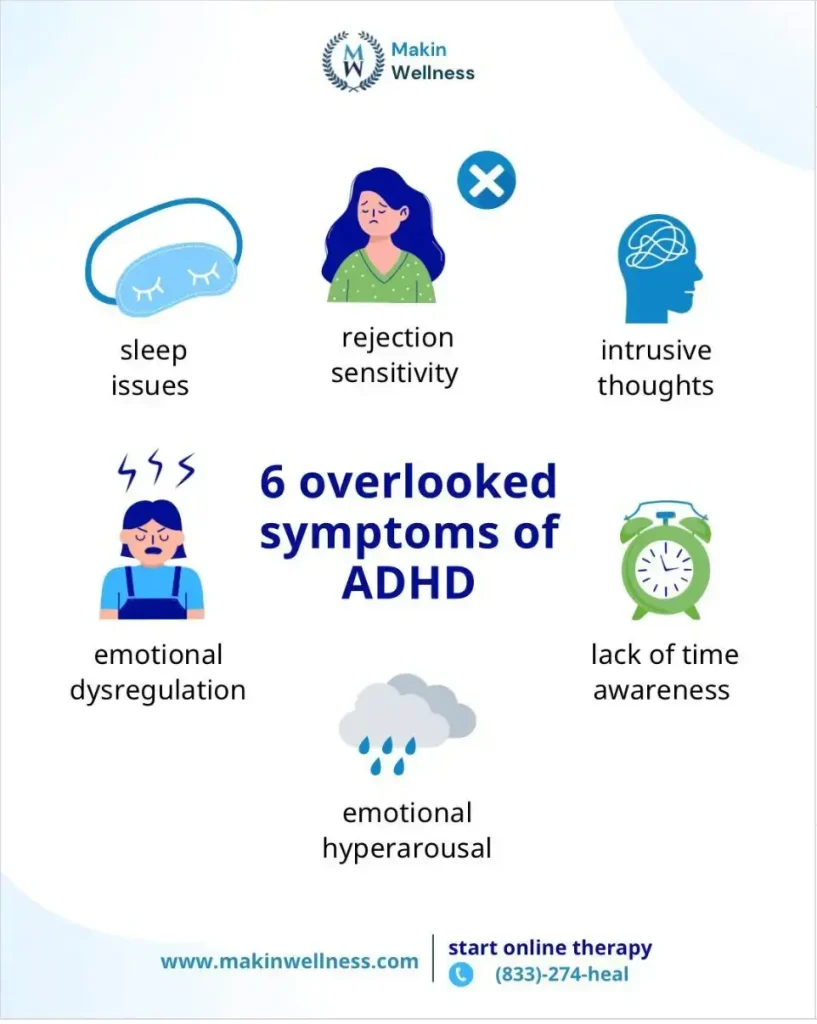
For many, the stereotype of the hyperactive boy bouncing off classroom walls meant they never even considered that their own struggles could be ADHD. The truth is that ADHD in women often looks like emotional overwhelm, chronic disorganization, executive dysfunction, and a deep internal restlessness that others rarely see.
You’re a brilliant, creative, caring mother who also forgot to put gas in the car and you’re running on literal fumes. You’re constantly playing games with the kids like Where’s My Purse and Find Mommy’s Phone because your brain treats anything as out of sight as out of mind. It looks like the paralysis of wanting to do that important project (like cleaning the toilet) and then not being quite able to start.
If that sounds familiar, you’re not broken. Even if this doesn’t look like the stereotype, it deserves just as much intentional care, compassion, and support. You’ve been unsupported. This month is here to start changing that.
What makes National ADHD Awareness Month so powerful?
Here’s what makes October ADHD Awareness Month special: it’s not a lecture or an article. It’s not another influencer trying to tell you how she hacked her ADHD. What makes this month powerful is that it’s all about community.
Think about what happens when people who’ve been carrying something heavy finally come together and share their stories. The shame gets quieter as someone describes your exact Tuesday morning and suddenly you’re nodding your head and laughing instead of crying about it. You feel seen. You hear how other people cope. And you realize that you’re not alone and you can keep going with people surrounding you who will make sure you don’t fall off the tightrope.
That’s what this month is for. Not performance. Not perfection. Just people being honest about what life with ADHD actually looks like, and choosing to love each other (and themselves) no matter how many plates have crashed to the ground recently.
When women share their ADHD stories openly, several things happen:
- Someone who didn’t know they had ADHD suddenly recognizes herself.
- Someone who’s been ashamed realizes she has nothing to be ashamed of.
- Someone who feels like the only one discovers an entire community that gets it.
- Someone who’s been managing alone finally feels brave enough to seek support.
The power of ADHD Awareness Month isn’t that somehow you use it to “fix” yourself. The power of it is that you can finally experience being seen, and learning to see yourself with compassion instead of criticism.
How to make October ADHD Awareness Month meaningful: see, share, and seek
You don’t need to be an advocate or an expert to participate. In other words, you don’t have to come to the table with everything figured out. Actually, this is the one place where you can show up with the intensity of the chaos front and center. All that you have to do is show up.
Here are three ways that you can show up during ADHD Awareness Month to be supported by the community that you need:
1. See yourself clearly
Give yourself permission to learn about your brain. Explore what stimming really is and why it helps you regulate. Understand why you freeze even when you desperately want to move forward. Discover how dopamine shapes your motivation (or lack of it). Learn why sleep issues and ADHD travel together. Read about the different types of ADHD and notice which one makes you nod.
To be clear: this isn’t homework. It’s self-compassion in action. As you read, the goal is for you to feel seen and have those “ah-ha” moments that will help you to be able to communicate your journey with ADHD more clearly with others. And, very valuably, it may be the first time you’ve looked at your own patterns without judgment.
2. Share your story
Awareness grows when women are willing to share their stories. You don’t need a platform or a following. Start small:
- Tell a trusted friend what ADHD actually feels like for you.
- Share a resource that helped you understand yourself better.
- Post something during the month, even if it’s just a sentence.
- Use conversation starters like “How does ADHD show up in your daily life?” or “What helps you manage it?”
When you break the silence, you give someone else permission to do the same. And remember: your story isn’t just your struggle. It’s also your creativity, your resilience, the way you figured out how to keep going when everything in you wanted to shut down. ADHD Awareness Month celebrates all of it.
3. Seek support
If you’ve been managing alone, this is your invitation to stop. Whether that means taking an ADHD assessment, booking a consultation with an online therapist, joining an online ADHD community, or practicing mindfulness for the first time, reaching out is not weakness. It’s one of the bravest, most loving things you can do for yourself.
Handing someone you trust one of your plates isn’t giving up. It’s caring for yourself so that you can be lovingly supported by the strength of community.
What online therapists notice during ADHD Awareness Month
October brings a wave of women who finally feel brave enough to ask, “Could this be ADHD?”
They come into sessions with our online therapists, saying things like:
- “I saw something online, and it described my entire life.”
- “I thought everyone felt this way. Apparently they don’t.”
- “I’ve been called lazy my whole life, and I’m starting to wonder if something else is going on.”
These same women are often some of the most resourceful, creative, and deeply caring people in the room. They’ve been running marathons with invisible ankle weights, blaming themselves for not keeping up, and still showing up every single day for the people who depend on them.
We also notice that once you finally understand that your brain works differently (not wrongly), something shifts. The labels start falling away. The shame loosens its grip. And for the first time, you can build strategies that actually work with your brain instead of constantly fighting against it.
That shift often starts with a single moment of awareness. A conversation. An article. A month that says: it’s okay to look closer.

How online therapy supports you beyond October
October is a starting point, not a deadline. No matter what month it is, a specialized online therapist who understands ADHD can help you:
- Process the grief of being unseen for so long.
- Develop focus strategies that work with your brain.
- Identify your unique ADHD patterns without shame or judgment.
- Navigate everyday demands that feel heavier than they “should.”
- Practice mindfulness techniques that help quiet the mental noise.
- Build executive functioning skills that make daily life more manageable.
- Address co-occurring anxiety or concentration challenges that may be tangled with your ADHD.
Online therapy also removes one of the biggest barriers for people with ADHD: the logistics. No driving across town. No arriving late and feeling shame about it. You connect from your own space, on your own terms.
Find the ADHD support you deserve with Makin Wellness
Curious whether online therapy could help you or someone you love manage ADHD? Schedule an appointment with a Makin Wellness online therapist who specializes in ADHD to help figure out the right next step.
Your Makin Wellness online therapist can answer any questions you have about the ADHD symptoms you or your loved ones may be experiencing. And whether you’re in Pennsylvania, Florida, South Carolina, Maine, or Vermont, you can connect with a specialized online ADHD therapist from the comfort of your home.
Call us at (833)-274-heal or start here to schedule an appointment with one of our caring online therapists today.
It’s time to feel supported on the tightrope, to hand off a few plates, and to know that there are hands here to catch you if you start to fall.
Key takeaways
- ADHD Awareness Month happens every October and exists to replace myths with truth, shame with community, and isolation with support.
- Millions of women live with undiagnosed or misunderstood ADHD, often believing they’re lazy, broken, or “too much.”
- This month is a gathering, not a lecture. It’s about coming together, sharing stories, and celebrating the strength it takes to keep showing up.
- The “See, Share, Seek” framework gives you three simple ways to make October meaningful.
- Online therapy can help you build a life that works with your brain, one plate at a time.
- You are not lazy. You are not failing. You are someone who has been fighting every day, and that fight deserves to be celebrated.
Further reading
ADHD Awareness Month FAQs
ADHD Awareness Month takes place every October (October 1–31) and is a global campaign focused on education, myth-busting, and community-building around ADHD.
October ADHD Awareness Month grew from a single awareness day (established in 2004) into a month-long movement supported by communities worldwide who share stories, resources, and encouragement throughout the month.
The purpose of National ADHD Awareness Month is to replace myths with facts, reduce stigma, celebrate neurodivergent strengths, and help more people access the support they deserve.
ADHD affects people across all ages, genders, and backgrounds. Awareness campaigns help those who are undiagnosed recognize their experiences, encourage loved ones to offer understanding instead of judgment, and remind everyone that ADHD is a real, manageable condition, not a character flaw or a lack of willpower.
You can support someone with ADHD by educating yourself about what ADHD actually looks like, asking how it shows up in their daily life, and offering patience and genuine curiosity instead of unsolicited advice.
Start a conversation. Ask open-ended questions like “What helps you manage your ADHD?” or “How can I support you in a way that actually feels helpful?” Sometimes the most powerful thing you can do is simply listen without trying to fix it. If they’re open to it, share resources or encourage them to explore online therapy with a specialized online therapist.
No. ADHD is a lifelong neurodevelopmental condition that persists into adulthood for more than 75% of people diagnosed as children. Many adults (especially women) are not diagnosed until their 20s, 30s, 40s, or later.
ADHD research historically focused on hyperactive boys in classroom settings, which means generations of women grew up without the support they needed. If you suspect ADHD as an adult, an ADHD assessment with a specialized online therapist is a helpful first step toward clarity and self-compassion.
If you’ve experienced chronic patterns of time blindness, emotional intensity, starting tasks and stalling out, forgetfulness (“out of sight, out of mind”), and the exhaustion of masking your struggles throughout most of your life, an ADHD diagnosis may be worth exploring.
These patterns typically span years (not just a stressful season) and affect multiple areas: work, relationships, daily routines, and self-image. A specialized online therapist can help you distinguish between ADHD and other conditions like anxiety or depression that may look similar on the surface.
Yes. Online therapy is an effective, research-backed approach to managing ADHD. A specialized online therapist can help you understand your unique ADHD patterns, develop practical coping strategies, and address co-occurring anxiety or depression.
Online therapy also removes common ADHD barriers like time management challenges and the shame of running late. You connect from your own space, on your own schedule, with an online therapist who genuinely understands how ADHD impacts your life.