
Stimming (self-stimulatory behavior) is incredibly common in people with ADHD. It includes things like leg bouncing, pen clicking, humming, skin picking, and even mental loops like replaying conversations. These behaviors help your brain regulate dopamine and manage focus, emotions, and sensory needs. While most stimming is healthy and helpful, if it’s causing physical harm, relationship strain, or shame, you may want to work with an online therapist who specializes in ADHD and can help you develop strategies that work with your brain, not against it.
Do you catch yourself clicking a pen during meetings, bouncing your leg under the table, or humming the same melody on repeat without realizing it? Maybe you twirl your hair while reading, pick at your skin when you’re anxious, or replay the same conversation in your head over and over.
If you have ADHD, these behaviors probably feel automatic, like something your body just does. That’s because they are. This is called stimming, and it’s a completely normal part of how your ADHD brain regulates itself.
Stimming, short for ‘self-stimulatory behavior,’ refers to repetitive movements, sounds, or mental patterns that help your nervous system find balance. While stimming is often associated with autism, it’s incredibly common in people with ADHD as well, especially in women who may have learned to mask these behaviors to fit in.
“Something important to clarify is that stimming itself isn’t necessarily a problem,” says Alexander Noel, MS LPC. “The important question is to ask, ‘What is this behavior doing for me?”. If it is helping you to focus, regulate your emotions, or meet a sensory need without causing harm, there is often no need to suppress or extinguish those behaviors. Stimming becomes more of a concern when the behavior is causing injury, distress, or is disruptive in daily life.”
In this article, we’ll explore what ADHD stimming is, why it happens, what it looks like, and when it might be time to seek professional support.
What is ADHD stimming?
ADHD stimming is when a person with Attention-Deficit/Hyperactivity Disorder (’ADHD’) repeats certain movements, sounds, or thought patterns, often without conscious awareness. These self-stimulatory behaviors serve an important purpose: they help regulate your brain’s need for sensory input.
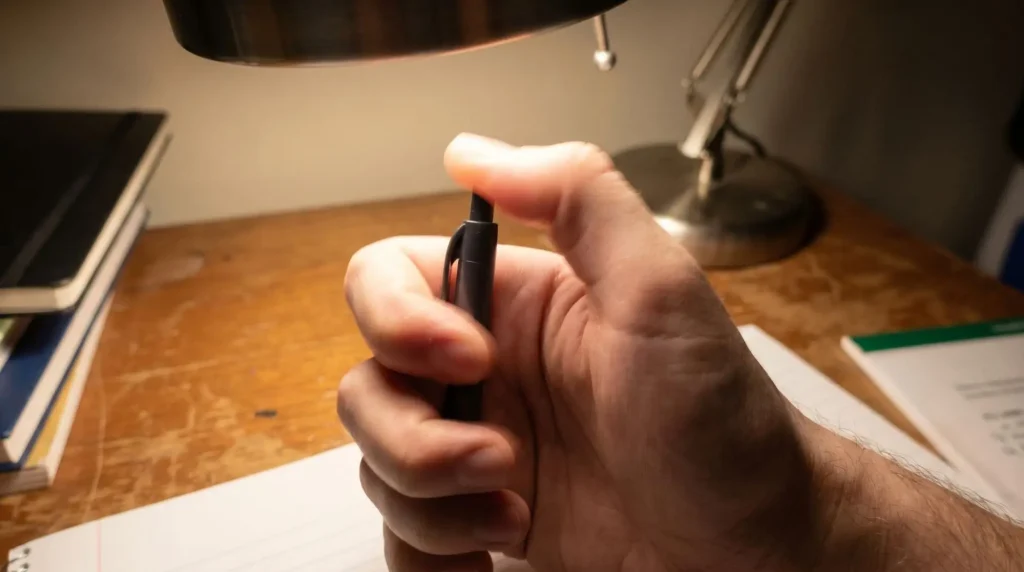
You may be wondering to yourself, isn’t that just fidgeting? Not exactly. While fidgeting tends to be random and brief (shifting in your seat, tapping a foot once or twice), stimming is more repetitive, rhythmic, and persistent. It often follows a pattern, and it usually serves a specific neurological function, whether that’s calming your nervous system, boosting your focus, or releasing built-up emotional energy.
Here’s the neuroscience behind it: ADHD brains typically produce less dopamine, the neurotransmitter responsible for motivation, reward, and sustained attention. When your brain isn’t getting enough stimulation from your environment, it goes looking for it on its own. Stimming is one of the ways it does that. The repetitive sensory input from bouncing your leg, clicking a pen, or humming a tune gives your brain just enough dopamine to stay engaged with what you’re actually trying to focus on. Stimming is more than fidgeting. It’s your brain creating the dopamine that it needs.
Do people with ADHD stim?
Yes, absolutely. People with ADHD do stim. And it’s far more common than many people realize. Stimming has traditionally been associated with autism spectrum disorders, which has led to the misconception that people with ADHD don’t stim. In reality, research shows that self-stimulatory behaviors are prevalent across neurodivergent conditions, including ADHD. The difference often lies in the why behind the behavior.
For people with autism, stimming frequently serves as a way to manage sensory overload or express emotions that are challenging to communicate verbally. In contrast, for people with ADHD, stimming more often functions as a way to increase stimulation, helping your brain stay alert, focused, or emotionally regulated during tasks that don’t provide enough engagement on their own.
You may be thinking to yourself, “I have friends with ADHD, and they don’t stim very much!” One reason that ADHD stimming goes underrecognized is the phenomenon of masking. Many adults, particularly women, have spent years suppressing their stims in social and professional settings.
Masking can make stimming harder to recognize, even for the person doing it. Instead of an obvious behavior like rocking or humming, you might turn your stim into something less noticeable, such as tensing your muscles, pressing your toes into your shoes, chewing the inside of your cheek, or constantly shifting your fingers out of sight.
While these behaviors may look different on the outside, they still ‘count’ as stimming when they represent an underlying need for movement, sensory input, or regulation. And while these ‘less noticeable’ signs differ from traditional forms of stimming, they can still take an enormous amount of energy, eventually leading to burnout, anxiety, and even a sense of disconnection from yourself.
If you’ve been masking your entire life and are just now recognizing your own stimming patterns, that’s a sign of growth, not an issue.
What are common examples of ADHD stimming?
While stimming looks different for everyone, there are several common categories. You might recognize yourself in one or many of these.
Physical and tactile stimming
These are the stims most people picture when they think about stimming:
Nail biting or cuticle picking
Skin picking or scratching
Hair twirling or pulling
Cracking knuckles or joints
Fidgeting with objects (pens, rings, rubber bands)
Leg bouncing or foot tapping
Rocking or swaying
Vocal stimming
Vocal stimming involves making repetitive sounds, often without awareness. Examples include:
- Humming or whistling
- Throat clearing
- Repeating words, phrases, or song lyrics
- Making clicking or popping sounds with your mouth
- Talking to yourself
- Mimicking sounds or accents
Visual stimming

Expressions of visual stimming are less commonly discussed and are still very real:
- Staring at moving lights or patterns
- Rewatching the same video clips repeatedly
- Scrolling social media in a trance-like state
- Watching spinning objects (fans, wheels)
Emotional and mental stimming
Not all stimming is visible to others. Here are some examples of emotional and mental stimming:
- Replaying conversations in your head
- Daydreaming in repetitive loops
- Creating elaborate mental scenarios
- Counting or repeating numbers internally
- Mentally rehearsing future events on repeat
It’s also important to remember that the behavior itself doesn’t always tell the whole story. Two people can do the exact same thing for completely different reasons. One person may bounce their leg to stay focused during a long meeting, while another may do it when they’re feeling overwhelmed. Rather than focusing only on what the behavior looks like, it can be more helpful to ask: What is this behavior doing for me right now?
Why do people with ADHD stim?

Understanding why you stim can help you feel less confused or frustrated by the behavior. There are several key reasons:
Dopamine regulation. As mentioned earlier, ADHD brains are chronically under-stimulated and are searching for dopamine. Stimming provides a quick, accessible source of sensory input that boosts dopamine levels just enough to keep you engaged.
Focus aid. Counterintuitively, stimming often helps concentration rather than hindering it. The repetitive input occupies the part of your brain that would otherwise wander, freeing up your working memory for the actual task at hand.
Emotional self-soothing. When emotions run high, whether from stress, anxiety, excitement, or frustration, stimming can bring your nervous system back into a regulated state. It acts like a pressure valve, releasing tension before it becomes overwhelming.
Sensory seeking. Some people with ADHD crave specific types of sensory input. You might stim because your body needs more tactile stimulation, more sound, or more movement than your current environment is providing.
Sensory overload response. On the flip side, stimming can also help during overstimulation by giving your brain something predictable and rhythmic to focus on instead of the chaos around you.
A clinical observation: stimming isn’t always a sign of anxiety. Some people assume that because they’re tapping, picking, pacing, or humming, they must be anxious. In practice, the reason isn’t always that simple. You might stim when you’re nervous, and you might also do it when you’re bored, excited, deeply focused, or trying to stay engaged with a task. Paying attention to what happens before and after the behavior can tell you more about what your brain is actually trying to regulate.
What are the benefits of stimming?

It’s important to say this clearly: stimming is not inherently bad. It’s not something that needs to be “fixed” in every case. In fact, for many people with ADHD, stimming is genuinely helpful. Here are some strong examples of how it can benefit you:
It improves focus. Many people report that they concentrate better when they’re allowed to stim freely, whether that’s doodling during a lecture, bouncing a leg during a work call, or chewing gum while reading. If you have ADHD and you find focusing frustrating, stimming may help you improve your ability to focus.
It calms anxiety. Repetitive, rhythmic movements activate your parasympathetic nervous system, which counteracts the stress response. This is why rocking, swaying, or humming can feel so soothing during tense moments.
It provides emotional release. When your emotions build up without an outlet, stimming gives them somewhere to go. Rather than exploding outward or shutting down internally, your body processes the energy through movement or sound.
It supports task performance. Research suggests that some forms of stimming can actually improve working memory and task completion if you have ADHD. Allowing yourself to move may be one of the best things you can do for your productivity.
The key question isn’t whether you stim. It’s whether your stims are serving you well.
When stimming becomes an issue
A useful way to think about stimming is to look at its impact rather than assuming the behavior is either “good” or “bad.” Helpful stimming may improve focus, release tension, or make it easier to regulate your emotions.
A behavior may need additional attention when it regularly causes injury, significant distress, or interferes with your ability to live your life the way you want to. The goal isn’t to judge or eliminate the behavior – it’s to understand whether it’s actually meeting your needs in a safe and sustainable way.
So, while stimming is often healthy and helpful, it is worth acknowledging situations where it may warrant attention and specialized support:
When it causes physical harm. An example of stimming causing physical harm is if you find yourself picking at your skin enough that it starts to bleed.
When it interferes with your relationships. If your stimming bothers partners, family members, or colleagues to the point where it’s causing ongoing conflict or isolation, it may be worth exploring other solutions to how you currently stim.
When it affects your self-image. Many people with ADHD feel shame about their stimming behaviors. If you find yourself avoiding social situations, canceling plans, or feeling intense embarrassment because of your stims, that emotional toll matters and you may want to seek help to manage your stimming and grow in confidence..
When masking causes burnout. Constantly suppressing your stims in professional or social settings requires enormous mental energy. Over time, this can lead to chronic exhaustion, emotional dysregulation, and even depressive symptoms.
When it disrupts daily functioning. If your stimming has become so intense or time-consuming that it prevents you from completing tasks, meeting obligations, or engaging in activities you enjoy, it may have crossed from helpful to harmful.
Building stronger executive functioning skills can help you create routines and structure that reduce the moments where stimming becomes disruptive, so that you can start to enjoy stimming again, rather than feeling frustrated by it.
How to manage ADHD stimming
If you’ve identified stims that aren’t serving you well, here are some strategies that can help.
Identify your triggers
Start by noticing when you stim. Is it during boring tasks? High-stress moments? Social situations? Specific times of day? Understanding your triggers gives you valuable information about what your nervous system actually needs in those moments.
Replace harmful stims with safer alternatives
You don’t have to stop stimming entirely. Instead, try redirecting harmful stims toward alternatives that meet the same sensory need without the frustrating consequences:
- Replace skin picking with textured fidget toys or putty
- Replace nail biting with chewing gum or silicone chew necklaces
- Replace hair pulling with running your fingers through a soft brush or fabric
- Replace teeth grinding with a mouth guard or jaw-stretching exercises
Use sensory tools and environment design
Similarly to finding safer alternatives if need be, it can be very helpful to you to create a personalized environment that supports healthy stimming. Some of our clients have found great success with these ideas:
- Keep fidget tools at your desk (spinners, stress balls, tangle toys)
- Use noise-canceling headphones or background sound machines
- Incorporate movement breaks into your schedule
- Wear textured jewelry or clothing that provides tactile input
- Arrange your workspace to minimize overwhelming sensory input
Explore online therapy approaches

Several evidence-based online therapies can help you develop healthier relationships with your stimming behaviors:
- Cognitive Behavioral Therapy (CBT) can help you identify thought patterns and triggers connected to harmful stims.
- Occupational therapy provides targeted strategies for sensory regulation.
- ADHD coaching helps you build structure and routines that reduce the dysregulation that drives unwanted stimming.
- Habit reversal training specifically targets repetitive behaviors by replacing them with competing responses.
When to seek professional support
If stimming is affecting your relationships, your focus, or the way you feel about yourself, you don’t have to figure it out alone.
An online therapist who understands ADHD can help you:
- Distinguish between helpful stims and harmful ones
- Develop personalized strategies that actually fit your life
- Process the shame or frustration that may have built up around your behaviors
- Address underlying emotional dysregulation or sensory processing challenges
- Explore whether ADHD medication or other interventions might help
You deserve support from someone who gets it, someone who won’t dismiss your experience or tell you to “just stop.” ADHD stimming is real, it’s valid, and it’s manageable with the right guidance.
Ready to take the next step? Schedule a consultation with a Makin Wellness therapist who specializes in ADHD and can help you build strategies that work for your unique brain.
Not sure if you have ADHD? Our ADHD test and assessment guide can help you determine whether it’s time to pursue a formal evaluation. Understanding your brain isn’t just about labeling behaviors. It’s about finding compassion for yourself and building a life that works with the way you’re wired, not against it.
Further Reading:
Stimming ADHD FAQs:
Stimming can be a sign of ADHD, though it is not exclusive to ADHD.
Self-stimulatory behaviors like leg bouncing, pen clicking, and humming are common in people with ADHD because the brain is seeking additional dopamine to stay focused and regulated. If you notice that you stim most often during under-stimulating tasks or emotionally intense moments, it may be worth exploring whether ADHD is a factor. A specialized online therapist can help you understand what your stimming patterns reveal about how your brain works.
Vocal stimming in ADHD includes repetitive sounds like humming, throat clearing, repeating words or song lyrics, clicking sounds, talking to yourself, and mimicking accents or sounds.
These behaviors often happen without your awareness and serve as a way for your brain to increase stimulation or self-soothe during stressful or under-engaging moments. Vocal stimming is one of the more commonly masked forms of ADHD stimming, especially among women who may suppress these sounds in social or professional settings to avoid drawing attention.
The core difference is why the stimming happens: ADHD stimming typically increases stimulation to boost focus and dopamine, while autism stimming more often manages sensory overload or expresses emotions that are challenging to communicate verbally.
In practice, the behaviors themselves can look very similar (rocking, hand movements, repetitive sounds), which is one reason ADHD stimming often goes unrecognized. Both forms of stimming are valid coping tools, and some people experience both ADHD and autism, which means their stimming may serve multiple functions at once.
Yes, stimming is a universal human behavior that occurs across neurotypical and neurodivergent populations.
You’ve probably tapped your foot during a boring meeting or twirled your hair while thinking without having any clinical condition. The distinction is that people with ADHD and other neurodivergent conditions tend to stim more frequently, more intensely, and more persistently because their nervous systems have a greater need for sensory regulation. If you find that your stimming is constant and goes beyond occasional fidgeting, an ADHD assessment can help clarify what’s going on.
No. Stimming is not something that needs to be eliminated. It is a natural and often helpful way for your ADHD brain to regulate focus, emotions, and sensory input.
The goal isn’t to stop stimming entirely. Instead, it’s about identifying whether specific stims are serving you well or causing harm. If a stim is leading to physical injury, relationship strain, or shame, redirecting it toward a safer alternative (like swapping skin picking for a textured fidget toy) is a more effective approach than suppression. Strengthening your executive functioning skills can also help you build routines that reduce the moments where stimming feels out of control.
If your stimming is causing physical harm, affecting your relationships, leading to burnout from constant masking, or making you feel ashamed, those are signs it’s worth exploring with a specialized online therapist.
Helpful stimming improves your focus and calms your nervous system. When stimming starts to interfere with daily functioning or self-image, it has likely crossed from a coping tool into something that needs professional attention. An online therapist who understands ADHD can help you sort through which stims are working for you and develop personalized strategies for the ones that aren’t, without asking you to “just stop.”